
Creativity, Inc.
Good to Great
Building a Second Brand
The Lean Startup
Blue Ocean Strategy
Leaders Eat Last
The Innovator's Dilemma
Thinking, Fast and Slow
Lean In
The Power of Habit
Four Thousand Weeks
The 5AM Club
Crucial Conversations
The Infinite Game
Never Split the Difference
The First 90 Days
Creativity, Inc. Good to Great Building a Second Brand The Lean Startup Blue Ocean Strategy Leaders Eat Last The Innovator's Dilemma Thinking, Fast and Slow Lean In The Power of Habit Four Thousand Weeks The 5AM Club Crucial Conversations The Infinite Game Never Split the Difference The First 90 Days
Keep your mind fresh with summaries of the best business books

What I Learned About Investing From Darwin
In What I Learned About Investing from Darwin, Pulak Prasad bridges evolutionary biology and finance to create a radical blueprint for long-term investing. Drawing on the success of his firm, Nalanda Capital, Prasad explains why avoiding catastrophic mistakes matters more than catching every trend, how to select companies with robust historical traits, and why the ultimate strategy for wealth creation is to buy exceptional businesses and simply never sell them.

Mind Mapping
In Mind Mapping, Kam Knight explains how translating thoughts into visual diagrams drastically improves memory, focus, and productivity. Because the human brain processes information through associative networks rather than straight lines, traditional linear note-taking is inherently inefficient. By mastering central concepts, radiating branches, and visual hierarchies, professionals can organize complex projects, solve stubborn problems, and retain information significantly faster.

The Power of Going All-In
In The Power of Going All-In, serial entrepreneur Brandon Bornancin delivers a practical framework for unleashing your team's ultimate potential. Drawing on his experience building companies to over $150 million in sales, he argues that true leadership requires replacing micromanagement with extreme accountability and servant leadership. Master these principles to inspire top-tier performance, eliminate burnout, and consistently shatter goals.

Global Vision
In Global Vision, NYU Stern professor Robert Salomon dismantles the myth that the modern business world is flat and borderless. He introduces the concept of Institutional Distance, demonstrating how political, economic, and cultural differences create a dangerous "liability of foreignness" for expanding companies. By teaching leaders to mathematically price global risk, the book provides a rigorous toolkit for avoiding the costly pitfalls of international expansion.
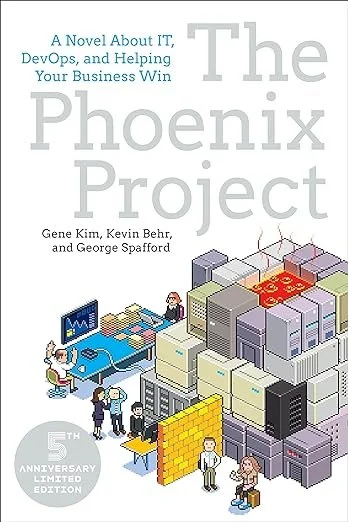
The Phoenix Project
In The Phoenix Project, Gene Kim, Kevin Behr, and George Spafford use a fictional narrative to illustrate the core principles of DevOps. Following an overwhelmed IT manager tasked with saving a failing corporate initiative, the book demonstrates how applying lean manufacturing concepts to technology can eliminate silos, manage unplanned work, and align IT with broader business goals to transform a chaotic department into a competitive advantage.

Hooked
In Hooked, Nir Eyal decodes the psychological mechanics behind the world's most engaging technologies. He introduces the Hook Model, a four-step framework—Trigger, Action, Variable Reward, and Investment—that companies use to manufacture desire and turn casual users into daily devotees. Master these principles, and you can build ethical, habit-forming products that solve real problems and keep users coming back without relying on expensive marketing.

Influencer
In Influencer, Brittany Hennessy draws from her experience casting creators for major publications to demystify the creator economy. She reveals that online influence is a structured business. By outlining how to build an engaged audience, package a personal brand, and pitch corporate sponsors, she provides a practical roadmap for monetization. Master these principles to turn your social media presence into a sustainable, professional enterprise.

Peak Teams
In Peak Teams, executive coach Jeff James Martin provides a comprehensive operating system for venture-backed founders navigating the chaos of rapid growth. He argues that as startups scale, informal communication breaks down, creating a dangerous gap between mission and execution. By implementing the Peak Teams System—a framework of structured cadences, clear goals, and relentless visibility—leaders can align their teams, overcome internal friction, and scale efficiently.

The Personal MBA
In The Personal MBA, Josh Kaufman demystifies the corporate world by arguing that you do not need expensive graduate school to master business. He distills the entirety of business practice into five interdependent processes: Value Creation, Marketing, Sales, Value Delivery, and Finance. By understanding these core mechanics, alongside fundamental human psychology and systems thinking, anyone can build a profitable enterprise and make highly effective, real-world business decisions.

Street Smarts
In Street Smarts, veteran entrepreneur Norm Brodsky and business journalist Bo Burlingham distill decades of company-building experience into a practical guide for founders. They argue that long-term survival relies on ignoring vanity metrics and mastering the fundamentals of cash flow, gross margins, and strategic pricing. By learning to fire bad customers, negotiate quietly, and keep overhead low, founders can build deeply resilient, highly profitable businesses that fund their own growth.

Power
In Power, Stanford business professor Jeffrey Pfeffer shatters the myth that the corporate world is a pure meritocracy. He argues that exceptional performance alone rarely guarantees advancement. Instead, professionals must actively cultivate influence, build strategic networks, and master the art of office politics. This pragmatic, unflinching guide provides a mechanical look at how authority is actually acquired, wielded, and maintained in modern organizations.

Mind Your Mindset
In Mind Your Mindset, leadership experts Michael Hyatt and Megan Hyatt Miller reveal that the biggest barrier to success is not a lack of strategy, but a flawed internal narrative. Drawing on neuroscience and psychology, they explain how the brain constructs subjective stories disguised as objective facts. By mastering a three-step framework to identify, interrogate, and imagine better stories, professionals can overcome mental blocks and achieve breakthrough results.

Pinpoint
In Pinpoint, journalist Greg Milner explores the history and profound impact of the Global Positioning System. Originally designed by the United States military to guide precision weaponry, GPS quietly became the invisible infrastructure powering the modern world. From synchronizing financial markets and electrical grids to altering human cognition and spatial awareness, Milner details how our reliance on this single, fragile network has fundamentally transformed technology, culture, and our minds.

The StorySelling Method
In The StorySelling Method, communication expert Philipp Humm argues that the most effective sales tool is not a feature list, but a well-told story. He provides a practical, step-by-step system for transforming mundane interactions into compelling narratives. By mastering the CCRR framework and five essential story types, professionals can bypass sales resistance, forge genuine connections, and make their message impossible to forget.

Your Multimillion-Dollar Exit
In Your Multimillion-Dollar Exit, CPA and attorney Wayne M. Zell provides a comprehensive blueprint for entrepreneurs aiming to sell their companies. He argues that a successful exit requires integrating business valuation, tax strategy, and estate planning long before a transaction occurs. By addressing unexpected transitions, employee retention, and structural risks, Zell offers practical tools to protect your wealth and maximize your company's value on your own terms.

Presence
In Presence: Bringing Your Boldest Self to Your Biggest Challenges, Amy Cuddy explores how we can harness the power of body language and mindset to build confidence, reduce stress, and perform at our best in high-stakes situations. Drawing from her groundbreaking research and personal experiences, Cuddy provides actionable strategies to help readers tap into their inner strength and project authenticity.

Small Data
In Small Data, branding expert Martin Lindstrom challenges the assumption that algorithms hold all the answers. He argues that while big data reveals broad correlations, it takes tiny, seemingly insignificant behavioral clues to uncover the emotional desires driving our choices. By blending forensic psychology with cultural observation, Lindstrom shows how paying attention to hidden habits helps businesses solve the mysteries that scale alone misses.

Hug Your Haters
In Hug Your Haters, customer experience expert Jay Baer argues that businesses must fundamentally change how they handle complaints. Drawing on extensive research, Baer reveals that customer service is no longer a private exchange; it is a public spectator sport. By categorizing complainers into "offstage" customers seeking private resolution and "onstage" customers seeking a public audience, he provides a practical playbook for answering every complaint, defusing trolls, and turning negative feedback into loyal advocacy.

SYSTEMology
In SYSTEMology, David Jenyns provides a practical, seven-step framework to help small business owners escape the daily operations trap. Recognizing that founders fail at systemization by trying to document everything themselves, Jenyns focuses on capturing the Critical Client Flow and empowering team members to extract processes. The result is an actionable guide for reducing errors, scaling profits, and building a business that thrives without you.

The Ethics of Invention
In The Ethics of Invention, Harvard professor Sheila Jasanoff explores how technology rules society as powerfully as written law. By dismantling the pervasive myths of technological determinism and technocracy, she reveals how delegating decisions to engineers and data oligarchs endangers democracy. Jasanoff provides a compelling framework for treating innovation not as an inevitable, amoral force, but as a deeply political process requiring urgent democratic oversight.