
Creativity, Inc.
Good to Great
Building a Second Brand
The Lean Startup
Blue Ocean Strategy
Leaders Eat Last
The Innovator's Dilemma
Thinking, Fast and Slow
Lean In
The Power of Habit
Four Thousand Weeks
The 5AM Club
Crucial Conversations
The Infinite Game
Never Split the Difference
The First 90 Days
Creativity, Inc. Good to Great Building a Second Brand The Lean Startup Blue Ocean Strategy Leaders Eat Last The Innovator's Dilemma Thinking, Fast and Slow Lean In The Power of Habit Four Thousand Weeks The 5AM Club Crucial Conversations The Infinite Game Never Split the Difference The First 90 Days
Keep your mind fresh with summaries of the best business books
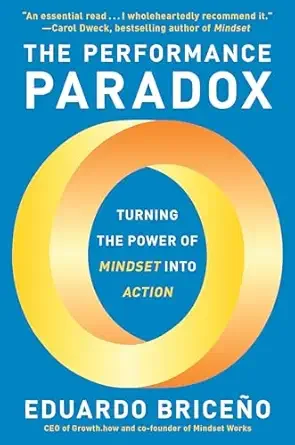
The Performance Paradox
In The Performance Paradox, executive coach Eduardo Briceño exposes why high performers eventually plateau: they spend all their effort executing and none of it improving. His remedy is a deliberate split between the Performance Zone, where you do what you know, and the Learning Zone, where you build what you don't. Master the rhythm between them and growth stops being accidental.
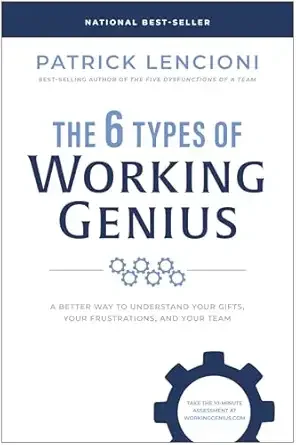
The 6 Types of Working Genius
In The 6 Types of Working Genius, organizational expert Patrick Lencioni offers a practical framework to help individuals and teams discover what brings them joy and what drains their energy. By identifying six fundamental types of work—from initial wonder to final execution—Lencioni provides a roadmap for aligning natural talents with daily tasks, ultimately eliminating unnecessary judgment and transforming workplace productivity.
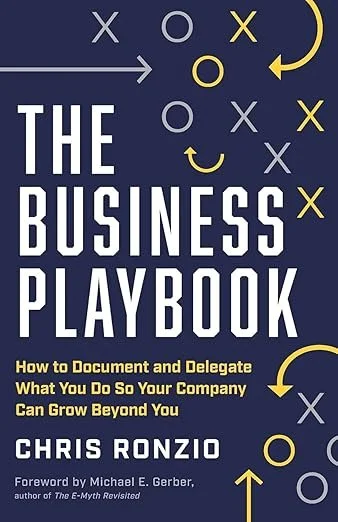
The Business Playbook
Are you trapped doing everything in your business? "The Business Playbook" by Chris Ronzio is your escape route. This summary shows you how to document your critical processes, delegate effectively, and build a "single source of truth" that empowers your team. Stop being the bottleneck and start building a company that can grow beyond you. Learn to create a business that runs itself, so you can finally have the freedom to lead it.

Building A Second Brain
In Building a Second Brain, Tiago Forte presents the PARA method—Projects, Areas, Resources, Archives—and the CODE workflow—Capture, Organize, Distill, Express—to transform scattered digital notes into a trusted external memory. By systematically saving ideas, resurfacing them at the right moment, and turning insights into shareable output, readers reduce cognitive overload, spark creativity, and consistently produce higher-quality work.

Mind Mapping
In Mind Mapping, Kam Knight explains how translating thoughts into visual diagrams drastically improves memory, focus, and productivity. Because the human brain processes information through associative networks rather than straight lines, traditional linear note-taking is inherently inefficient. By mastering central concepts, radiating branches, and visual hierarchies, professionals can organize complex projects, solve stubborn problems, and retain information significantly faster.

SYSTEMology
In SYSTEMology, David Jenyns provides a practical, seven-step framework to help small business owners escape the daily operations trap. Recognizing that founders fail at systemization by trying to document everything themselves, Jenyns focuses on capturing the Critical Client Flow and empowering team members to extract processes. The result is an actionable guide for reducing errors, scaling profits, and building a business that thrives without you.

Atomic Habits
Atomic Habits is James Clear's implementation manual for behavior change. Its two central claims are that small improvements compound in ways people systematically underestimate, and that lasting change works through identity rather than outcomes. Around those sits the Four Laws of Behavior Change — make it obvious, attractive, easy, and satisfying — with each law mapped to a stage of the habit loop and each reversible for breaking bad habits. The book's strength is its density of specific, immediately usable tactics.

The 12 Week Year
In The 12 Week Year, Brian P. Moran and Michael Lennington expose the fatal flaw of annualized thinking. They argue that twelve-month goals breed complacency, causing us to delay the actual work until December. By redefining a year as just twelve weeks, the authors provide a rigorous execution system that manufactures constant urgency, replacing vague resolutions with ruthless weekly tracking, predictable routines, and measurable daily actions.

Buy Back Your Time
In Buy Back Your Time, serial founder Dan Martell attacks the assumption that entrepreneurs should hire to grow. His Buyback Principle says you hire to reclaim your own hours instead, then reinvest them in the small number of activities only you can do. The book supplies the machinery: a buyback rate for deciding what to offload, the DRIP Matrix for auditing where your time goes, a Replacement Ladder that sequences the first five hires, the four-part playbook method for transferring work, and rules like 1-3-1 and 10-80-10 for delegating without micromanaging.

Discipline Is Destiny
In Discipline is Destiny, Ryan Holiday explores the ancient Stoic virtue of temperance. Drawing on historical figures like Queen Elizabeth II, Lou Gehrig, and Marcus Aurelius, Holiday argues that self-control is not a restriction, but the ultimate source of personal freedom. By mastering the physical body, regulating the mind, and elevating the soul, readers learn how to build the iron-clad habits required to achieve enduring greatness and avoid self-destruction.

How Big Things Get Done
In How Big Things Get Done, megaproject expert Bent Flyvbjerg and journalist Dan Gardner reveal the hidden mechanics behind why projects fail. Drawing on a database of over 16,000 global endeavors, they show that successful projects share a counterintuitive approach: agonizingly slow planning followed by blistering execution. By mastering reference class forecasting and modularity, anyone can learn to beat the odds and deliver on time and on budget.

Limitless
In Limitless, world-renowned brain coach Jim Kwik provides a practical manual for upgrading your cognitive performance. Having overcome a severe childhood brain injury, Kwik dispels the myth that intelligence is fixed. Instead, he introduces a three-part framework—Mindset, Motivation, and Methods—to help readers conquer digital distractions, accelerate learning, and unlock their brain's true potential. By mastering these pillars, anyone can train their memory, enhance their focus, and learn anything faster.
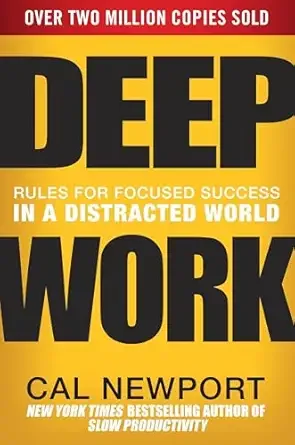
Deep Work
In Deep Work, computer science professor Cal Newport argues that the ability to focus without distraction is the defining skill of the modern economy. He divides professional activities into "deep" and "shallow" work, proving that constant connectivity actively destroys our cognitive capacity. Blending neuroscience with practical scheduling tactics, Newport provides a rigorous framework for eliminating digital noise, embracing boredom, and training your brain to produce massive value in less time.

Getting Things Done
Getting Things Done is David Allen's system for managing commitments so they stop consuming attention. Its premise is that the mind is for having ideas rather than holding them, and that every unfinished obligation stored mentally drains focus regardless of whether you can act on it. The method runs in five steps — capture, clarify, organize, reflect, engage — anchored by two disciplines that do most of the work: defining the specific next physical action for everything, and a weekly review that keeps the whole system trustworthy.

Four Thousand Weeks
"Four Thousand Weeks: Time Management for Mortals" by Oliver Burkeman challenges readers to make the most of their limited time on Earth. He argues that time management isn't just about productivity and efficiency, but also about finding meaning and purpose in life. Burkeman offers practical advice on how to prioritize what's important, reduce distractions, and cultivate a sense of gratitude for the time we have.

Focal Point
In Focal Point, Brian Tracy provides a system for achieving more by doing less. The core idea is to gain absolute clarity on your most important goals and then apply the 80/20 rule to focus on the vital few activities that produce the majority of your results. By identifying your Key Result Areas and ruthlessly prioritizing your tasks, you can double your productivity, reduce stress, and achieve your most ambitious goals.

The Effective Executive
Peter Drucker's 1967 classic argues that effectiveness is not a talent but a habit, and that any knowledge worker can learn it. Through five practices, from keeping an honest time log to building on strengths and making decisions that start with disagreement rather than consensus, The Effective Executive explains how to get the right things done instead of merely doing things right.

The Happiness Advantage
In The Happiness Advantage, Harvard researcher Shawn Achor argues the success formula most of us run is backwards. Happiness is not the prize waiting at the end of hard work; it is the fuel that makes the work go better. Across seven principles, from the Tetris Effect to the Zorro Circle to the 20-Second Rule, he shows how small mindset and habit shifts compound into real performance gains.

The 5AM Club
In The 5 AM Club, leadership expert Robin Sharma uses a narrative fable to present a comprehensive system for mastering your morning. He argues that waking up at 5:00 a.m. offers a distraction-free window to optimize your mind, body, and spirit. By applying structured routines like the 20/20/20 Formula and cultivating four interior empires, you can build lasting habits and dramatically increase your daily output.