
Creativity, Inc.
Good to Great
Building a Second Brand
The Lean Startup
Blue Ocean Strategy
Leaders Eat Last
The Innovator's Dilemma
Thinking, Fast and Slow
Lean In
The Power of Habit
Four Thousand Weeks
The 5AM Club
Crucial Conversations
The Infinite Game
Never Split the Difference
The First 90 Days
Creativity, Inc. Good to Great Building a Second Brand The Lean Startup Blue Ocean Strategy Leaders Eat Last The Innovator's Dilemma Thinking, Fast and Slow Lean In The Power of Habit Four Thousand Weeks The 5AM Club Crucial Conversations The Infinite Game Never Split the Difference The First 90 Days
Keep your mind fresh with summaries of the best business books
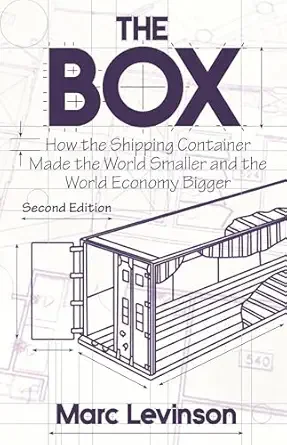
The Box
The Box is Marc Levinson's history of the shipping container and the economic transformation it produced. Its central argument is that the container was not an invention so much as a system: standardized dimensions, purpose-built ships, redesigned ports, compatible trucks and rail, and labor agreements, all of which had to arrive together before any of it worked. Levinson traces Malcom McLean's role, the standardization fights, the union negotiations, the Vietnam logistics contract that proved the concept, and the resulting collapse of historic port cities alongside the rise of global supply chains.
The Friction Project
In The Friction Project, Stanford professors Robert I. Sutton and Huggy Rao provide a practical guide to identifying and managing organizational drag. They argue that skilled leaders act as "friction fixers," aggressively eliminating the bad friction that wastes time, while intentionally introducing good friction to prevent reckless decisions. Master these principles to cure addition sickness, protect your team's time, and build a highly productive workplace.
Upstream
In Upstream, Dan Heath challenges the business obsession with reactive problem-solving, urging leaders to prevent fires rather than just fighting them. He identifies the psychological barriers to prevention—Problem Blindness, Lack of Ownership, and Tunneling—and provides a framework for systemic intervention. By leveraging data, aligning stakeholders, and altering environmental levers, you can stop "handling" recurring issues and finally solve them at the source.

Winning Moves
In Winning Moves, private equity veteran Dan Cremons provides a comprehensive, actionable playbook for driving post-acquisition growth. He argues that the era of relying purely on leverage and cost-cutting is over. To generate superior returns today, investors and executives must master deliberate value creation. By aligning leadership, optimizing talent during the critical first hundred days, and pulling specific revenue levers, leaders can predictably scale their portfolio companies.

Productize
In Productize, CEO and product innovation expert Eisha Armstrong provides a tactical blueprint for transforming bespoke professional services into scalable, tech-enabled products. She argues that relying on custom work fundamentally limits growth and valuation. By avoiding the "Seven Deadly Productization Mistakes" and adopting the Productize Pathway, founders can shift their culture, navigate the fear of cannibalized revenue, and build highly profitable assets that solve urgent, expensive problems.

The Power of Resilience
In The Power of Resilience, MIT supply chain expert Yossi Sheffi explores how globalization and lean manufacturing have made modern businesses dangerously fragile. Drawing on high-stakes corporate crises, Sheffi provides a comprehensive framework for managing risk. He argues that companies must move beyond costly redundancy and build inherent flexibility—mapping deep-tier suppliers, standardizing components, and fostering a culture of rapid detection—to survive and thrive during unexpected disruptions.

The 80/20 CEO
In The 80/20 CEO, global executive Bill Canady provides a 100-day playbook for leaders who need to rapidly take command of their organizations. By applying the Pareto Principle to executive strategy, he introduces the Profitable Growth Operating System (PGOS). Learn how to eliminate complexity, focus exclusively on the 20 percent of efforts that drive 80 percent of results, and establish a high-performance culture built on strategic subtraction.

Global Vision
In Global Vision, NYU Stern professor Robert Salomon dismantles the myth that the modern business world is flat and borderless. He introduces the concept of Institutional Distance, demonstrating how political, economic, and cultural differences create a dangerous "liability of foreignness" for expanding companies. By teaching leaders to mathematically price global risk, the book provides a rigorous toolkit for avoiding the costly pitfalls of international expansion.
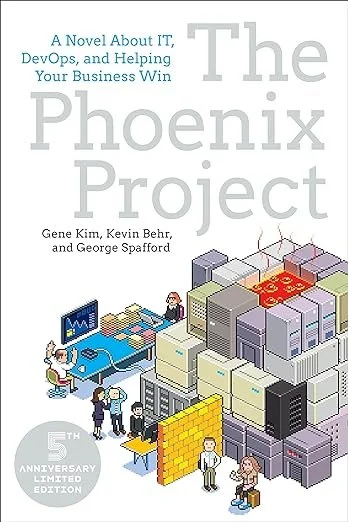
The Phoenix Project
In The Phoenix Project, Gene Kim, Kevin Behr, and George Spafford use a fictional narrative to illustrate the core principles of DevOps. Following an overwhelmed IT manager tasked with saving a failing corporate initiative, the book demonstrates how applying lean manufacturing concepts to technology can eliminate silos, manage unplanned work, and align IT with broader business goals to transform a chaotic department into a competitive advantage.

Peak Teams
In Peak Teams, executive coach Jeff James Martin provides a comprehensive operating system for venture-backed founders navigating the chaos of rapid growth. He argues that as startups scale, informal communication breaks down, creating a dangerous gap between mission and execution. By implementing the Peak Teams System—a framework of structured cadences, clear goals, and relentless visibility—leaders can align their teams, overcome internal friction, and scale efficiently.

SYSTEMology
In SYSTEMology, David Jenyns provides a practical, seven-step framework to help small business owners escape the daily operations trap. Recognizing that founders fail at systemization by trying to document everything themselves, Jenyns focuses on capturing the Critical Client Flow and empowering team members to extract processes. The result is an actionable guide for reducing errors, scaling profits, and building a business that thrives without you.

Traction
In Traction, Gino Wickman introduces the Entrepreneurial Operating System (EOS), a highly practical method for overcoming the chaos that plagues growing companies. By mastering six key components—Vision, People, Data, Issues, Process, and Traction—leadership teams can align their goals, solve recurring problems, and build exceptionally healthy cultures. It is an instruction manual for founders who want to stop putting out fires and finally take control of their business.

How Big Things Get Done
In How Big Things Get Done, megaproject expert Bent Flyvbjerg and journalist Dan Gardner reveal the hidden mechanics behind why projects fail. Drawing on a database of over 16,000 global endeavors, they show that successful projects share a counterintuitive approach: agonizingly slow planning followed by blistering execution. By mastering reference class forecasting and modularity, anyone can learn to beat the odds and deliver on time and on budget.

Turn the Ship Around!
In Turn the Ship Around!, former Navy Captain L. David Marquet shares how he transformed the worst-performing submarine in the fleet into its absolute best. By abandoning the traditional top-down chain of command for a "leader-leader" model, he proves that true excellence comes from pushing decision-making power down the ranks. It is a practical, brilliant blueprint for replacing passive compliance with active, intent-based ownership.
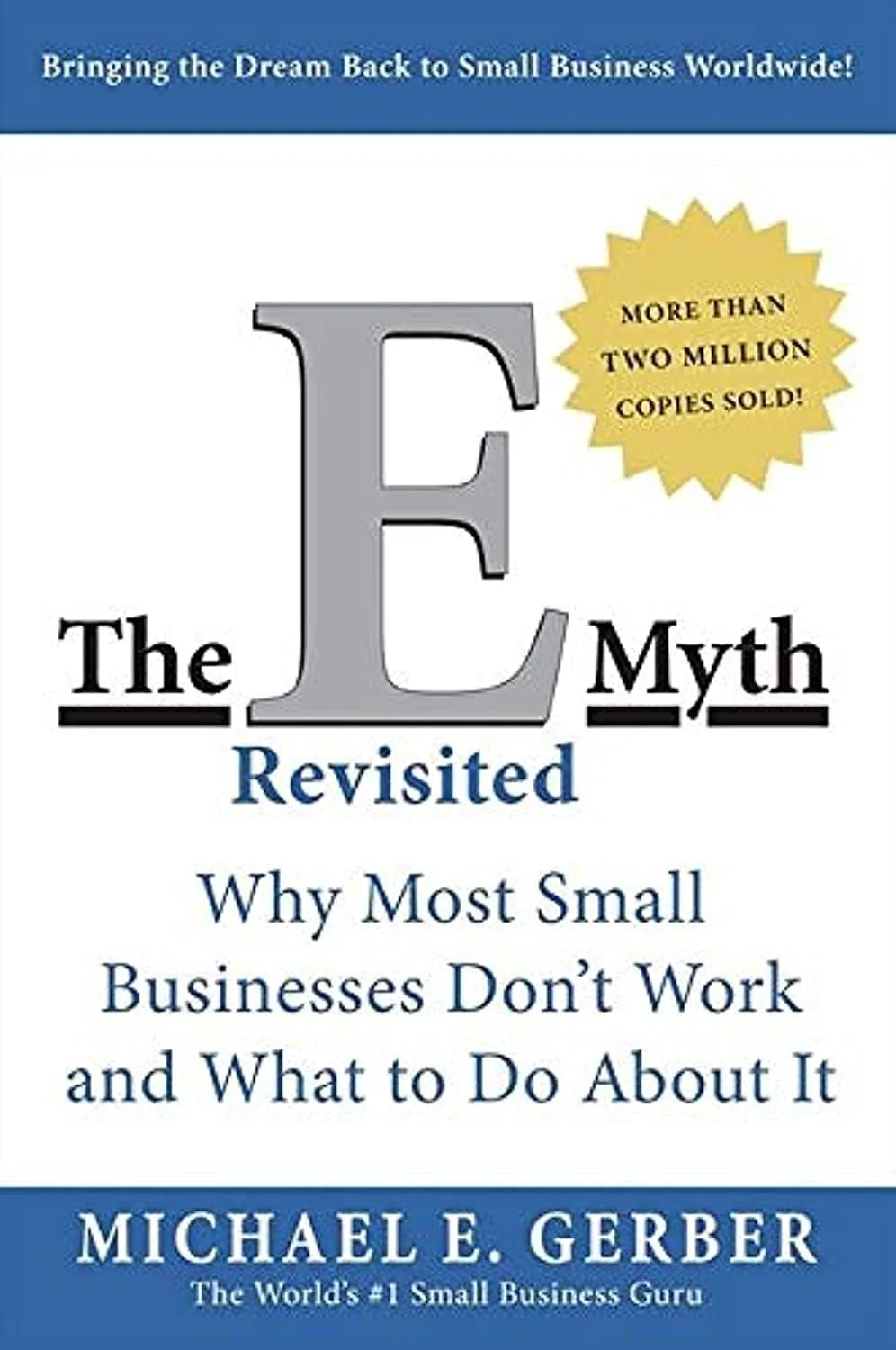
The E-Myth Revisited
Michael Gerber's argument is that most small businesses fail for a reason nobody warns you about: they are started by skilled technicians who assume doing the work qualifies them to own a company that does the work. He calls that the entrepreneurial seizure, and traces the wreckage through three personalities every owner carries, three phases every business passes through, and one structural fix. Build your company as though it were the prototype for five thousand more, and refine it through a loop of innovation, quantification, and orchestration. The result is a business that runs on systems rather than on you, and a real answer to the question of what it is all supposed to be for.