
Creativity, Inc.
Good to Great
Building a Second Brand
The Lean Startup
Blue Ocean Strategy
Leaders Eat Last
The Innovator's Dilemma
Thinking, Fast and Slow
Lean In
The Power of Habit
Four Thousand Weeks
The 5AM Club
Crucial Conversations
The Infinite Game
Never Split the Difference
The First 90 Days
Creativity, Inc. Good to Great Building a Second Brand The Lean Startup Blue Ocean Strategy Leaders Eat Last The Innovator's Dilemma Thinking, Fast and Slow Lean In The Power of Habit Four Thousand Weeks The 5AM Club Crucial Conversations The Infinite Game Never Split the Difference The First 90 Days
Keep your mind fresh with summaries of the best business books
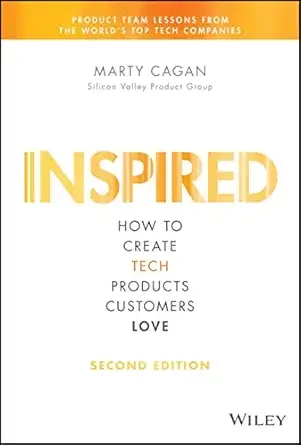
Inspired
Inspired is Marty Cagan's account of how strong product organizations actually operate, drawn from decades at eBay, HP, and Netscape and years advising companies through the Silicon Valley Product Group. Its central distinction is between feature teams that receive specifications and empowered teams that receive problems. The book covers the four risks discovery exists to eliminate, why discovery and delivery run in parallel rather than in sequence, the case against feature roadmaps, and what the product manager, designer, and engineering lead each actually contribute.
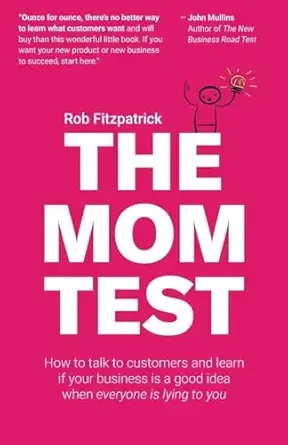
The Mom Test
In The Mom Test, Rob Fitzpatrick offers a deceptively simple guide to customer conversations that actually reveal the truth. Because friends and family will tell you what you want to hear, he provides rules for asking questions so good that even your mom can't lie: talk about their life, not your idea; ask about specific past behavior, not hypotheticals; and listen more than you pitch. It is an essential, practical book for any founder validating an idea.
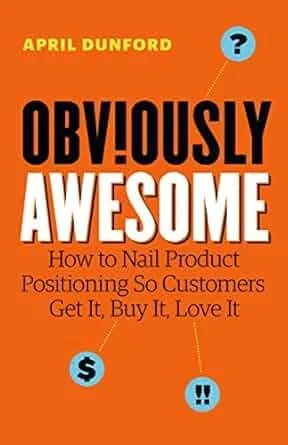
Obviously Awesome
Obviously Awesome by April Dunford presents a step-by-step methodology for product positioning. It argues that positioning isn't a marketing afterthought but the essential context that helps customers understand a product’s value. The process involves starting with your happiest customers to identify competitive alternatives, unique attributes, and true value. The core of the framework is deliberately choosing a market category that makes your product's strengths obvious and helps you win.
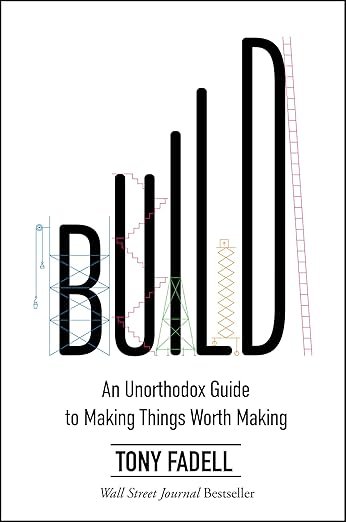
Build
In Build: An Unorthodox Guide to Making Things Worth Making, iPod co-inventor and Nest founder Tony Fadell compresses three decades in Silicon Valley into a blunt, story-rich handbook. From “scratching your own itch” to managing boards, firing bozos, and learning from spectacular failures, Fadell shows builders how to craft world-changing products, assemble cultures that last, and protect their sanity along the way—no MBA jargon, just battle-tested truth.

Productize
In Productize, CEO and product innovation expert Eisha Armstrong provides a tactical blueprint for transforming bespoke professional services into scalable, tech-enabled products. She argues that relying on custom work fundamentally limits growth and valuation. By avoiding the "Seven Deadly Productization Mistakes" and adopting the Productize Pathway, founders can shift their culture, navigate the fear of cannibalized revenue, and build highly profitable assets that solve urgent, expensive problems.

Hooked
In Hooked, Nir Eyal decodes the psychological mechanics behind the world's most engaging technologies. He introduces the Hook Model, a four-step framework—Trigger, Action, Variable Reward, and Investment—that companies use to manufacture desire and turn casual users into daily devotees. Master these principles, and you can build ethical, habit-forming products that solve real problems and keep users coming back without relying on expensive marketing.

Sales Pitch
In Sales Pitch, product positioning expert April Dunford shifts the focus of B2B sales from pushing features to guiding buyers. She argues that complex sales are most often lost to buyer indecision, not direct competitors. By outlining an eight-step narrative framework, Dunford shows teams how to establish market context, evaluate alternatives, and confidently present their differentiated value so customers feel safe saying yes.

The SaaS Playbook
In The SaaS Playbook, serial entrepreneur Rob Walling dismantles the Silicon Valley myth that software startups require venture capital to survive. Drawing on his experience launching and acquiring multiple bootstrapped companies, Walling provides a tactical manual for building a multimillion-dollar software-as-a-service (SaaS) business. He covers everything from achieving product-market fit and optimizing pricing tiers to tracking essential metrics and navigating the psychological challenges of self-funding a sustainable company.
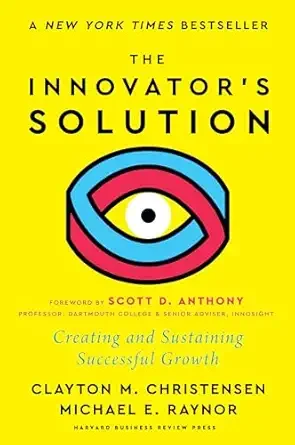
The Innovator’s Solution
In The Innovator's Solution, Clayton M. Christensen and Michael E. Raynor move from diagnosing market disruption to actively harnessing it. Building on the theories that toppled established corporate giants, the authors offer a practical playbook for creating sustainable growth. By mastering the "Jobs to Be Done" framework, identifying asymmetric motivation, and knowing whose capital to accept, leaders can predict industry shifts and launch successful new ventures before their core markets evaporate.

Don’t Make Me Think
In Don't Make Me Think, usability expert Steve Krug provides a masterclass in intuitive web design. He argues that users do not read pages carefully; they scan them ruthlessly. By understanding how people actually behave online, designers can eliminate cognitive friction, embrace web conventions, and create digital experiences that allow users to accomplish their goals without expending unnecessary mental energy. It remains the definitive, common-sense guide to making things easy to use.

The Four Steps To The Epiphany
In The Four Steps to the Epiphany, Silicon Valley veteran Steve Blank dismantles the traditional approach to launching a business. He argues that building a product first and searching for buyers later is a recipe for disaster. Instead, he introduces the Customer Development methodology—a rigorous process of testing hypotheses, securing early adopters, and validating your business model before scaling. This dense, highly practical manual laid the exact foundation for the modern Lean Startup movement.

The Lean Startup
In The Lean Startup, entrepreneur Eric Ries applies the principles of lean manufacturing to early-stage business creation. He argues that startups must abandon complex, long-term business plans in favor of rapid, scientifically tested experimentation. By embracing the Build-Measure-Learn feedback loop, deploying Minimum Viable Products, and replacing vanity metrics with rigorous data, founders can systematically reduce uncertainty and build products that real customers actually want to buy.