
Creativity, Inc.
Good to Great
Building a Second Brand
The Lean Startup
Blue Ocean Strategy
Leaders Eat Last
The Innovator's Dilemma
Thinking, Fast and Slow
Lean In
The Power of Habit
Four Thousand Weeks
The 5AM Club
Crucial Conversations
The Infinite Game
Never Split the Difference
The First 90 Days
Creativity, Inc. Good to Great Building a Second Brand The Lean Startup Blue Ocean Strategy Leaders Eat Last The Innovator's Dilemma Thinking, Fast and Slow Lean In The Power of Habit Four Thousand Weeks The 5AM Club Crucial Conversations The Infinite Game Never Split the Difference The First 90 Days
Keep your mind fresh with summaries of the best business books
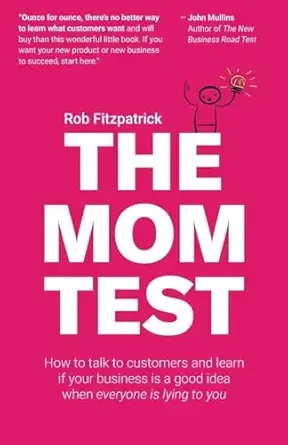
The Mom Test
In The Mom Test, Rob Fitzpatrick offers a deceptively simple guide to customer conversations that actually reveal the truth. Because friends and family will tell you what you want to hear, he provides rules for asking questions so good that even your mom can't lie: talk about their life, not your idea; ask about specific past behavior, not hypotheticals; and listen more than you pitch. It is an essential, practical book for any founder validating an idea.
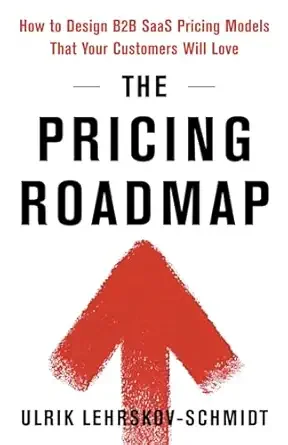
The Pricing Roadmap
In The Pricing Roadmap, B2B SaaS pricing expert Ulrik Lehrskov-Schmidt turns hundreds of real-world redesigns into a step-by-step framework for building pricing that grows revenue without torching customer trust. He shows why structure beats price points, how fencing and laddering shape commercial outcomes, and how to pick metrics, validate changes, and raise prices with confidence. Essential reading for any SaaS operator tired of guessing.

Negotiation Genius
Negotiation Genius distills decades of Harvard research by Deepak Malhotra and Max Bazerman into a field-tested playbook for anyone who must strike deals, resolve conflicts, or persuade skeptics. Combining behavioral science with war-story detail, the authors show how to build powerful BATNAs, uncover hidden interests, neutralize dirty tricks, and create value that both sides will fight to protect. Master these moves and every bargaining table becomes a lab for brilliant results.
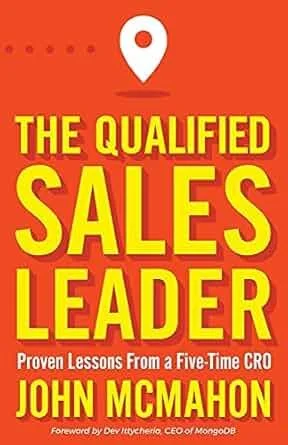
The Qualified Sales Leader
In The Qualified Sales Leader, five-time CRO John McMahon distills decades of enterprise software experience into a masterclass on B2B selling. Using a fictional narrative, he reveals why sales teams consistently miss quotas and how leaders can fix it. By enforcing rigorous qualification through the MEDDPICC framework, shifting focus from technical features to quantifiable business pain, and moving from spreadsheet management to active coaching, leaders can build highly predictable, revenue-generating teams.

Productize
In Productize, CEO and product innovation expert Eisha Armstrong provides a tactical blueprint for transforming bespoke professional services into scalable, tech-enabled products. She argues that relying on custom work fundamentally limits growth and valuation. By avoiding the "Seven Deadly Productization Mistakes" and adopting the Productize Pathway, founders can shift their culture, navigate the fear of cannibalized revenue, and build highly profitable assets that solve urgent, expensive problems.

Never Sit in the Lobby
In Never Sit in the Lobby, veteran executive Glenn Poulos distills three decades of frontline experience into fifty-seven practical rules for sales success. He abandons theoretical dogma in favor of gritty, real-world tactics. By mastering physical presence, ruthless time management, and the art of the perfect pitch, professionals can avoid costly interpersonal mistakes, command respect, and consistently close more high-value deals.

Street Smarts
In Street Smarts, veteran entrepreneur Norm Brodsky and business journalist Bo Burlingham distill decades of company-building experience into a practical guide for founders. They argue that long-term survival relies on ignoring vanity metrics and mastering the fundamentals of cash flow, gross margins, and strategic pricing. By learning to fire bad customers, negotiate quietly, and keep overhead low, founders can build deeply resilient, highly profitable businesses that fund their own growth.

The StorySelling Method
In The StorySelling Method, communication expert Philipp Humm argues that the most effective sales tool is not a feature list, but a well-told story. He provides a practical, step-by-step system for transforming mundane interactions into compelling narratives. By mastering the CCRR framework and five essential story types, professionals can bypass sales resistance, forge genuine connections, and make their message impossible to forget.

Sales Pitch
In Sales Pitch, product positioning expert April Dunford shifts the focus of B2B sales from pushing features to guiding buyers. She argues that complex sales are most often lost to buyer indecision, not direct competitors. By outlining an eight-step narrative framework, Dunford shows teams how to establish market context, evaluate alternatives, and confidently present their differentiated value so customers feel safe saying yes.

Getting to Yes
In Getting to Yes, Roger Fisher and William Ury present the definitive guide to reaching fair agreements without resorting to adversarial posturing or passive surrender. Drawing from the Harvard Negotiation Project, they introduce principled negotiation—a framework built on separating people from the problem, focusing on underlying interests, generating creative options, and relying on objective criteria. It is a timeless blueprint for resolving conflict while preserving valuable relationships.

The Boron Letters
In the 1980s, legendary copywriter Gary Halbert was sent to a federal minimum-security prison. While serving his time, he wrote a series of letters to his youngest son, Bond, distilling everything he knew about direct response marketing, consumer psychology, and living a successful life. The Boron Letters collects this correspondence. Gritty, conversational, and highly practical, it remains one of the most revered texts on how to actually persuade people to buy.

How to Win Friends & Influence People
In How to Win Friends and Influence People, Dale Carnegie codified the modern rules of human relations. Drawing on history, psychology, and his own corporate training courses, he proves that financial success and personal happiness rely far less on technical knowledge than on the ability to handle people. By mastering the art of sincere appreciation, active listening, and avoiding arguments, readers learn to navigate social friction and build immense, lasting influence.

Start With No
In Start with No, expert negotiator Jim Camp completely dismantles the popular "win-win" philosophy. He argues that chasing compromise turns negotiators into needy targets. Instead, Camp provides a system for maintaining emotional control, using open-ended questions to uncover the other party's true pain, and giving them the safety to reject you. By removing the pressure to agree, you build the foundation for a highly profitable, permanent decision.

The Four Steps To The Epiphany
In The Four Steps to the Epiphany, Silicon Valley veteran Steve Blank dismantles the traditional approach to launching a business. He argues that building a product first and searching for buyers later is a recipe for disaster. Instead, he introduces the Customer Development methodology—a rigorous process of testing hypotheses, securing early adopters, and validating your business model before scaling. This dense, highly practical manual laid the exact foundation for the modern Lean Startup movement.

Just Listen
In Just Listen, psychiatrist and business coach Mark Goulston reveals that the secret to influencing anyone is not effective talking, but deep, empathetic listening. He introduces the "Persuasion Cycle," a framework for moving people from resistance to action by first making them feel understood and valued. Through practical techniques used by FBI negotiators, Goulston shows how to disarm defensiveness, bypass emotional roadblocks, and build the trust required for genuine connection and buy-in.

How to Become a Rainmaker
In How to Become a Rainmaker, Jeffrey J. Fox provides a no-nonsense playbook of actionable rules for winning and keeping clients. The book argues that "Rainmakers" are made, not born, through disciplined, customer-focused action. Key principles include only selling to the true decision-maker, "dollarizing" your value proposition to show clear ROI, and never giving a concession without getting one in return. It's a sharp, practical guide for anyone looking to drive revenue and become a top performer.

Everything is Negotiable
In Everything is Negotiable, Gavin Kennedy provides a practical, step-by-step guide to becoming a more effective negotiator. He introduces three styles—Red (aggressive), Blue (cooperative), and Purple (strategic)—and argues for the Purple approach. The core of the book is a four-phase process: Prepare, Debate, Propose, and Bargain. By following this structured framework and always trading concessions with "If...then..." statements, anyone can learn to get a better deal in any situation.