
Creativity, Inc.
Good to Great
Building a Second Brand
The Lean Startup
Blue Ocean Strategy
Leaders Eat Last
The Innovator's Dilemma
Thinking, Fast and Slow
Lean In
The Power of Habit
Four Thousand Weeks
The 5AM Club
Crucial Conversations
The Infinite Game
Never Split the Difference
The First 90 Days
Creativity, Inc. Good to Great Building a Second Brand The Lean Startup Blue Ocean Strategy Leaders Eat Last The Innovator's Dilemma Thinking, Fast and Slow Lean In The Power of Habit Four Thousand Weeks The 5AM Club Crucial Conversations The Infinite Game Never Split the Difference The First 90 Days
Keep your mind fresh with summaries of the best business books
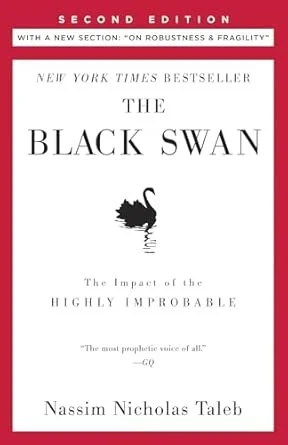
The Black Swan
In The Black Swan, former options trader and philosopher Nassim Nicholas Taleb exposes the severe limitations of human prediction. He argues that history is driven not by predictable trends, but by highly improbable, high-impact events he calls Black Swans. By abandoning flawed bell-curve risk models and adopting a robust "barbell" strategy, professionals can stop acting like the Thanksgiving turkey and learn to survive in an inherently unpredictable world.
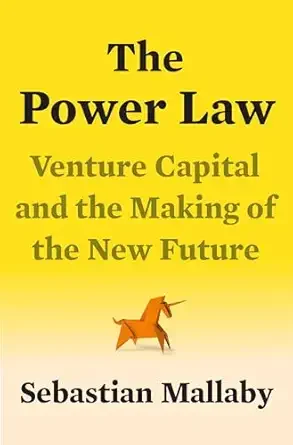
The Power Law
In The Power Law, journalist Sebastian Mallaby tells the history of venture capital and the math that drives it. Returns are not normally distributed. A small number of wild successes dominate everything else, which forces investors to chase asymmetry, build soft moats like brand and network, and stay in the game across cycles. Practical reading for anyone allocating capital under high uncertainty.
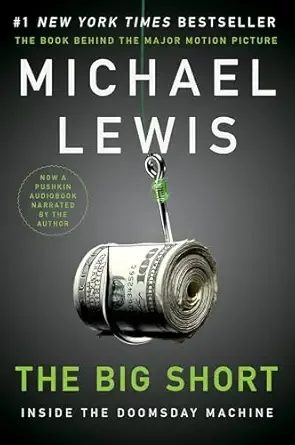
The Big Short
In The Big Short, journalist Michael Lewis tells the story of a handful of investors who saw the 2008 housing crisis coming and bet against the mortgage bond market. The book uses their stories to explain how subprime lending, credit default swaps, and rating agency failures produced the financial crisis. Useful reading for any finance professional trying to understand how markets get things spectacularly wrong.
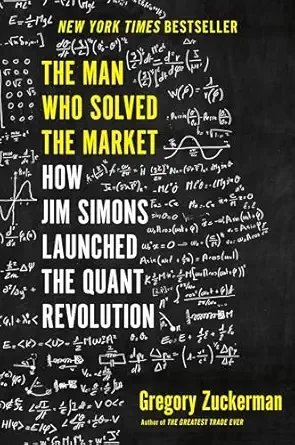
The Man Who Solved the Market
In The Man Who Solved the Market, Wall Street Journal reporter Gregory Zuckerman tells the story of Jim Simons and Renaissance Technologies, the hedge fund whose Medallion Fund produced what may be the greatest investment record in history. The book details how a team of mathematicians and physicists built a quantitative system that beat the market for three decades. Eye-opening reading for anyone curious about how systematic investing actually works.

Rich Dad Poor Dad
In Rich Dad, Poor Dad, Robert Kiyosaki contrasts the financial mindsets of two father figures to show why a paycheck rarely builds wealth. Through plainspoken stories and a blunt asset-versus-liability framework, he argues that financial literacy, owning income-producing assets, and learning to make money work for you matter more than any salary. A classic starter book for anyone ready to step off the earning treadmill.
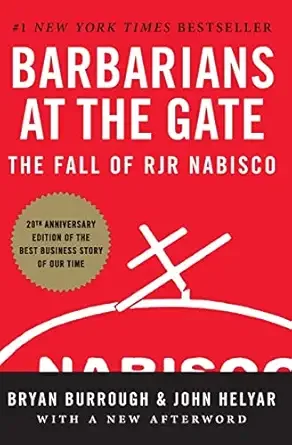
Barbarians at the Gate
In Barbarians at the Gate, journalists Bryan Burrough and John Helyar tell the definitive story of the 1988 battle for RJR Nabisco, the largest leveraged buyout of its era. What began as CEO Ross Johnson's management buyout exploded into a bidding war won by private equity firm KKR. It is an unforgettable portrait of Wall Street ego, greed, and the dealmaking that drove a 25 billion dollar takeover.

The Most Important Thing
In The Most Important Thing, legendary value investor Howard Marks distills four decades of memo-writing at Oaktree Capital into a pragmatic guide to risk-adjusted thinking. He argues that superior results flow less from bold forecasts than from second-level thinking, rigorous price-versus-value discipline, and relentless attention to cycles, probabilities, and psychology. Master these principles—especially the art of risk control—and market turbulence becomes a feature, not a fatal threat.

The Little Book of Common Sense Investing
The Little Book of Common Sense Investing is John C. Bogle’s no-nonsense case for buying the entire U.S. stock market through ultra-low-cost index funds and holding them forever. Backed by iron-clad arithmetic—gross return minus costs equals net return—Bogle shows why most active managers lag the market, how compounding costs devour wealth, and how patient, diversified indexing guarantees investors their fair share of capitalism’s growth.

What I Learned About Investing From Darwin
In What I Learned About Investing from Darwin, Pulak Prasad bridges evolutionary biology and finance to create a radical blueprint for long-term investing. Drawing on the success of his firm, Nalanda Capital, Prasad explains why avoiding catastrophic mistakes matters more than catching every trend, how to select companies with robust historical traits, and why the ultimate strategy for wealth creation is to buy exceptional businesses and simply never sell them.

Your Multimillion-Dollar Exit
In Your Multimillion-Dollar Exit, CPA and attorney Wayne M. Zell provides a comprehensive blueprint for entrepreneurs aiming to sell their companies. He argues that a successful exit requires integrating business valuation, tax strategy, and estate planning long before a transaction occurs. By addressing unexpected transitions, employee retention, and structural risks, Zell offers practical tools to protect your wealth and maximize your company's value on your own terms.

Money: Master The Game
In Money: Master the Game, Tony Robbins distills insights from over 50 financial legends into a 7-step blueprint for financial freedom. The book exposes the wealth-draining impact of hidden mutual fund fees and champions a fiduciary standard of advice. It provides actionable strategies, including a simplified "All-Weather" asset allocation portfolio from billionaire Ray Dalio, designed to help any investor protect their downside, automate their savings, and build a lifetime income plan.
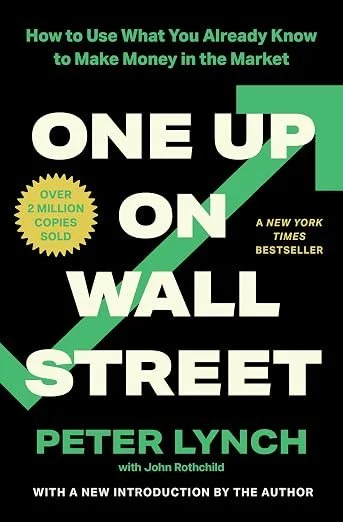
One Up on Wall Street
In One Up On Wall Street, legendary investor Peter Lynch argues that average investors have a built-in advantage over professionals because they can spot promising companies in their everyday lives long before Wall Street does. He champions a "buy what you know" philosophy, but insists it must be followed by rigorous research. The book provides a practical framework for investing, including his famous six categories of stocks, and empowers individual investors to use their own unique knowledge to find "ten-baggers" and beat the market.

Fooling Some of the People All of the Time
In Fooling Some of the People All of the Time, hedge fund manager David Einhorn chronicles his six-year war against Allied Capital, a company he accused of systemic accounting fraud. This real-life financial thriller details how Einhorn used forensic accounting to uncover inflated asset valuations and how he withstood attacks from the company and inaction from regulators. It's a gripping lesson in critical thinking, market skepticism, and the courage required to hold power to account.
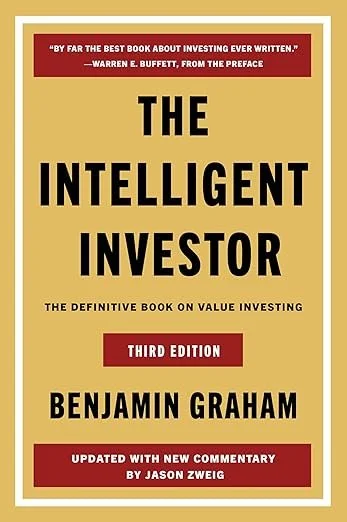
The Intelligent Investor
First published in 1949 and updated regularly since, Benjamin Graham’s The Intelligent Investor is the foundational text of value investing. Graham distinguishes between “investment” and “speculation,” urges a margin-of-safety in every purchase, and personifies market swings as the capricious “Mr. Market.” By focusing on intrinsic value, rigorous analysis, and emotional discipline, he equips both “defensive” and “enterprising” investors to compound wealth while sidestepping ruinous fads and panics.