
Creativity, Inc.
Good to Great
Building a Second Brand
The Lean Startup
Blue Ocean Strategy
Leaders Eat Last
The Innovator's Dilemma
Thinking, Fast and Slow
Lean In
The Power of Habit
Four Thousand Weeks
The 5AM Club
Crucial Conversations
The Infinite Game
Never Split the Difference
The First 90 Days
Creativity, Inc. Good to Great Building a Second Brand The Lean Startup Blue Ocean Strategy Leaders Eat Last The Innovator's Dilemma Thinking, Fast and Slow Lean In The Power of Habit Four Thousand Weeks The 5AM Club Crucial Conversations The Infinite Game Never Split the Difference The First 90 Days
Keep your mind fresh with summaries of the best business books

$100M Offers
$100M Offers is Alex Hormozi's manual for constructing what he calls a Grand Slam Offer: a bundled proposition valuable enough that price comparison with competitors becomes impossible. Built from his experience scaling gyms and later a portfolio of companies, it argues most businesses fail not because their product is poor but because their offer is weak and commoditized. The book supplies a value equation with four levers, a five-step process for building an offer around customer obstacles, and five enhancers covering scarcity, urgency, bonuses, guarantees, and naming.
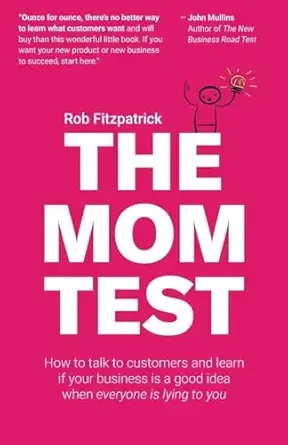
The Mom Test
In The Mom Test, Rob Fitzpatrick offers a deceptively simple guide to customer conversations that actually reveal the truth. Because friends and family will tell you what you want to hear, he provides rules for asking questions so good that even your mom can't lie: talk about their life, not your idea; ask about specific past behavior, not hypotheticals; and listen more than you pitch. It is an essential, practical book for any founder validating an idea.
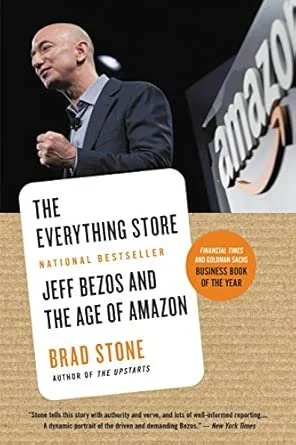
The Everything Store
In The Everything Store, Brad Stone provides the definitive, unvarnished history of Amazon and its relentless founder, Jeff Bezos. Stone reveals how Amazon grew from a scrappy online bookstore into a global juggernaut by relying on a deeply contrarian playbook. By prioritizing extreme customer obsession, decades-long strategic thinking, and a famously ruthless corporate culture, Bezos proved that prioritizing long-term market dominance over short-term profits is the ultimate competitive advantage.
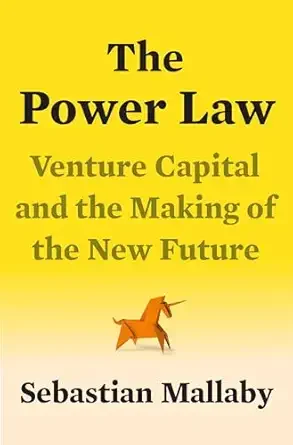
The Power Law
In The Power Law, Sebastian Mallaby traces venture capital from Arthur Rock's 1957 bet on the "traitorous eight" to SoftBank's excesses at WeWork. His argument: VC returns follow a power law, where a handful of grand slams pay for everything else, and that math shapes how the industry thinks, invests, and occasionally blows up. Part history, part defense of a frequently caricatured business.
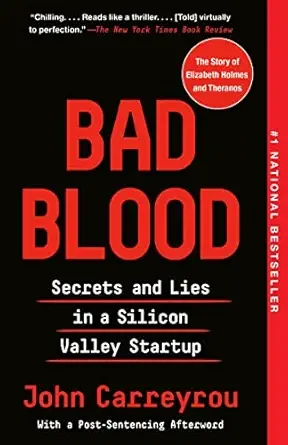
Bad Blood
In Bad Blood, Pulitzer-winning reporter John Carreyrou tells how Theranos, a $9 billion startup built on a blood-testing device that never worked, deceived investors, retailers, and patients for over a decade. Elizabeth Holmes raised hundreds of millions on a promise her own scientists knew was false, then silenced anyone who said so. It is the definitive anatomy of a corporate fraud, and a warning about what belief can hide.
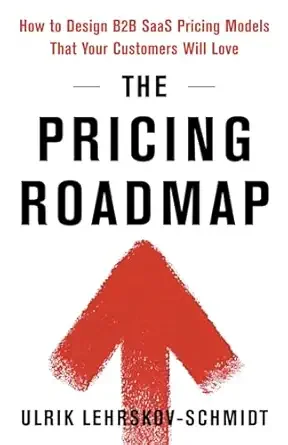
The Pricing Roadmap
In The Pricing Roadmap, B2B SaaS pricing expert Ulrik Lehrskov-Schmidt turns hundreds of real-world redesigns into a step-by-step framework for building pricing that grows revenue without torching customer trust. He shows why structure beats price points, how fencing and laddering shape commercial outcomes, and how to pick metrics, validate changes, and raise prices with confidence. Essential reading for any SaaS operator tired of guessing.

Elon Musk
In Elon Musk, biographer Walter Isaacson follows the SpaceX and Tesla CEO with extensive access over two years, including through his acquisition of Twitter. The book presents an unvarnished portrait of a leader whose drive produces extraordinary engineering achievements alongside significant personal and organizational damage. Worth reading for anyone trying to understand modern technology leadership in its most polarized form.
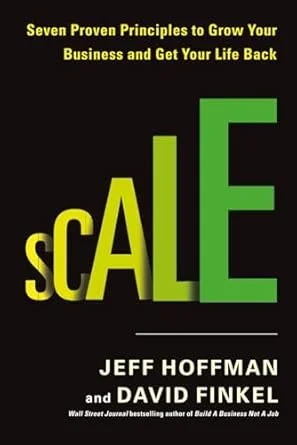
Scale
In Scale, Jeff Hoffman and David Finkel provide a pragmatic roadmap for entrepreneurs looking to grow their businesses without sacrificing their personal lives. By transitioning from a "Level One" startup to a "Level Three" owner-independent company, readers learn to build robust systems, empower teams, and focus on high-leverage strategic work. This summary details the seven principles and five pillars necessary to build a truly scalable, valuable asset.
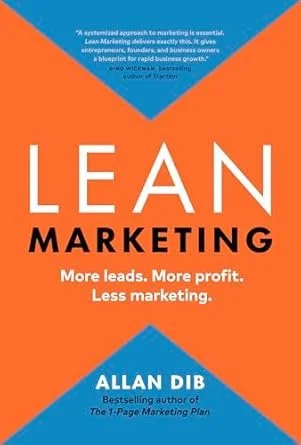
Lean Marketing
In Lean Marketing, Allan Dib applies the principles of lean manufacturing to the world of business growth. He argues that most marketing is bloated and wasteful, urging leaders to focus on "Direct Response" tactics and the "Vital Few" channels that drive ROI. By following his three-phase framework—Before, During, and After—you can automate lead generation and maximize customer lifetime value.
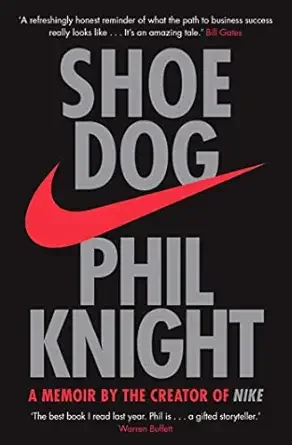
Shoe Dog
In Shoe Dog, Nike founder Phil Knight tells the raw, honest story of building the company from a car-trunk sneaker operation into a global brand. It is less a how-to than a memoir of doubt, debt, and stubborn persistence. Knight shows that entrepreneurship is messy, lonely, and rarely tidy, and that surviving long enough to win often comes down to a simple refusal to quit.
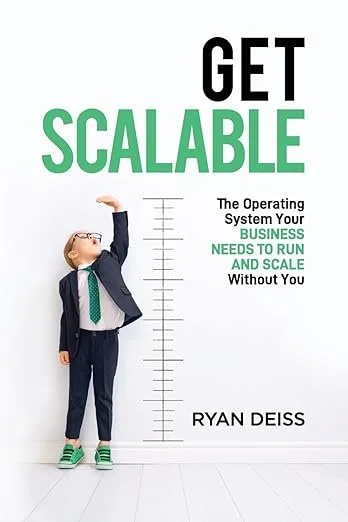
Get Scalable
In Get Scalable, Ryan Deiss provides a pragmatic roadmap for founders trapped by their own success. By implementing a "Scalable Operating System" based on the four core circuits of Strategy, People, Process, and Acceleration, leaders can move from being the bottleneck to the architect. This summary details how to document processes, delegate effectively, and build a business that runs predictably—and profitably—without you.
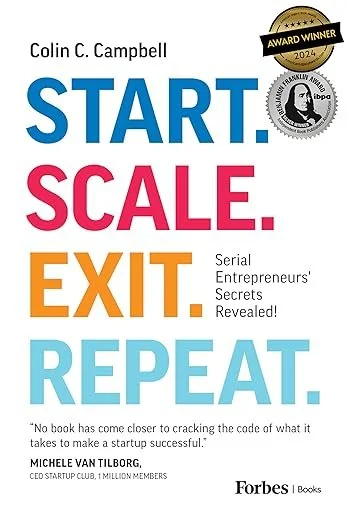
Start. Scale. Exit. Repeat.
In Start. Scale. Exit. Repeat., Colin C. Campbell turns three decades of building and selling internet companies into a four-stage operating manual, each stage examined through story, people, money, and systems. Fifty-eight short chapters cover kill criteria, scaling in orders of magnitude, why customer revenue beats venture capital, and how to time a sale. Practical, granular, and unusually honest about the failures.
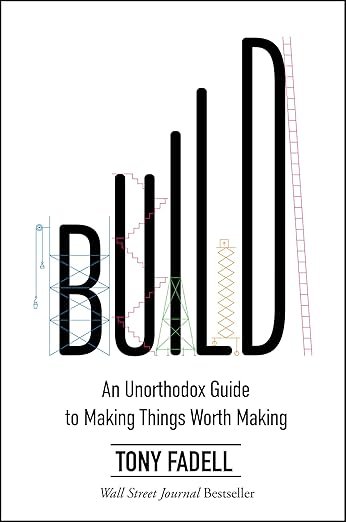
Build
In Build: An Unorthodox Guide to Making Things Worth Making, iPod co-inventor and Nest founder Tony Fadell compresses three decades in Silicon Valley into a blunt, story-rich handbook. From “scratching your own itch” to managing boards, firing bozos, and learning from spectacular failures, Fadell shows builders how to craft world-changing products, assemble cultures that last, and protect their sanity along the way—no MBA jargon, just battle-tested truth.

Famous Nathan
In Famous Nathan, Lloyd Handwerker chronicles the epic rise of his grandfather, an illiterate immigrant who transformed a tiny 1916 Coney Island hot dog stand into a global food empire. The book explores the gritty reality of the American dream, detailing Nathan’s obsession with quality and the subsequent generational clashes that occurred as his sons fought to modernize and franchise the fiercely guarded family business.

The Art of Profitability
In The Art of Profitability, Adrian Slywotzky teaches through fiction: 23 Saturday-morning sessions between a demanding mentor, David Zhao, and Steve Gardner, a young strategist at a struggling conglomerate. Each session unpacks a different profit model, from pyramid pricing to installed-base economics to de facto standards. The argument underneath is simple and uncomfortable: profit does not happen by accident, and most managers can name only one way it happens.

Productize
In Productize, CEO and product innovation expert Eisha Armstrong provides a tactical blueprint for transforming bespoke professional services into scalable, tech-enabled products. She argues that relying on custom work fundamentally limits growth and valuation. By avoiding the "Seven Deadly Productization Mistakes" and adopting the Productize Pathway, founders can shift their culture, navigate the fear of cannibalized revenue, and build highly profitable assets that solve urgent, expensive problems.

Nine-Figure Mindset
In Nine-Figure Mindset, entrepreneur Brandon Dawson maps the difficult psychological transition from exhausted business owner to elite enterprise leader. He argues that scaling past a stagnant revenue ceiling requires abandoning the gritty, do-it-all approach that initially made you successful. By discarding limiting beliefs, building scalable systems, and obsessively developing human capital, founders can break out of survival mode and build a massively profitable organization.

Never Sit in the Lobby
In Never Sit in the Lobby, veteran executive Glenn Poulos distills three decades of frontline experience into fifty-seven practical rules for sales success. He abandons theoretical dogma in favor of gritty, real-world tactics. By mastering physical presence, ruthless time management, and the art of the perfect pitch, professionals can avoid costly interpersonal mistakes, command respect, and consistently close more high-value deals.

The Power of Going All-In
In The Power of Going All-In, serial entrepreneur Brandon Bornancin delivers a practical framework for unleashing your team's ultimate potential. Drawing on his experience building companies to over $150 million in sales, he argues that true leadership requires replacing micromanagement with extreme accountability and servant leadership. Master these principles to inspire top-tier performance, eliminate burnout, and consistently shatter goals.

Influencer
In Influencer, Brittany Hennessy draws from her experience casting creators for major publications to demystify the creator economy. She reveals that online influence is a structured business. By outlining how to build an engaged audience, package a personal brand, and pitch corporate sponsors, she provides a practical roadmap for monetization. Master these principles to turn your social media presence into a sustainable, professional enterprise.