
Elon Musk
by Walter Isaacson
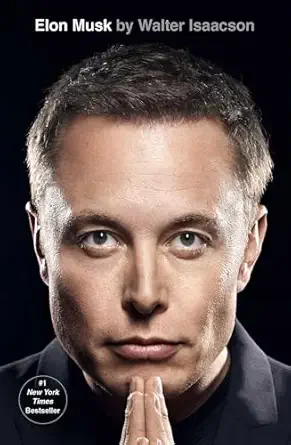
The 60-Second Take
In Elon Musk, biographer Walter Isaacson follows the SpaceX and Tesla CEO with extensive access over two years, including through his acquisition of Twitter. The book presents an unvarnished portrait of a leader whose drive produces extraordinary engineering achievements alongside significant personal and organizational damage. Worth reading for anyone trying to understand modern technology leadership in its most polarized form.
Elon Musk: The Drive That Builds and Breaks
Walter Isaacson has built a career writing biographies of consequential technical and creative figures: Benjamin Franklin, Albert Einstein, Steve Jobs, Leonardo da Vinci. His Elon Musk extends that catalog with the most polarizing subject he has yet tackled. Isaacson followed Musk for two years with unusual access, including through the chaotic acquisition of Twitter, attending engineering reviews, factory walkthroughs, and family events.
The portrait that emerges is neither hagiography nor takedown. Isaacson presents a leader whose intensity produces engineering breakthroughs that nobody else could deliver, alongside organizational and personal patterns that cost real human damage along the way. The book is most useful when both pictures are held in view together.
What You'll Learn
The childhood experiences that shaped Musk's drive and communication style
The specific operating practices behind SpaceX and Tesla's engineering culture
The role of "demon mode" and how it shows up in real time
The decision-making patterns visible in the Twitter acquisition
A measured read on what is transferable and what is not
The Backdrop
Isaacson opens with Musk's South African childhood, including a difficult relationship with his father that emerges as a recurring theme. The biographer is careful not to over-explain everything through this lens, but it is clearly relevant. Musk's drive, his combative communication style, and his oscillation between affection and rage trace back to patterns formed early.
After leaving South Africa, Musk worked his way through Canadian and American universities, sold his first company (Zip2) to Compaq for over $300 million in his twenties, co-founded what became PayPal, and used the proceeds to launch SpaceX and Tesla. The arc is now well-known. What Isaacson adds is the texture of how Musk operated at each stage.
The Engineering Operating System
The most useful chapters describe how Musk runs his engineering organizations. The pattern is consistent across SpaceX, Tesla, and the new ventures.
Algorithm-driven design reviews. Musk has internalized a five-step approach: question every requirement, delete every part possible, simplify, accelerate cycle time, automate. Most engineering teams skip the first three steps and try to automate immediately. Musk insists on the order.
First-principles thinking. When facing a hard problem, Musk strips away assumed constraints and reasons from physics. The famous example is rocket fuel cost, where his analysis showed materials cost was a tiny fraction of finished rocket cost, leading to the SpaceX vertical integration strategy.
Painful cycle time pressure. Musk pushes for compressed schedules that engineering teams initially reject as impossible, then sometimes deliver. The successes feed the model. The failures, including significant ones, are paid in human cost.
Direct shop floor presence. Musk shows up on factory floors and rocket assembly bays personally. He talks to junior engineers, asks why, and removes obstacles in real time. This produces decisions that would otherwise take weeks of meetings.
For operators, the lessons are mixed. The five-step algorithm is transferable. The compressed cycles are difficult to imitate without paying the same human cost. The shop floor presence works if the leader has the technical depth to be useful there, which Musk does in his domains and most imitators do not.
Demon Mode
Isaacson introduces the term "demon mode" early and refers to it throughout. The phrase describes a state Musk enters under pressure, where he becomes combative, cold, and capable of decisions that range from brilliant to destructive. The mode is not occasional. It is a recurring operating state that the people around him learn to recognize and survive.
The biographer is careful to show both sides. Demon mode has produced engineering decisions and product breakthroughs that more measured leadership would not have. It has also driven away talented executives, damaged personal relationships, and produced organizational chaos that delayed projects in ways that calmer leadership would have avoided.
The honest portrait is that Musk's intensity is a tool that cuts both ways. The same energy that produces the Falcon 9 also produces the late-night firings, the public Twitter attacks on employees, and the personal volatility his closest colleagues describe.
The Twitter Acquisition
Isaacson had real-time access during the Twitter acquisition, which makes the chapter unusually detailed. The acquisition itself was unplanned at the price Musk paid. He had attempted to back out and was forced through with the deal by legal pressure. The first months of his ownership involved mass layoffs, public attacks on remaining employees, frequent feature reversals, and rapid loss of advertiser revenue.
From Isaacson's vantage point, the period reveals patterns that were present in Musk's other ventures but had been balanced by stronger operational support. At SpaceX and Tesla, Musk's volatility was channeled through deep engineering operations and capable lieutenants. At Twitter, those structures did not exist, and the volatility came through unmediated.
The lesson for leaders, including any reader thinking about decisive leadership styles, is that intensity requires a supporting structure to be productive. The same drive, without the structure, becomes destructive.
What Transfers and What Does Not
Isaacson is more direct than most business biographers about the limits of his subject as a model. The transferable practices are real.
The five-step engineering algorithm.
First-principles questioning of inherited assumptions.
Direct, immediate presence in the work rather than indirect management.
Willingness to break with industry norms when the physics or economics suggest it.
The practices that do not transfer.
Personal volatility as a management tool. Most leaders who try this produce only the costs without the breakthroughs.
Cycle time pressure as a substitute for capacity. Musk's organizations sometimes catch up. More commonly the pressure produces burnout, fraud, or cut corners.
Direct ownership of public discourse via personal channels. Most leaders do not have Musk's specific platform, and most who attempt it damage rather than build their organizations.
A Quick Start Guide for Operators
Pull these specific lessons from Musk's operating model.
Question every requirement. In your next planning meeting, force the team to defend each spec from first principles. Cut what cannot be defended.
Push the simplification step. Before you optimize a process or product, look for the steps and parts to delete entirely.
Show up where the work happens. A weekly shop floor visit, code review, or customer call changes what you know.
Compress one cycle. Pick a process and challenge the team to cut its cycle time in half. Examine the steps that resist.
Notice your demon mode. Most leaders have a stress state where they make worse decisions. Learn to recognize yours and slow down when it appears.
Final Reflections
Elon Musk is one of the more challenging business biographies in recent memory because the subject is genuinely difficult to evaluate. The achievements are real. The damage is real. Isaacson does not resolve the tension because it cannot be resolved. For readers, the value is in resisting the temptation to either dismiss Musk's methods entirely or to mistake the surface volatility for the actual operating practices that produce results. The lessons available here are sharper than the headlines suggest, but they require a careful read.
Business Floss is reader-supported. When you use our links we may earn an affiliate commission that helps us keep the site running. Thank you for your support!


