
Creativity, Inc.
Good to Great
Building a Second Brand
The Lean Startup
Blue Ocean Strategy
Leaders Eat Last
The Innovator's Dilemma
Thinking, Fast and Slow
Lean In
The Power of Habit
Four Thousand Weeks
The 5AM Club
Crucial Conversations
The Infinite Game
Never Split the Difference
The First 90 Days
Creativity, Inc. Good to Great Building a Second Brand The Lean Startup Blue Ocean Strategy Leaders Eat Last The Innovator's Dilemma Thinking, Fast and Slow Lean In The Power of Habit Four Thousand Weeks The 5AM Club Crucial Conversations The Infinite Game Never Split the Difference The First 90 Days
Keep your mind fresh with summaries of the best business books
Losing The Signal
Losing the Signal is Jacquie McNish and Sean Silcoff's inside account of Research In Motion, the Waterloo company that turned a pocket email device into the tool of choice for presidents and CEOs, then watched its grip on the U.S. smartphone market slip from half to almost nothing. Drawing on interviews with executives, directors, and rivals, the two Globe and Mail journalists trace the partnership between engineer Mike Lazaridis and dealmaker Jim Balsillie, the carrier relationships that made BlackBerry thrive, and the distractions, rushed products, and leadership rifts that left it unprepared when Apple and Google rewrote the rules.
The Box
The Box is Marc Levinson's history of the shipping container and the economic transformation it produced. Its central argument is that the container was not an invention so much as a system: standardized dimensions, purpose-built ships, redesigned ports, compatible trucks and rail, and labor agreements, all of which had to arrive together before any of it worked. Levinson traces Malcom McLean's role, the standardization fights, the union negotiations, the Vietnam logistics contract that proved the concept, and the resulting collapse of historic port cities alongside the rise of global supply chains.
Chip War
In Chip War, economic historian Chris Miller traces how a sliver of silicon became the resource that determines who holds power. From Bell Labs and Cold War missile guidance to Morris Chang's foundry model and ASML's lithography monopoly, he shows how a globe-spanning supply chain quietly concentrated into a few irreplaceable chokepoints, and why Taiwan now sits at the center of the rivalry between Washington and Beijing.
Supremacy
In Supremacy, technology journalist Parmy Olson chronicles the high-stakes rivalry between OpenAI and DeepMind. She reveals how the noble quest to build artificial general intelligence devolved into a cutthroat proxy war between tech monopolies. By tracing the paths of Sam Altman and Demis Hassabis, Olson exposes how massive computing costs forced idealistic founders to compromise their safety principles, prioritizing rapid commercialization over the public good.
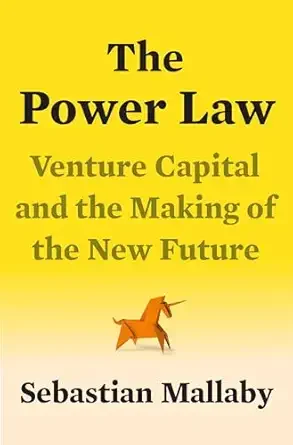
The Power Law
In The Power Law, Sebastian Mallaby traces venture capital from Arthur Rock's 1957 bet on the "traitorous eight" to SoftBank's excesses at WeWork. His argument: VC returns follow a power law, where a handful of grand slams pay for everything else, and that math shapes how the industry thinks, invests, and occasionally blows up. Part history, part defense of a frequently caricatured business.
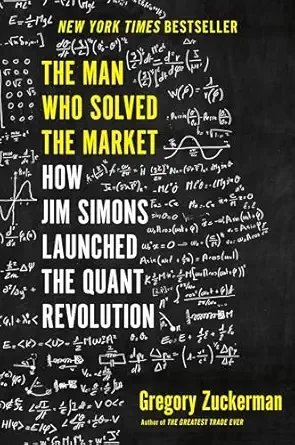
The Man Who Solved the Market
In The Man Who Solved the Market, Wall Street Journal reporter Gregory Zuckerman tells the story of Jim Simons and Renaissance Technologies, the hedge fund whose Medallion Fund produced what may be the greatest investment record in history. The book details how a team of mathematicians and physicists built a quantitative system that beat the market for three decades. Eye-opening reading for anyone curious about how systematic investing actually works.

Famous Nathan
In Famous Nathan, Lloyd Handwerker chronicles the epic rise of his grandfather, an illiterate immigrant who transformed a tiny 1916 Coney Island hot dog stand into a global food empire. The book explores the gritty reality of the American dream, detailing Nathan’s obsession with quality and the subsequent generational clashes that occurred as his sons fought to modernize and franchise the fiercely guarded family business.

Pinpoint
In Pinpoint, journalist Greg Milner explores the history and profound impact of the Global Positioning System. Originally designed by the United States military to guide precision weaponry, GPS quietly became the invisible infrastructure powering the modern world. From synchronizing financial markets and electrical grids to altering human cognition and spatial awareness, Milner details how our reliance on this single, fragile network has fundamentally transformed technology, culture, and our minds.

Age of Discovery
In Age of Discovery, Ian Goldin and Chris Kutarna argue that our current era of globalization and technological explosion represents a Second Renaissance. Just as Gutenberg’s press and global exploration birthed immense genius and devastating upheaval five centuries ago, today's hyper-connected world brings both unprecedented prosperity and fragile systemic risks. To survive, leaders must embrace bold innovation while managing the inevitable social backlash of rapid change.

How Soccer Explains the World
In How Soccer Explains the World, journalist Franklin Foer uses humanity's most popular sport to test the optimistic promises of globalization. Traveling from the violent terraces of Serbia to the suburban fields of America, he reveals how global capitalism failed to erase tribalism, nationalism, and corruption. Instead, the beautiful game exposes how fiercely people cling to local identities and sectarian divides in a rapidly integrating world.