
Creativity, Inc.
Good to Great
Building a Second Brand
The Lean Startup
Blue Ocean Strategy
Leaders Eat Last
The Innovator's Dilemma
Thinking, Fast and Slow
Lean In
The Power of Habit
Four Thousand Weeks
The 5AM Club
Crucial Conversations
The Infinite Game
Never Split the Difference
The First 90 Days
Creativity, Inc. Good to Great Building a Second Brand The Lean Startup Blue Ocean Strategy Leaders Eat Last The Innovator's Dilemma Thinking, Fast and Slow Lean In The Power of Habit Four Thousand Weeks The 5AM Club Crucial Conversations The Infinite Game Never Split the Difference The First 90 Days
Keep your mind fresh with summaries of the best business books

The Box
The Box is Marc Levinson's history of the shipping container and the economic transformation it produced. Its central argument is that the container was not an invention so much as a system: standardized dimensions, purpose-built ships, redesigned ports, compatible trucks and rail, and labor agreements, all of which had to arrive together before any of it worked. Levinson traces Malcom McLean's role, the standardization fights, the union negotiations, the Vietnam logistics contract that proved the concept, and the resulting collapse of historic port cities alongside the rise of global supply chains.
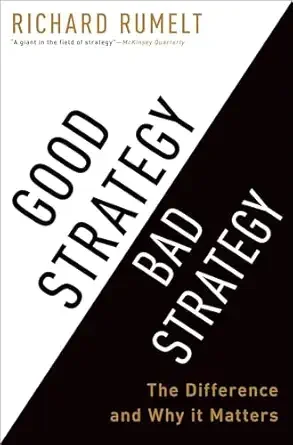
Good Strategy Bad Strategy
In Good Strategy Bad Strategy, UCLA professor Richard Rumelt takes one of business's most abused words and gives it a spine. Most of what organizations call strategy, he argues, is ambition in disguise: goals, slogans, and template mission statements that never name the actual obstacle. Real strategy has a structure he calls the kernel, built from an honest diagnosis, a guiding policy, and coherent actions that reinforce one another. Drawing on Sam Walton, Nvidia, Apple's 1997 turnaround, and Desert Storm, Rumelt shows why focus beats ambition and why the hardest part of strategy is deciding what not to do.
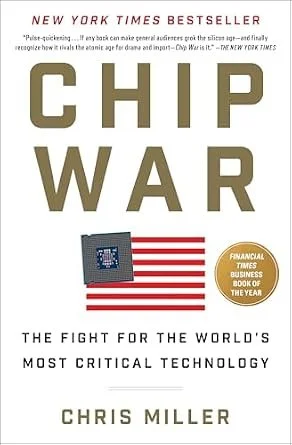
Chip War
In Chip War, economic historian Chris Miller traces how a sliver of silicon became the resource that determines who holds power. From Bell Labs and Cold War missile guidance to Morris Chang's foundry model and ASML's lithography monopoly, he shows how a globe-spanning supply chain quietly concentrated into a few irreplaceable chokepoints, and why Taiwan now sits at the center of the rivalry between Washington and Beijing.
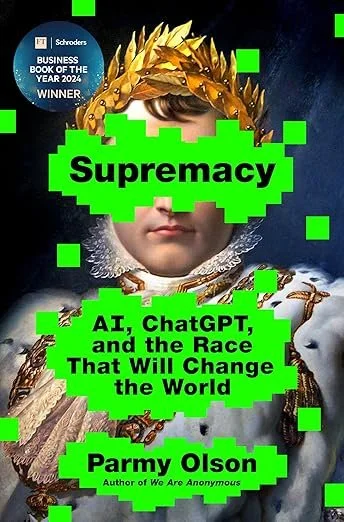
Supremacy
In Supremacy, technology journalist Parmy Olson chronicles the high-stakes rivalry between OpenAI and DeepMind. She reveals how the noble quest to build artificial general intelligence devolved into a cutthroat proxy war between tech monopolies. By tracing the paths of Sam Altman and Demis Hassabis, Olson exposes how massive computing costs forced idealistic founders to compromise their safety principles, prioritizing rapid commercialization over the public good.
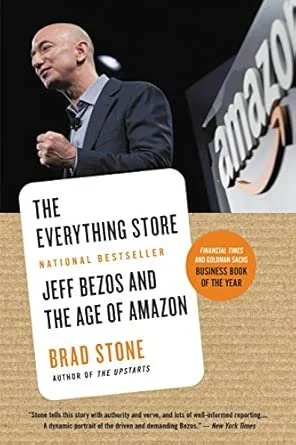
The Everything Store
In The Everything Store, Brad Stone provides the definitive, unvarnished history of Amazon and its relentless founder, Jeff Bezos. Stone reveals how Amazon grew from a scrappy online bookstore into a global juggernaut by relying on a deeply contrarian playbook. By prioritizing extreme customer obsession, decades-long strategic thinking, and a famously ruthless corporate culture, Bezos proved that prioritizing long-term market dominance over short-term profits is the ultimate competitive advantage.
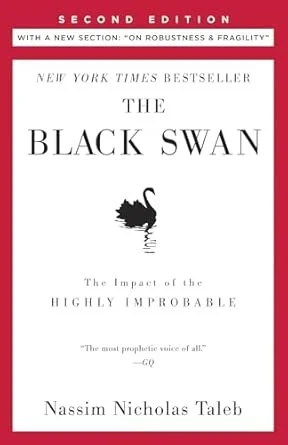
The Black Swan
In The Black Swan, former options trader and philosopher Nassim Nicholas Taleb exposes the severe limitations of human prediction. He argues that history is driven not by predictable trends, but by highly improbable, high-impact events he calls Black Swans. By abandoning flawed bell-curve risk models and adopting a robust "barbell" strategy, professionals can stop acting like the Thanksgiving turkey and learn to survive in an inherently unpredictable world.
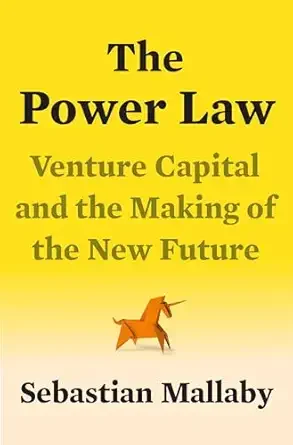
The Power Law
In The Power Law, Sebastian Mallaby traces venture capital from Arthur Rock's 1957 bet on the "traitorous eight" to SoftBank's excesses at WeWork. His argument: VC returns follow a power law, where a handful of grand slams pay for everything else, and that math shapes how the industry thinks, invests, and occasionally blows up. Part history, part defense of a frequently caricatured business.
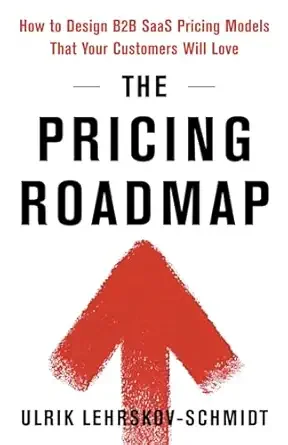
The Pricing Roadmap
In The Pricing Roadmap, B2B SaaS pricing expert Ulrik Lehrskov-Schmidt turns hundreds of real-world redesigns into a step-by-step framework for building pricing that grows revenue without torching customer trust. He shows why structure beats price points, how fencing and laddering shape commercial outcomes, and how to pick metrics, validate changes, and raise prices with confidence. Essential reading for any SaaS operator tired of guessing.

Corporate Turnaround
In Corporate Turnaround, Stuart Slatter and David Lovett provide a rigorous framework for rescuing companies from the brink of insolvency. They argue that management denial is the primary cause of failure and that recovery requires immediate crisis stabilization, where cash is prioritized over profit. By replacing leadership, strictly managing stakeholders, and implementing a "shrink to
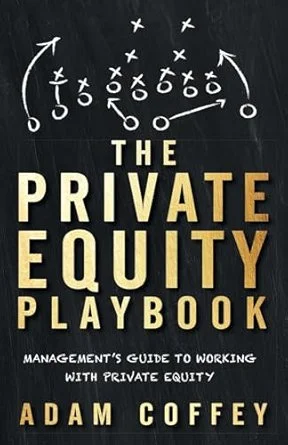
The Private Equity Playbook
In The Private Equity Playbook, seasoned CEO Adam Coffey demystifies the world of private equity, transforming it from a feared industry into a tool for massive wealth creation. He guides entrepreneurs through the "Three Bites of the Apple" strategy—selling a majority stake while rolling equity for a second, larger exit. By explaining how to maximize adjusted EBITDA, choose the right PE partner, and navigate the high-speed growth of a hold period, Coffey provides a tactical roadmap for founders to secure their financial future.

Moneyball
In Moneyball, Michael Lewis details how the Oakland Athletics used data-driven "Sabermetrics" to outplay wealthier opponents. By valuing undervalued traits like On-Base Percentage over traditional "scouting" metrics, Billy Beane proved that market inefficiencies are everywhere. This summary explores how business leaders can use data arbitrage to identify hidden talent, overcome subjective bias, and achieve elite results on a budget.
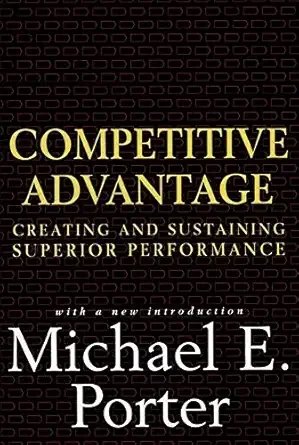
Competitive Advantage
In Competitive Advantage, Michael Porter argues that lasting profitability comes from one of three deliberate strategies, cost leadership, differentiation, or focus, and almost never from a blend of all three. Using the value chain to dissect a business into discrete activities, he shows where real advantage is built and why most companies leak margin without realizing it. The strategist's bible for a reason.
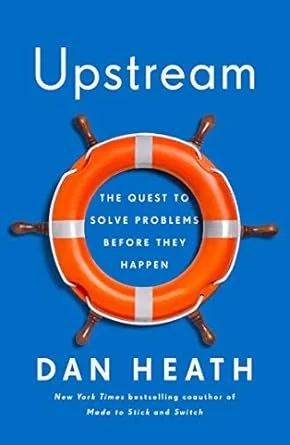
Upstream
In Upstream, Dan Heath challenges the business obsession with reactive problem-solving, urging leaders to prevent fires rather than just fighting them. He identifies the psychological barriers to prevention—Problem Blindness, Lack of Ownership, and Tunneling—and provides a framework for systemic intervention. By leveraging data, aligning stakeholders, and altering environmental levers, you can stop "handling" recurring issues and finally solve them at the source.
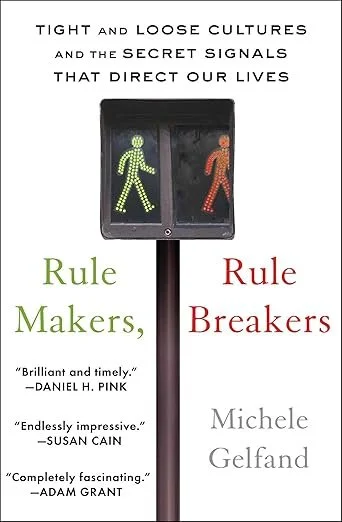
Rule Makers, Rule Breakers
In Rule Makers, Rule Breakers, Michele Gelfand reveals the hidden "tight-loose" code that governs human behavior across nations and boardrooms. She explains how perceived threats drive cultures to embrace strict rules, while safety fosters permissiveness. By mastering the "Goldilocks Principle" of cultural balance, leaders can bridge cultural divides, prevent failed mergers, and build teams that are both disciplined and creative.
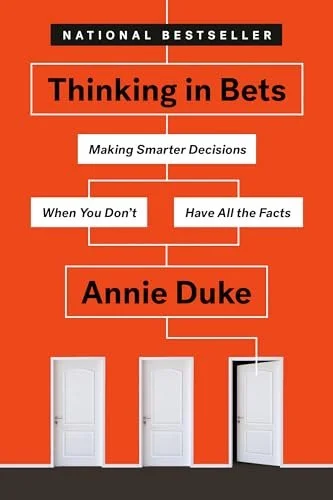
Thinking in Bets
In Thinking in Bets, Annie Duke leverages her experience as a world-class poker player to teach professionals how to navigate a world of uncertainty. By avoiding the "resulting" trap—judging decisions by their outcomes—and embracing probabilistic thinking, readers learn to make more objective, less emotional choices. This summary provides the tools to build "truth-seeking" cultures and turn hidden risks into calculated advantages.

In Search of Excellence
In "In Search of Excellence," Tom Peters and Robert H. Waterman Jr. reveal eight enduring attributes of America's best-run companies. This summary highlights their focus on action, customer obsession, employee empowerment, and strong, lived values. Discover how these principles, often overlooked in favor of complex strategies, drive sustained success and foster a culture of innovation and adaptability.
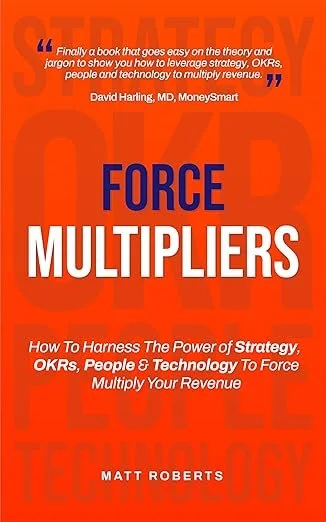
Force Multipliers
Feeling stuck with slow, linear growth? "Force Multipliers" by Tony D'Anna provides a blueprint for exponential revenue growth by systemically aligning four key areas: Strategy, OKRs, People, and Technology. This summary details how to move beyond siloed efforts and create a powerful, interconnected engine where each component amplifies the others, transforming your business from a simple machine into a true growth multiplier.

The 48 Laws of Power
In The 48 Laws of Power, Robert Greene distills three thousand years of court intrigue into 48 blunt rules, illustrated by Machiavelli, Talleyrand, Bismarck, and a supporting cast of con artists. Amoral by design and contradictory in places, it remains the sharpest available catalogue of how influence actually operates. Best used to recognize the game being played on you.

Friend & Foe
In Friend & Foe, social psychologists Adam Galinsky and Maurice Schweitzer argue that humans are fundamentally wired to be both cooperative and competitive. Drawing on behavioral research, they show how the most successful people navigate this constant tension. From building trust through strategic vulnerability to understanding how power blinds us to other perspectives, the authors offer a practical guide for mastering the complex balance of our dual nature.

The Long Tail
"The Long Tail" by Chris Anderson reveals the transformative power of niche markets in the digital age, driven by the democratization of production, distribution, and consumer empowerment. The book explores the potential of catering to diverse customer segments, emphasizing personalization, recommendation systems, and adapting to new market dynamics. By understanding and leveraging the long tail, businesses can unlock opportunities for growth, innovation, and customer engagement.