
Moneyball
The Art of Winning an Unfair Game
by Michael Lewis
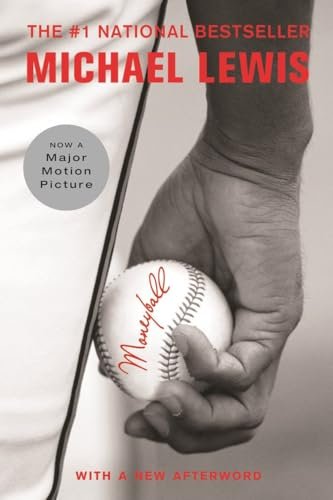
“One of the best baseball—and management—books out… Deserves a place in the Baseball Hall of Fame.”
Outthinking the Giants: How Data Arbitrage Wins the Market
Imagine you are running a mid-sized marketing firm with a fraction of the budget of your largest competitor. While they are outspending you ten-to-one on celebrity influencers and prime-time ad slots, you are struggling to keep your best talent from being poached. In a traditional world, you lose. You are the "small market" team, destined to be a farm system for the elite. But what if the elite are actually paying for the wrong things? What if the traits they value—the prestigious degrees, the "charismatic" interview style, the industry pedigree—have almost zero correlation with the actual results that drive profit?
In his 2003 masterpiece Moneyball, Michael Lewis chronicles the true story of Billy Beane, the General Manager of the Oakland Athletics, who faced exactly this dilemma. With a payroll that was a pittance compared to the New York Yankees, Beane couldn't afford to buy stars. Instead, he had to buy wins. By using a rigorous, data-driven approach to identify undervalued traits in players, Beane didn't just compete; he changed the game forever. This summary isn't just about baseball; it is a masterclass in identifying market inefficiencies, overcoming institutional bias, and using logic to disrupt an industry that is stuck in its ways.
What You'll Learn
The Arbitrage Mindset: How to find high-value assets that your competitors have mistakenly labeled as "junk."
Overcoming Subjective Bias: Why your "gut feeling" about a candidate or a project is likely costing you millions.
The Power of the Correct Metric: Why focusing on the wrong Key Performance Indicators (KPIs) leads to expensive failure.
Challenging the "Expert" Class: How to disrupt legacy industries by questioning the traditional wisdom of the "old guard."
Resource Optimization: Strategies for achieving elite-level output with a "small market" budget.
The Flaw in the System: Why "Experts" Get it Wrong
Before Billy Beane and his chief analyst, Paul DePodesta, revolutionized the front office, baseball scouting was a world of "eye tests." Scouts—mostly former players—traveled the country looking for young men who "looked the part." They wanted the kid with the athletic build, the fast legs, and the "good face." They were looking for the next superstar who fit the archetype of a hero.
The problem? Most of those "heroic-looking" kids failed. They looked like ballplayers, but they couldn't actually play ball at a professional level. Meanwhile, players who were overweight, had "ugly" pitching motions, or lacked speed were ignored, even if they were consistently winning games at the amateur level.
Beane realized that the entire industry was pricing players based on aesthetics and potential rather than actual performance. In business terms, this is a massive market inefficiency. If everyone is fighting over the "Ivy League graduate with the perfect handshake," the price of that candidate sky-tours. However, if you find the "state school graduate with a 4.0 and a weird hobby" who produces the same technical output, you have found an undervalued asset.
Core Concepts Defined
Sabermetrics: The specialized statistical analysis of baseball data, used to determine why teams win and lose.
Market Inefficiency: A situation where the price of an asset (or employee) does not accurately reflect its true value.
On-Base Percentage (OBP): A metric that measures how often a hitter avoids making an out. Beane valued this above all else because you cannot score if you are "out."
The "Eye Test": Subjective evaluation based on appearance, charisma, or traditional "pedigree" rather than objective data.
Arbitrage: The simultaneous purchase and sale of an asset to profit from a difference in the price. In Moneyball, this means selling overvalued "stars" and buying undervalued "stat-fillers."
Identify Market Inefficiency: The Hunt for the "Broken" Asset
The most famous micro-story in Moneyball is the recruitment of Scott Hatteberg. In the eyes of every other team, Hatteberg was a "broken" catcher who could no longer throw the ball to second base due to a nerve injury. His career was effectively over.
But Beane didn't need a catcher. He needed a guy who didn't get out.
The data showed that Hatteberg had an elite ability to draw walks and hit for a high on-base percentage. Beane signed him for a bargain-basement salary and taught him to play first base. Hatteberg didn't "look" like a superstar, and he certainly didn't fit the traditional mold of a power-hitting first baseman. But he did exactly what the team needed to win games. He was a high-value asset hidden behind a "broken" exterior.
In your professional life, where is your Scott Hatteberg? Perhaps it is a software tool that isn't "trendy" but gets the job done at half the cost. Or maybe it is a hiring pool that other companies ignore because they don't have a specific certification, even though their portfolio proves they have the skill. When you stop looking for "the look" and start looking for the "outcome," you find value that others are literally throwing away.
Data Over Gut Feeling: The Power of Objective Metrics
For decades, the most valued stat in baseball was "Batting Average." It sounds logical—you want people who hit the ball. But Beane and his team realized that Batting Average was a "noisy" metric. It didn't account for walks, and it didn't reflect a player’s ability to wear down a pitcher.
They shifted their entire focus to On-Base Percentage (OBP) and Slugging Percentage. They realized that the goal of an offense is not "to hit," but "to not make outs." Every out is a precious resource; once you use 27 of them, the game is over.
This is a profound lesson for any manager. Often, we track "Vanity Metrics"—things like social media followers, total emails sent, or hours worked. These feel good, but do they correlate with the win?
Does a high number of leads matter if the conversion rate is zero?
Does a "prestigious" partnership matter if it doesn't drive revenue?
By ruthlessly pruning your metrics down to the ones that actually correlate with "wins" (profit, retention, efficiency), you gain a massive advantage over competitors who are still chasing "vanity."
The Moneyball Methodology for Managers
Question the "Why": Why do we value this specific trait in our hires? Is it because it works, or because "that's how it's always been done"?
Seek the Objective: Replace "I have a good feeling about this" with "The data from the pilot program shows a 12% lift."
Ignore the Noise: Don't get distracted by a candidate's charisma or a vendor's glossy brochure. Look at the "On-Base Percentage" of their past performance.
Buy the Skill, Not the Person: Don't try to replace a "superstar" who left your company. Replace the functions and outputs that person provided, often using two or three smaller, more affordable assets.
Challenging the Old Guard: Dealing with the Resistance
When Billy Beane started implementing these changes, the "Old Guard"—the scouts and traditionalists—nearly revolted. They felt their "wisdom" was being insulted by a kid with a laptop. They argued that "you can't put heart and soul into a computer."
This is the "Change Management" hurdle. Whenever you use data to disrupt a traditional process, you will face emotional resistance. People who have spent thirty years trusting their gut do not want to be told that their gut is a biased, unreliable instrument.
Beane's strategy was not to argue, but to execute. He fired the head of scouting. He traded away the players the manager wanted to play, forcing the manager to use the "undervalued" players the data supported. He realized that you cannot talk people into a new mindset; you have to build a system that makes the old mindset impossible to maintain.
Quick Start Guide: Implementing Moneyball in Your Business
Audit Your KPIs: List your top 5 business metrics. For each one, ask: "If this number goes up, does it guarantee we make more money/save more time?" If not, find a better metric.
Blind the Interview Process: When hiring, remove names, photos, and university titles from resumes before the first review. Focus purely on the skills and performance data.
Identify Your "Cheap Wins": What is a task in your department that is currently being done by a high-paid "star" but could be automated or handled by a more specialized, lower-cost resource?
Run a "Small Sample" Test: Before a full-scale launch, run a data-driven pilot. Use the results of that pilot to "bet" on the larger project, just as Beane used minor league stats to predict major league success.
Celebrate the "Unsexy" Win: Reward employees who produce consistent, quiet results (the walks) rather than just those who have the occasional "home run" but high "strikeout" rates.
Final Reflections
Moneyball is far more than a sports story; it is a fundamental text on the power of rational thinking in an irrational world. Michael Lewis shows us that even in an industry as entrenched as Major League Baseball, there is always room for a "Rule Breaker" to find a better way. The core takeaway is that the "experts" are often just people repeating the mistakes of the past with more confidence. By focusing on objective data, identifying undervalued assets, and having the courage to ignore the "eye test," you can compete with the giants and win. The game isn't about having the most money; it’s about having the most information and the discipline to act on it.
Business Floss is reader-supported. When you use our links we may earn an affiliate commission that helps us keep the site running. Thank you for your support!


