
Creativity, Inc.
Good to Great
Building a Second Brand
The Lean Startup
Blue Ocean Strategy
Leaders Eat Last
The Innovator's Dilemma
Thinking, Fast and Slow
Lean In
The Power of Habit
Four Thousand Weeks
The 5AM Club
Crucial Conversations
The Infinite Game
Never Split the Difference
The First 90 Days
Creativity, Inc. Good to Great Building a Second Brand The Lean Startup Blue Ocean Strategy Leaders Eat Last The Innovator's Dilemma Thinking, Fast and Slow Lean In The Power of Habit Four Thousand Weeks The 5AM Club Crucial Conversations The Infinite Game Never Split the Difference The First 90 Days
Keep your mind fresh with summaries of the best business books
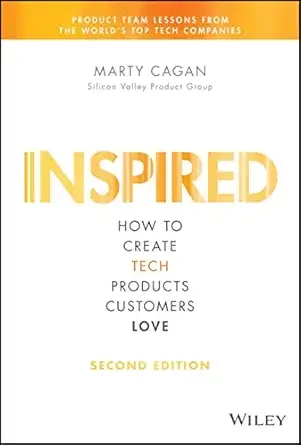
Inspired
Inspired is Marty Cagan's account of how strong product organizations actually operate, drawn from decades at eBay, HP, and Netscape and years advising companies through the Silicon Valley Product Group. Its central distinction is between feature teams that receive specifications and empowered teams that receive problems. The book covers the four risks discovery exists to eliminate, why discovery and delivery run in parallel rather than in sequence, the case against feature roadmaps, and what the product manager, designer, and engineering lead each actually contribute.
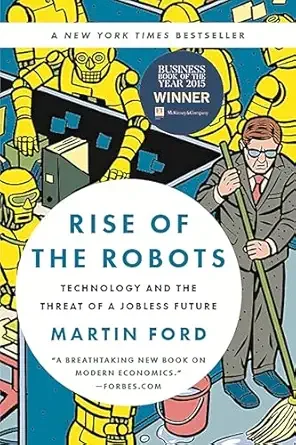
Rise of the Robots
Rise of the Robots is Martin Ford's argument that this wave of automation differs from previous ones in ways that matter economically. A software entrepreneur, Ford contends that information technology functions as a general-purpose capability rather than a task-specific tool, that it increasingly targets educated white-collar work rather than only routine manual labor, and that seven observable economic trends already show the strain. He argues more education won't solve it, that mass automation eventually undermines the consumer demand it depends on, and that a guaranteed basic income deserves serious consideration.
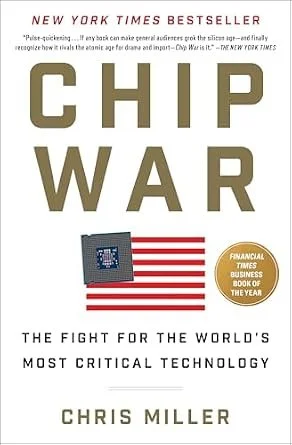
Chip War
In Chip War, economic historian Chris Miller traces how a sliver of silicon became the resource that determines who holds power. From Bell Labs and Cold War missile guidance to Morris Chang's foundry model and ASML's lithography monopoly, he shows how a globe-spanning supply chain quietly concentrated into a few irreplaceable chokepoints, and why Taiwan now sits at the center of the rivalry between Washington and Beijing.
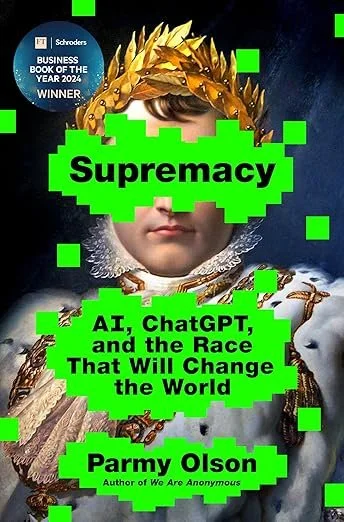
Supremacy
In Supremacy, technology journalist Parmy Olson chronicles the high-stakes rivalry between OpenAI and DeepMind. She reveals how the noble quest to build artificial general intelligence devolved into a cutthroat proxy war between tech monopolies. By tracing the paths of Sam Altman and Demis Hassabis, Olson exposes how massive computing costs forced idealistic founders to compromise their safety principles, prioritizing rapid commercialization over the public good.
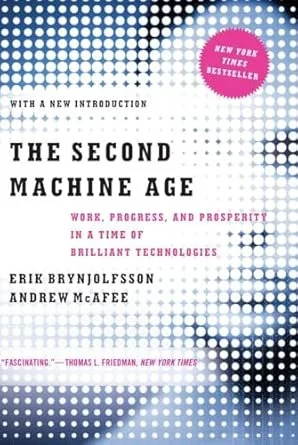
The Second Machine Age
In The Second Machine Age, MIT researchers Erik Brynjolfsson and Andrew McAfee explain how digital technologies are doing for human brainpower what the steam engine did for muscle power. While this era promises unprecedented abundance, it also creates severe economic inequality by hollowing out routine jobs. To thrive, professionals must stop competing against computers and learn to race alongside them by mastering ideation, complex communication, and large-frame pattern recognition.
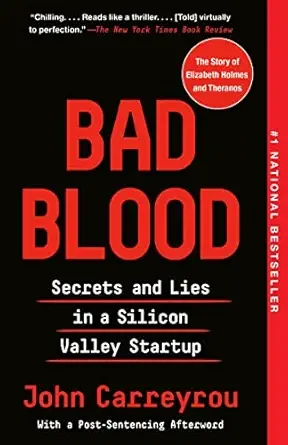
Bad Blood
In Bad Blood, Pulitzer-winning reporter John Carreyrou tells how Theranos, a $9 billion startup built on a blood-testing device that never worked, deceived investors, retailers, and patients for over a decade. Elizabeth Holmes raised hundreds of millions on a promise her own scientists knew was false, then silenced anyone who said so. It is the definitive anatomy of a corporate fraud, and a warning about what belief can hide.
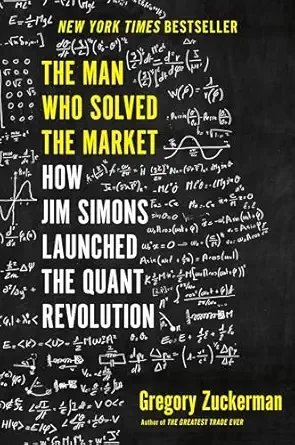
The Man Who Solved the Market
In The Man Who Solved the Market, Wall Street Journal reporter Gregory Zuckerman tells the story of Jim Simons and Renaissance Technologies, the hedge fund whose Medallion Fund produced what may be the greatest investment record in history. The book details how a team of mathematicians and physicists built a quantitative system that beat the market for three decades. Eye-opening reading for anyone curious about how systematic investing actually works.
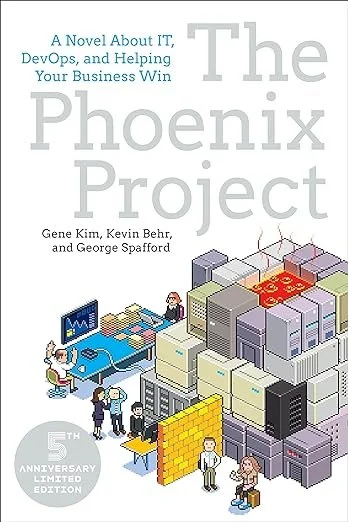
The Phoenix Project
In The Phoenix Project, Gene Kim, Kevin Behr, and George Spafford use a fictional narrative to illustrate the core principles of DevOps. Following an overwhelmed IT manager tasked with saving a failing corporate initiative, the book demonstrates how applying lean manufacturing concepts to technology can eliminate silos, manage unplanned work, and align IT with broader business goals to transform a chaotic department into a competitive advantage.

Hooked
In Hooked, Nir Eyal decodes the psychological mechanics behind the world's most engaging technologies. He introduces the Hook Model, a four-step framework—Trigger, Action, Variable Reward, and Investment—that companies use to manufacture desire and turn casual users into daily devotees. Master these principles, and you can build ethical, habit-forming products that solve real problems and keep users coming back without relying on expensive marketing.

Pinpoint
In Pinpoint, journalist Greg Milner explores the history and profound impact of the Global Positioning System. Originally designed by the United States military to guide precision weaponry, GPS quietly became the invisible infrastructure powering the modern world. From synchronizing financial markets and electrical grids to altering human cognition and spatial awareness, Milner details how our reliance on this single, fragile network has fundamentally transformed technology, culture, and our minds.

The Ethics of Invention
In The Ethics of Invention, Harvard professor Sheila Jasanoff explores how technology rules society as powerfully as written law. By dismantling the pervasive myths of technological determinism and technocracy, she reveals how delegating decisions to engineers and data oligarchs endangers democracy. Jasanoff provides a compelling framework for treating innovation not as an inevitable, amoral force, but as a deeply political process requiring urgent democratic oversight.

The SaaS Playbook
In The SaaS Playbook, serial entrepreneur Rob Walling dismantles the Silicon Valley myth that software startups require venture capital to survive. Drawing on his experience launching and acquiring multiple bootstrapped companies, Walling provides a tactical manual for building a multimillion-dollar software-as-a-service (SaaS) business. He covers everything from achieving product-market fit and optimizing pricing tiers to tracking essential metrics and navigating the psychological challenges of self-funding a sustainable company.

Zero To One
In Zero to One, PayPal co-founder and venture capitalist Peter Thiel challenges almost every accepted dogma of the Silicon Valley startup ecosystem. Blending philosophy with ruthless business strategy, he argues that the greatest companies do not copy existing models; they create entirely new markets. By pursuing secrets, rejecting the cult of extreme iteration, and deliberately building creative monopolies, founders can escape the margin-destroying trap of competition and invent the future.

Don’t Make Me Think
In Don't Make Me Think, usability expert Steve Krug provides a masterclass in intuitive web design. He argues that users do not read pages carefully; they scan them ruthlessly. By understanding how people actually behave online, designers can eliminate cognitive friction, embrace web conventions, and create digital experiences that allow users to accomplish their goals without expending unnecessary mental energy. It remains the definitive, common-sense guide to making things easy to use.
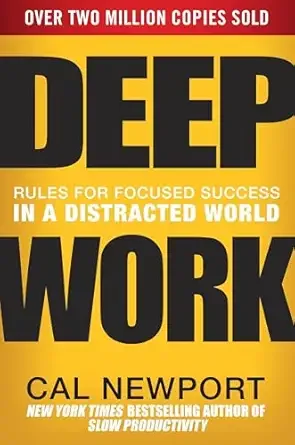
Deep Work
In Deep Work, computer science professor Cal Newport argues that the ability to focus without distraction is the defining skill of the modern economy. He divides professional activities into "deep" and "shallow" work, proving that constant connectivity actively destroys our cognitive capacity. Blending neuroscience with practical scheduling tactics, Newport provides a rigorous framework for eliminating digital noise, embracing boredom, and training your brain to produce massive value in less time.