
Creativity, Inc.
Good to Great
Building a Second Brand
The Lean Startup
Blue Ocean Strategy
Leaders Eat Last
The Innovator's Dilemma
Thinking, Fast and Slow
Lean In
The Power of Habit
Four Thousand Weeks
The 5AM Club
Crucial Conversations
The Infinite Game
Never Split the Difference
The First 90 Days
Creativity, Inc. Good to Great Building a Second Brand The Lean Startup Blue Ocean Strategy Leaders Eat Last The Innovator's Dilemma Thinking, Fast and Slow Lean In The Power of Habit Four Thousand Weeks The 5AM Club Crucial Conversations The Infinite Game Never Split the Difference The First 90 Days
Keep your mind fresh with summaries of the best business books
Never Lead Alone
In Never Lead Alone, executive coach Keith Ferrazzi argues that the era of the individual hero leader is dead. Drawing from decades of research, he outlines a transformational shift from traditional top-down management to "teamship." By embracing co-elevation, peer-to-peer accountability, and structured candor, organizations can dismantle the silos and conflict avoidance that destroy value. Master these shifts to build a deeply resilient, high-performing, and unified team.
The Canary Code
In The Canary Code, organizational psychologist and autistic community member Ludmila N. Praslova provides a comprehensive framework for neuroinclusion at work. She argues that neurodivergent employees are like canaries in a coal mine, sensing toxic environments and broken workflows first. By shifting from a deficit model to a dignity-based approach built on six core principles, organizations can create flexible, transparent systems where all talent thrives.
Bad Blood
In Bad Blood, Pulitzer-winning reporter John Carreyrou tells how Theranos, a $9 billion startup built on a blood-testing device that never worked, deceived investors, retailers, and patients for over a decade. Elizabeth Holmes raised hundreds of millions on a promise her own scientists knew was false, then silenced anyone who said so. It is the definitive anatomy of a corporate fraud, and a warning about what belief can hide.
Unreasonable Hospitality
In Unreasonable Hospitality, Will Guidara, former co-owner of the world-renowned Eleven Madison Park, reveals how he transformed a good restaurant into the world's best by focusing on radical kindness. He distinguishes between "service" (technical execution) and "hospitality" (emotional connection), arguing that the latter is the ultimate competitive advantage. Through concepts like the "95/5 Rule" and "One Size Fits One," Guidara provides a blueprint for any business to turn ordinary transactions into extraordinary, loyalty-building experiences.
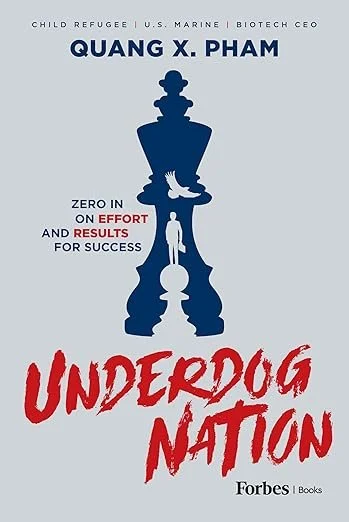
Underdog Nation
What can a U.S. Marine teach you about business? In Underdog Nation, former combat pilot Quang X. Pham reveals how the military's underdog ethos is the ultimate advantage in entrepreneurship. Through powerful principles like the "30-Second Complain-and-Fix Rule" and "Commander's Intent," he provides a battle-tested playbook for building resilient teams, leading with integrity, and thriving in the chaos of the modern marketplace.
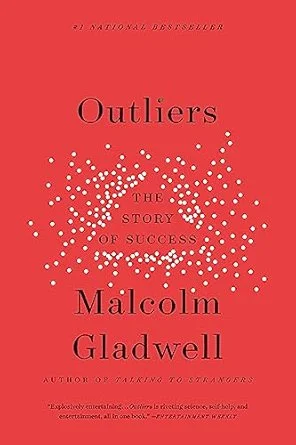
Outliers
In Outliers, Malcolm Gladwell dismantles the myth of the self-made success. Through fascinating case studies—from Canadian hockey players to Bill Gates—he demonstrates that success is rarely just about raw talent. Instead, it is the product of hidden advantages, cultural legacies, and extraordinary opportunities to practice (the 10,000-Hour Rule). By understanding these systemic factors, we can better engineer environments where success is not an accident of birth, but a cultivated outcome.
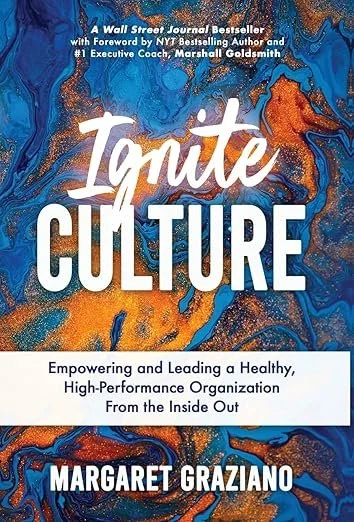
Ignite Culture
In Ignite Culture, culture consultant Margaret Graziano argues that companies are human systems, and that most dysfunction traces to personal strengths running in overdrive. Structured around the leader, the leadership team, and the organization, the book makes the case that culture change starts with the CEO's self-awareness and takes years, not quarters. Practical in places, and openly an on-ramp to her consultancy.

Find Your Why
In Find Your Why, Simon Sinek, David Mead, and Peter Docker provide the practical companion to the bestselling Start With Why. Moving from theory to action, the authors outline a step-by-step process for discovering your personal or organizational purpose. By extracting themes from your past stories, you can draft a concrete Why Statement, articulate your guiding Hows, and align your daily work with a deeper sense of fulfillment.

Built To Last
In Built to Last, Jim Collins and Jerry I. Porras present the results of a six-year Stanford University study answering one question: what makes truly exceptional companies outlast their peers? Comparing visionary organizations with their closest rivals, the authors dismantle the myth of the charismatic founder. Enduring greatness, they prove, requires a fierce dedication to core values, massive audacious goals, and an architectural obsession with building systems over launching products.

The Infinite Game
In The Infinite Game, Simon Sinek applies the philosophical framework of finite and infinite play to the business world. He argues that leaders who try to "win" their industries end up destroying trust, stifling innovation, and driving their companies into the ground. By mastering five essential practices—including advancing a Just Cause, building Trusting Teams, and studying worthy rivals—leaders can build resilient organizations designed to outlast their competitors and thrive for generations.

Turn the Ship Around!
In Turn the Ship Around!, former Navy Captain L. David Marquet shares how he transformed the worst-performing submarine in the fleet into its absolute best. By abandoning the traditional top-down chain of command for a "leader-leader" model, he proves that true excellence comes from pushing decision-making power down the ranks. It is a practical, brilliant blueprint for replacing passive compliance with active, intent-based ownership.

The Five Dysfunctions of a Team
The Five Dysfunctions of a Team is Patrick Lencioni's model of why teams underperform, presented mostly as a fable about a new CEO inheriting a dysfunctional executive group. His five dysfunctions form a pyramid: absence of trust at the base, then fear of conflict, lack of commitment, avoidance of accountability, and inattention to results at the top. The sequence is the point, since each one is produced by the one below it, which means visible symptoms almost always trace to a foundation problem nobody is addressing.

Leaders Eat Last
Simon Sinek's argument starts with a Marine Corps custom, officers eating after their troops, and builds it into a theory of why some workplaces produce loyalty and others produce quiet self-protection. His central idea is the Circle of Safety: when people trust that leadership will absorb risk on their behalf, they stop guarding against threats from inside the organization and turn their energy outward. Sinek grounds this in the neurochemistry of endorphins, dopamine, serotonin and oxytocin, argues that most modern workplaces have become dopamine-heavy and trust-poor, and names the imbalance Destructive Abundance. The conclusion is that protecting people is not the reward for performance but the precondition for it.
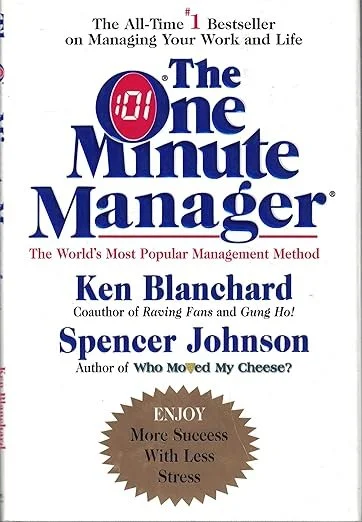
The One Minute Manager
In The One Minute Manager, Ken Blanchard and Spencer Johnson use a short business parable to solve a classic leadership dilemma. They reveal how to achieve massive results while genuinely supporting a team. By mastering three techniques—One Minute Goals, One Minute Praisings, and One Minute Reprimands—leaders can drastically improve productivity, eliminate micromanagement, and build confident employees who learn to manage themselves.