
Creativity, Inc.
Good to Great
Building a Second Brand
The Lean Startup
Blue Ocean Strategy
Leaders Eat Last
The Innovator's Dilemma
Thinking, Fast and Slow
Lean In
The Power of Habit
Four Thousand Weeks
The 5AM Club
Crucial Conversations
The Infinite Game
Never Split the Difference
The First 90 Days
Creativity, Inc. Good to Great Building a Second Brand The Lean Startup Blue Ocean Strategy Leaders Eat Last The Innovator's Dilemma Thinking, Fast and Slow Lean In The Power of Habit Four Thousand Weeks The 5AM Club Crucial Conversations The Infinite Game Never Split the Difference The First 90 Days
Keep your mind fresh with summaries of the best business books

What I Learned About Investing From Darwin
In What I Learned About Investing from Darwin, Pulak Prasad bridges evolutionary biology and finance to create a radical blueprint for long-term investing. Drawing on the success of his firm, Nalanda Capital, Prasad explains why avoiding catastrophic mistakes matters more than catching every trend, how to select companies with robust historical traits, and why the ultimate strategy for wealth creation is to buy exceptional businesses and simply never sell them.

The Personal MBA
In The Personal MBA, Josh Kaufman demystifies the corporate world by arguing that you do not need expensive graduate school to master business. He distills the entirety of business practice into five interdependent processes: Value Creation, Marketing, Sales, Value Delivery, and Finance. By understanding these core mechanics, alongside fundamental human psychology and systems thinking, anyone can build a profitable enterprise and make highly effective, real-world business decisions.

MONEY - Master the Game
MONEY Master the Game is Tony Robbins's attempt to distil interviews with roughly fifty of the world's most successful investors into a plan for ordinary people. Its seven steps run from automating savings through understanding fees and adviser incentives to asset allocation and generating retirement income. The strongest material is the unglamorous middle: the compounding cost of fees, the difference between a broker and a fiduciary, and the evidence on active management. The specific product recommendations warrant more skepticism, for reasons the book itself partly discloses.
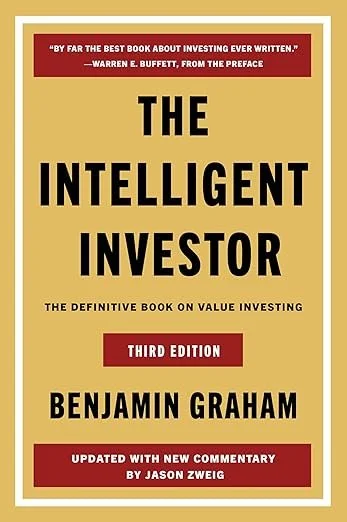
The Intelligent Investor
Benjamin Graham's 1949 classic is the book Warren Buffett calls the best ever written on investing, and its argument has almost nothing to do with picking winners. Graham separates investment from speculation, then builds a discipline around two ideas: Mr. Market, the manic-depressive business partner whose daily quotes you are free to ignore, and margin of safety, the practice of paying meaningfully less than a business is worth so that being wrong costs you little. He distinguishes the defensive investor, who wants adequate returns with minimal effort, from the enterprising one willing to do real work, and argues that the biggest threat to your results is not the market but your own behavior.