
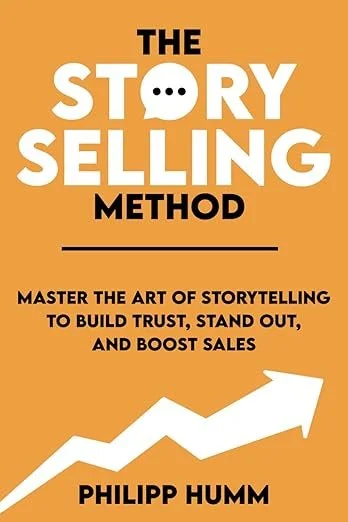
The StorySelling Method
Master the Art of Storytelling to Build Trust, Stand Out, and Boost Sales
by Phillipp Humm
The 60-Second Take
In The StorySelling Method, communication expert Philipp Humm argues that the most effective sales tool is not a feature list, but a well-told story. He provides a practical, step-by-step system for transforming mundane interactions into compelling narratives. By mastering the CCRR framework and five essential story types, professionals can bypass sales resistance, forge genuine connections, and make their message impossible to forget.
Why Your Pitch Needs a Plot
In modern sales, professionals are trained to emphasize value. They memorize product specifications, build elaborate return-on-investment models, and rehearse their unique propositions. Yet when it comes time to close the deal, logic often fails. Buyers nod politely at the data and then choose the competitor who simply felt like a safer bet. In The StorySelling Method, Philipp Humm explains why this happens and how to fix it. He argues that human beings are wired for narrative. We do not make decisions based on raw data; we make them based on emotion, and we use data to justify the choice after the fact.
Humm's premise is straightforward but powerful. The ability to share salient, memorable stories is the single greatest differentiator between average salespeople and top performers. A good story bypasses the buyer's natural defenses. It creates empathy, builds trust, and makes complex information easy to digest. Rather than writing a theoretical book on the power of narrative, Humm delivers a highly practical manual. He breaks down the exact mechanics of how to find, craft, and deliver stories in high-stakes business environments. This summary covers his core frameworks and how to apply them.
What You'll Learn
The four steps of the CCRR framework for structuring a compelling narrative
The five distinct types of stories every professional needs to master
Why pitching features triggers resistance, while storytelling builds connection
How to use inner dialogue and sensory details to make your stories memorable
Practical techniques for overcoming objections without arguing
The CCRR Framework
Many professionals avoid storytelling because they think it requires natural charisma. Humm dispels this myth by reducing story creation to a repeatable formula. He calls it the CCRR framework. It stands for Context, Challenge, Response, and Result. By running any experience through these four steps, you can turn a rambling anecdote into a sharp, persuasive tool.
The first step is Context. You have to set the scene quickly so the listener can picture the environment. Give them the when, the where, and the who. Opening a pitch with a generic claim about your supply chain expertise is a boring statement. Opening with a specific scenario about receiving a frantic call from a major retailer on a Tuesday morning is context. It immediately grounds the listener in a specific time and place. It signals that a narrative is beginning, which naturally causes people to lean in and listen.
Next comes the Challenge. A story without a challenge is just a report. You must introduce a relatable obstacle or problem. The obstacle should mirror the exact pain point your prospect is currently facing. If the prospect is struggling with poor margins, the hero of your story must also struggle with poor margins. Humm emphasizes that you need to articulate the emotional weight of this challenge. Do not just state the problem; describe the frustration or the financial strain it caused to build tension.
The third and fourth steps are Response and Result. The Response is the action taken to overcome the hurdle. In a sales context, this is where your product, service, or insight enters the narrative. You describe the collaboration, the strategy, and the proactive implementation. Finally, you deliver the Result. This is the transformation. The story must end by showing the tangible outcome of the actions taken. Good storytellers highlight the results clearly to leave a lasting impression. Humm advises keeping the entire CCRR arc tight. A great sales story should take less than ninety seconds to tell.
The Five Fundamental Story Types
Not every situation calls for the same narrative. Humm identifies five fundamental story types that every professional should develop, practice, and keep in their mental toolkit.
The first is the Connection Story. This is used early in a relationship to build rapport. Connection stories reveal something authentic about you as an individual. They help the buyer see that you are a human being, not just a vendor looking for a commission. The second is the Industry Story. This narrative establishes your credibility and expertise. Instead of reciting your resume, you tell a story about a market shift or a trend, demonstrating that you understand the specific forces shaping your client's world.
The third type is the Success Story, which demonstrates results. This is the classic case study, but reframed as a narrative. Rather than listing efficiency statistics, you tell the story of a specific client's struggle and how your partnership transformed their situation.
The final two types are the Differentiation Story and the Resistance Story. The Differentiation Story highlights what makes you or your product unique. The Resistance Story is an incredibly powerful tool to overcome objections. When a client raises a hesitation, you do not argue with them. Arguing creates friction. Instead, you share a Resistance Story about a previous client who had the exact same objection. You validate their fear, and then narrate how the previous client moved forward and achieved success regardless. It gently guides the prospect past their own mental blocks.
Make It Memorable: Emotion and Visualization
Structure alone is not enough. A story must stick in the listener's memory long after the meeting ends. Humm details several techniques to elevate a narrative from functional to unforgettable. The most critical element is emotion. He points out that business professionals are often trained to strip emotion out of their communication. This is a mistake, because emotions drive purchasing decisions. If your story lacks emotional resonance, it lacks influence. You need to connect on an emotional level to effectively move your audience.
To make stories vivid, Humm advocates for strong visual moments. Avoid corporate jargon and abstract concepts. Instead, use visceral, sensory details. These details allow the listener's brain to construct a mental movie. When people can see the story in their mind's eye, they retain the information significantly better.
Humm also encourages the strategic use of dialogue to make stories realistic and dynamic. There are two types you should use: outer dialogue and inner dialogue. Outer dialogue is the actual conversation that took place. Inner dialogue is sharing the character's internal thoughts, which adds depth and makes the speaker more relatable. Finally, use pattern interrupts. If the listener expects the story to go one way, introduce an unexpected event. A well-placed surprise captures attention and maintains interest.
StorySelling at a Glance
Focus on people. Shifting your focus from pitching products to telling stories about people builds trust and makes your message relatable.
The CCRR framework. Every good story needs Context, a Challenge, a Response, and a Result.
Keep it brief. Effective sales stories should be tight and stay under ninety seconds.
Five core story types. Sellers need to master Connection, Industry, Success, Differentiation, and Resistance stories.
Emotions drive decisions. Highlighting emotional struggles and triumphs influences buyers far more than raw data.
Show, don't just tell. Use visual moments, inner dialogue, and outer dialogue to make the narrative come alive.
A Quick Start Guide to Crafting Sales Stories
Find your stories. Brainstorm past client interactions, everyday experiences, and industry challenges to build a personal story bank.
Apply the CCRR structure. Take an existing case study and rewrite it to clearly define the Context, Challenge, Response, and Result.
Use visual details. Review your stories and remove abstract business jargon, replacing it with sensory details.
Prepare for resistance. Identify common objections and draft a Resistance Story to gently address those specific fears.
Practice your delivery. The book specifically focuses on oral storytelling; practice your stories out loud until you can deliver them naturally and authentically.
Who Should Read The StorySelling Method (and Who Can Skip It)
Read it if you are a sales professional who wants to build stronger trust and close more deals by connecting with clients on a human level.
Read it if you frequently face tough objections and want a structured, persuasive way to handle them without creating friction.
Read it if you sell complex or intangible products (like SaaS or consulting) and need a way to simplify your pitch for your audience.
Skip it if you are looking for written copywriting advice. The book explicitly focuses on oral storytelling for face-to-face, phone, or virtual conversations.
Skip it if you want a high-level marketing framework for your company's brand identity. This is a tactical guide for individual conversations.
Final Reflections
The StorySelling Method is an accessible, highly actionable guide to one of the most vital communication skills in business. Philipp Humm successfully demystifies storytelling, proving that you do not need to be a born entertainer to hold a room's attention. By providing clear frameworks like the CCRR model and defining the five specific types of stories a seller needs, he gives readers a practical roadmap they can implement immediately. The book's greatest strength is its focus on genuine human connection and brevity. It does not ask you to spin elaborate yarns; it asks you to find the human element in your everyday work and share it clearly. For anyone tired of losing deals to the status quo, this book offers a refreshing, emotionally intelligent approach to persuasion.
The Bottom Line
People make purchasing decisions based on emotion and justify them with logic, so stop relying entirely on data and start framing your value within a compelling, relatable story.
Frequently Asked Questions
What is the main idea of The StorySelling Method?
The core idea is that storytelling is a systematic, learnable skill that can drastically improve sales outcomes. The book provides a practical system to find, structure, and verbally deliver short narratives that bypass sales resistance and connect with buyers emotionally.
How does The StorySelling Method differ from Building a StoryBrand?
Building a StoryBrand by Donald Miller focuses on broader marketing and brand identity, whereas Humm's approach is designed specifically for direct sales conversations. The StorySelling Method gives tactical frameworks for objection handling and building personal rapport during face-to-face or virtual meetings.
What is the CCRR framework?
It is Philipp Humm's four-step structure for crafting a narrative. It stands for Context (setting the scene), Challenge (introducing the obstacle), Response (the action taken), and Result (the final measurable outcome).
Business Floss is reader-supported. When you use our links we may earn an affiliate commission that helps us keep the site running. Thank you for your support!


