
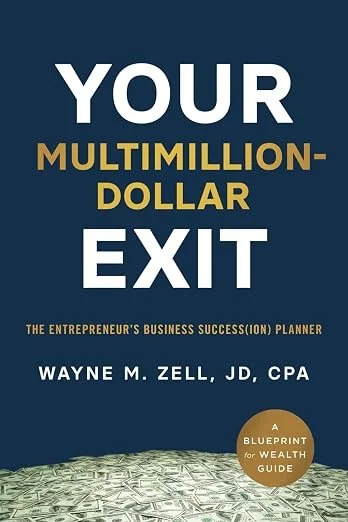
Your Multimillion-Dollar Exit
The Entrepreneur’s Business Success(ion) Planner
by Wayne M. Zell
The 60-Second Take
In Your Multimillion-Dollar Exit, CPA and attorney Wayne M. Zell provides a comprehensive blueprint for entrepreneurs aiming to sell their companies. He argues that a successful exit requires integrating business valuation, tax strategy, and estate planning long before a transaction occurs. By addressing unexpected transitions, employee retention, and structural risks, Zell offers practical tools to protect your wealth and maximize your company's value on your own terms.
The Sale Starts the Day You Build the Company
Many entrepreneurs spend decades pouring their energy and capital into building a successful business, only to stumble at the finish line. They assume that if they build a profitable, growing company, a lucrative exit will naturally follow. Unfortunately, the market does not buy past effort; it buys future, transferable cash flow. In Your Multimillion-Dollar Exit, Wayne M. Zell argues that selling a business is not a single event, but a deliberate process that must be carefully architected from the ground up.
Zell, an attorney, CPA, and Certified Exit Planner, has spent decades advising entrepreneurs on how to sell their businesses and avoid the hidden risks that destroy value during a sale. He has seen founders leave millions on the table due to fragmented advice, poor tax structuring, or a failure to prepare for unexpected tragedies. This summary explores his integrated approach, connecting the often-siloed disciplines of business valuation, taxes, and succession planning so you can prepare, protect, and ultimately sell your company with confidence.
What You'll Learn
How to structure your company early for a tax-efficient exit
Why preparing for unexpected events is critical for business stability
How to calculate the wealth gap and profit gap to meet your financial goals
The role of ironclad NDAs in protecting your secrets during due diligence
How to use retention (stay) bonuses to keep key employees during a sale
Why business exit planning and personal estate planning must be integrated
Preparing for the Expected and the Unexpected
Most founders think of exit planning as a task to tackle a year or two before retirement. Zell flips this paradigm, arguing that establishing a solid exit strategy from the very start is an essential blueprint for building wealth. The reality is that not all exits are voluntary. The book heavily emphasizes preparing for "unexpected" exits, which are typically triggered by sudden health issues, disability, or death.
If a tragedy occurs, you must have a plan detailing who will run the business when you cannot, and how you will replace the income lost from the business. If the company's relationships, operational knowledge, and strategic vision reside entirely in the founder's head, an unexpected exit will instantly destroy the firm's value. To build a truly transferable asset, you must design a firm that can run without your heroic daily effort. When potential buyers evaluate a business, they assess the risk of the operation failing once the founder departs. By building a management team and establishing repeatable workflows early, you ensure the business remains stable and transferable, regardless of what the future holds.
Closing the Wealth Gap and Optimizing Value
A critical concept in Zell's framework is understanding what you actually need to earn from the sale, rather than relying on arbitrary valuation multiples. Zell advises business owners to calculate their "wealth gap". This is the financial difference between the resources you currently possess and the capital required to fund your ideal post-exit lifestyle. Once you know your wealth gap, you can determine exactly what net proceeds you need from the sale, which directly informs your required sale price.
This calculation naturally leads to evaluating the "profit gap," which highlights the difference between your company's current profitability and the profitability required to achieve that target sale price. To bridge this gap, Zell focuses on optimizing market EBITDA (Earnings Before Interest, Taxes, Depreciation, and Amortization). This involves carefully analyzing profit and loss statements and balance sheets to identify opportunities for maximizing value. By stripping out personal expenses run through the business and addressing operational inefficiencies years before a sale, you ensure that the company generates the precise valuation necessary to fund your next chapter.
The Due Diligence Crucible and the Secret Sauce
Selling a business is an intensely invasive process. When a buyer issues an Indication of Interest (IOI) or a formal Letter of Intent (LOI), it triggers the due diligence phase. During this period, the buyer's team will scrutinize every contract, financial statement, and operational procedure you have. Because this process is so complex, Zell emphasizes the absolute necessity of leveraging a high-quality team of advisors to advance your exit strategy.
During due diligence, protecting what makes your company special is paramount. Zell warns that opening your books to potential buyers carries immense inherent risk. If a deal falls through—which is a common occurrence—you do not want a potential acquirer walking away with your proprietary methods or customer lists. Zell strongly emphasizes the importance of implementing ironclad NDAs (Non-Disclosure Agreements) to prevent potential buyers from stealing your secrets, employees, and customers. This legal boundary is your primary defense against buyers who might use the acquisition process simply to gather competitive intelligence.
Keeping the Key Players: The Power of Retention Bonuses
When a company changes hands, uncertainty immediately ripples through the staff. A buyer's worst nightmare is acquiring a company only to have the top talent, engineers, or key customer relationship managers leave the next day. To prevent this post-sale exodus, Zell highlights the strategic use of retention bonuses, commonly known as stay bonuses.
A retention bonus is a financial incentive offered to key employees for staying with a company for a specific amount of time after it has been sold. These bonuses can be substantial, varying widely from 25% to 90% of the employee's base salary. The payout period generally ranges from 12 to 36 months after the sale closes, and the money can be distributed incrementally or as a lump sum. These agreements protect all parties: they provide the buyer with intellectual capital continuity, they offer the key employee job security and financial upside, and they help the seller ensure the company hits the performance targets often required for post-sale earn-outs.
Crucially, Zell advises that timing matters. If you offer a retention bonus right near the closing of a sale, it can appear disingenuous to the employees and signal to the buyer that the company is entirely dependent on those individuals, which might prompt a lower purchase offer. Implementing these bonuses earlier in the process shows appreciation for the employees' loyalty and keeps them invested in building the company toward a future sale.
The Intersection of Taxes and Estate Planning
Perhaps the most overlooked element of an exit is the massive tax consequence it triggers. Zell notes that one of the main reasons business owners leave money on the table is a failure to connect tax strategy with business planning. Selling a business without a proactive tax strategy is one of the fastest ways to destroy wealth. The book details how to structure your company for a tax-efficient exit, revealing methods that help business owners sell without overpaying the IRS.
Furthermore, Zell connects business succession with personal estate planning. You are not just liquidating a corporate asset; you are generating a pool of personal wealth that needs to be protected and passed down efficiently. Instead of relying on fragmented advice from different professionals, Zell provides a clear, integrated approach so that your legal structure, tax plan, and estate plan all work together in harmony. This ensures that when the final check clears, you and your family actually keep the millions you worked so hard to earn.
Exit Planning at a Glance
The wealth gap. The calculation required to determine the exact sale price needed to meet your personal financial goals.
Market EBITDA optimization. Analyzing financial statements to maximize business value before entering the market.
Ironclad NDAs. Essential legal agreements required to prevent buyers from stealing your secrets, customers, or employees.
Retention (stay) bonuses. Financial incentives ranging from 25% to 90% of base salary used to keep key employees for 12 to 36 months after a sale.
Unexpected exits. The vital preparation for sudden death or disability to ensure the business remains transferable.
Tax-efficient structuring. Integrating tax and estate planning early to avoid costly mistakes and overpaying taxes during a sale.
A Quick Start Guide to Architecting Your Exit
Calculate your wealth gap. Determine the exact net proceeds you need from a sale to live your desired lifestyle, then work backward to find your target valuation.
Prepare for the unexpected. Create a clear contingency plan detailing who will run the business and replace your income if health issues prevent you from doing so.
Protect your intellectual capital. Implement strict NDAs before sharing any proprietary information or client lists with potential buyers.
Incentivize your key players. Structure retention bonuses for crucial employees well in advance of a sale so they remain invested in the company's long-term success.
Build an integrated advisory team. Connect your CPA, attorney, and wealth advisor early to ensure your tax strategy and estate planning work together.
Who Should Read Your Multimillion-Dollar Exit (and Who Can Skip It)
Read it if you are an entrepreneur planning to sell your business and want a step-by-step guide to achieving maximum value.
Read it if you are the sole driver of your company's revenue and need to understand how to protect your firm against unexpected health issues or accidents.
Read it if you want clear, actionable advice on how tax strategy, estate planning, and business succession work together.
Skip it if you are a solopreneur who plans to simply close your practice when you retire, with no intention of building a transferable asset.
Skip it if you are looking for abstract business theory; this is a highly practical planner filled with real-world examples, checklists, and actionable advice.
Final Reflections
Your Multimillion-Dollar Exit strips away the romanticism of entrepreneurship and focuses entirely on the endgame: turning business equity into liquid, protected wealth. Wayne M. Zell's greatest contribution is his holistic perspective. Rather than treating valuation, employee retention, taxes, and estate planning as separate hurdles to be cleared at the end of a career, he shows how they are deeply intertwined elements of a single machine. While the sheer volume of legal and tax considerations can feel intimidating, that thoroughness is exactly what makes the book valuable. It forces founders to confront the uncomfortable realities of succession and unexpected tragedy, providing a clear, expert-driven roadmap to ensure that the final chapter of their business journey is the most rewarding one.
The Bottom Line
A successful business exit does not happen by accident; it requires integrating your valuation strategy, employee retention plans, and tax structures years before a buyer ever makes an offer.
Frequently Asked Questions
What is the main idea of Your Multimillion-Dollar Exit?
The main idea is that selling a business requires integrated planning across valuation, tax strategy, and estate planning long before the transaction occurs. To achieve maximum value, founders must prepare for unexpected exits, protect their key assets with NDAs, and structure the entity to minimize the tax burden upon sale.
Why are retention bonuses important during a business sale?
Retention or "stay" bonuses are critical because they incentivize key employees to remain with the company for 12 to 36 months after the transition of ownership. This protects the buyer by keeping intellectual capital in the firm, and it protects the seller by ensuring the company remains stable during post-sale earn-out periods.
What is the wealth gap in exit planning?
The wealth gap is the difference between the assets you currently have and the total amount of money you will need to comfortably fund your financial goals after you sell the business. Calculating this gap helps you determine the exact sale price you must achieve.
Business Floss is reader-supported. When you use our links we may earn an affiliate commission that helps us keep the site running. Thank you for your support!


