
Discipline Is Destiny
The Power of Self-Control
by Ryan Holiday
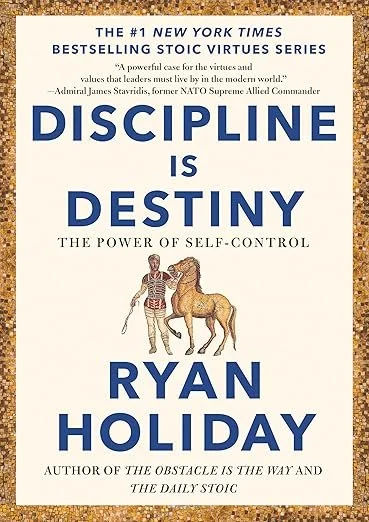
The 60-Second Take
In Discipline is Destiny, Ryan Holiday explores the ancient Stoic virtue of temperance. Drawing on historical figures like Queen Elizabeth II, Lou Gehrig, and Marcus Aurelius, Holiday argues that self-control is not a restriction, but the ultimate source of personal freedom. By mastering the physical body, regulating the mind, and elevating the soul, readers learn how to build the iron-clad habits required to achieve enduring greatness and avoid self-destruction.
Freedom Is Not the Absence of Rules
We culturally misunderstand discipline. We picture it as a bleak, joyless existence characterized by cold showers, strict diets, and punishing schedules. We view self-control as a cage that keeps us from enjoying our lives, preferring instead to "keep our options open" and go with the flow. Ryan Holiday believes we have the equation entirely backward. If you cannot force yourself to do difficult things, your future is entirely dictated by your comfort zone. If you cannot resist a temptation, you belong to it.
In Discipline is Destiny, the second volume of his four-part Stoic Virtues series, Holiday argues that a lack of discipline is the actual cage. He examines the ancient virtue of temperance—what the Greeks called sophrosyne—and proves that mastering yourself is the prerequisite for mastering anything else. The Stoics believed there were four core virtues: Courage, Temperance, Justice, and Wisdom. Holiday points out that temperance is the load-bearing pillar. You cannot act bravely, rule justly, or study deeply if you cannot sit still and control your own impulses.
Through the biographies of historical figures who either triumphed through restraint or destroyed themselves through excess, the book breaks self-control into three distinct, progressive domains: the physical body, the mental temperament, and the elevated soul.
What You'll Learn
Why the Stoics viewed temperance as the foundation of all other virtues and achievements
How to build physical discipline by conquering your morning routine and physical limits
The immense power of the disciplined tongue and the ability to ignore provocations
The difference between being ruthlessly strict with yourself and being tolerant of others
How to regulate your emotions and maintain focus in an increasingly chaotic world
The Exterior: Conquer the Body First
You cannot expect to govern a company, a family, or a nation if you cannot even govern your own physical form. Holiday insists that all discipline begins in the physical realm. The body is the vehicle through which we experience the world, and if it is weak, lethargic, or addicted to comfort, the mind will inevitably follow suit.
He points to Lou Gehrig, the legendary baseball player who played 2,130 consecutive games. Gehrig was not necessarily the most naturally gifted athlete of his era, but his physical endurance and absolute refusal to quit made him immortal. He simply showed up, every single day, regardless of how he felt. Holiday also shares the story of Cleanthes, an ancient Stoic who worked as a manual water carrier at night just so he could afford to study philosophy during the day. He did not complain about his circumstances; he let his physical labor finance his intellectual growth.
Building this kind of physical discipline starts with the smallest, most immediate choices. It means waking up early. It means choosing water over alcohol, moving heavy things, and intentionally subjecting yourself to physical discomfort. Holiday calls this the "strenuous life," echoing Theodore Roosevelt, who famously transformed himself from a frail, asthmatic child into a paragon of physical vigor through sheer force of will. When you train your body to endure hardship, you are actually training your brain to ignore the voice that constantly begs you to quit.
The Inner Domain: Regulate the Mind
Physical endurance is useless if your mind is chaotic. Once you have established control over your physical habits, the battle moves inward. The second domain of discipline is temperament. This is the ability to control your emotions, filter out distractions, and maintain a steady, unshakeable focus regardless of external circumstances.
Holiday uses Queen Elizabeth II as a masterclass in mental restraint. For seventy years, she faced endless public scrutiny, family scandals, and global crises, yet she rarely showed anger, panic, or frustration publicly. She understood that her role required neutrality and composure. She practiced the discipline of the tongue, realizing that you do not have to have an opinion on everything, and you certainly do not have to voice every opinion you hold.
Mental discipline means putting a delay between a stimulus and your response. When someone insults you, the undisciplined mind lashes out immediately, driven by ego. The disciplined mind pauses, evaluates the insult, and chooses to ignore it because anger is a massive waste of energy. Temperance also means aggressively protecting your attention. We are constantly bombarded by outrage, breaking news, and trivial notifications designed to hijack our focus. True mental discipline requires the fortitude to look away from the noise and direct your mental bandwidth entirely toward the work that actually matters.
The Magisterial: Elevate the Soul
The highest level of discipline transcends productivity and emotional control. It becomes a matter of character. Holiday calls this the Magisterial domain, where discipline stops being something you do and becomes something you are. It is doing the right thing simply because it is the right thing, even when no one is watching, even when you will not be rewarded, and even when it costs you personally.
A crucial element of this elevated discipline is how you treat other people. A common trap for highly disciplined individuals is becoming bitter, judgmental, and cruel to those who lack the same drive. Holiday leans heavily on a Stoic maxim: be strict with yourself, but tolerant with others. You hold yourself to an impossible standard, but you offer grace to the people around you who stumble. Marcus Aurelius learned this exact style of leadership from his stepfather, the emperor Antoninus Pius. Antoninus was the most powerful man in the world, yet he lived simply, did not seek glory, and forgave his enemies easily. He led by quiet example rather than tyrannical force.
Holiday also points to George Washington, who exhibited magisterial discipline when he willingly walked away from the presidency. He had the military backing and popularity to become a king, but he possessed the spiritual restraint to relinquish power for the greater good of the republic. At this stage, discipline ceases to be a harsh, grinding effort. It becomes a state of grace, a quiet confidence that radiates to everyone around you and shapes your ultimate destiny.
Stoic Temperance at a Glance
The Body. Physical discipline builds the foundation. Eat well, sleep early, and seek out strenuous effort to harden your resolve.
The Mind. Mental discipline requires putting a space between a trigger and your reaction. Regulate your emotions and guard your attention.
The Soul. Spiritual discipline is doing the right thing when it is difficult, acting with unwavering integrity, and relinquishing your ego.
Tolerant of others. You must be ruthless with your own standards but endlessly forgiving of the weaknesses and flaws of others.
Freedom through constraint. Establishing strict personal rules eliminates decision fatigue, prevents destructive excess, and creates true autonomy.
A Quick Start Guide to Building Iron Habits
Own the morning. Wake up early and tackle your most difficult, important task before the rest of the world has a chance to interrupt you.
Do something physically hard. Intentionally sweat or experience discomfort every single day. Use physical exertion to prove to your brain that you can endure friction.
Ignore the mob. Stop reacting to every piece of breaking news or online outrage. Protect your attention fiercely and practice the discipline of having no opinion.
Set a hard boundary. Pick one area of your life—screen time, alcohol consumption, complaining—and draw an absolute line. Do not negotiate with it.
Forgive others. Stop expecting everyone around you to match your intensity. Hold the line for yourself, but show deep grace to them.
Who Should Read Discipline is Destiny (and Who Can Skip It)
Read it if you feel completely overwhelmed by distractions and need a philosophical kick to regain control of your time and attention.
Read it if you enjoy history and biographical sketches; Holiday uses fascinating stories to illustrate abstract principles perfectly.
Read it if you want a practical, modern entry point into Stoic philosophy that focuses entirely on action rather than theory.
Skip it if you are looking for a highly clinical, psychological breakdown of exactly how the brain forms habits; read Atomic Habits instead.
Skip it if you have already read Holiday’s other works and feel fatigued by the historical-anecdote format. The structural rhythm here is very similar to The Obstacle is the Way and Ego is the Enemy.
Final Reflections
Discipline is Destiny takes an unsexy, often resented concept and successfully rebrands it as a superpower. Holiday’s writing is punchy, urgent, and highly readable. By splitting the concept into the body, the mind, and the soul, he gives the reader a clear roadmap for gradual improvement. You do not have to become a perfect Zen master overnight; you just have to start by waking up when your alarm goes off. While the sheer volume of historical anecdotes can occasionally feel overwhelming if read in a single sitting, they serve their purpose beautifully, proving that the struggles we face with procrastination, indulgence, and emotional volatility are entirely universal. It is a sobering, empowering reminder that you are the only person coming to save you.
The Bottom Line
True freedom does not come from doing whatever you want; it comes from having the iron-clad self-control to decide exactly who you want to be and the physical, mental, and moral fortitude to actually become it.
Frequently Asked Questions
What is the main idea of Discipline is Destiny? The core argument is that self-control, or temperance, is the key to a successful, free, and meaningful life. Without discipline, we are slaves to our impulses and emotions. Holiday breaks this practice down into mastering your physical body, regulating your mental state, and elevating your spiritual character.
Do I need to read Courage is Calling first? No. While Discipline is Destiny is the second book in Holiday’s four-part Stoic Virtues series, it functions perfectly as a standalone work. You do not need any prior knowledge of Stoicism, or the previous book, to grasp the concepts.
Business Floss is reader-supported. When you use our links we may earn an affiliate commission that helps us keep the site running. Thank you for your support!


