
Creativity, Inc.
Good to Great
Building a Second Brand
The Lean Startup
Blue Ocean Strategy
Leaders Eat Last
The Innovator's Dilemma
Thinking, Fast and Slow
Lean In
The Power of Habit
Four Thousand Weeks
The 5AM Club
Crucial Conversations
The Infinite Game
Never Split the Difference
The First 90 Days
Creativity, Inc. Good to Great Building a Second Brand The Lean Startup Blue Ocean Strategy Leaders Eat Last The Innovator's Dilemma Thinking, Fast and Slow Lean In The Power of Habit Four Thousand Weeks The 5AM Club Crucial Conversations The Infinite Game Never Split the Difference The First 90 Days
Keep your mind fresh with summaries of the best business books

The Power of Resilience
In The Power of Resilience, MIT supply chain expert Yossi Sheffi explores how globalization and lean manufacturing have made modern businesses dangerously fragile. Drawing on high-stakes corporate crises, Sheffi provides a comprehensive framework for managing risk. He argues that companies must move beyond costly redundancy and build inherent flexibility—mapping deep-tier suppliers, standardizing components, and fostering a culture of rapid detection—to survive and thrive during unexpected disruptions.

The 80/20 CEO
In The 80/20 CEO, global executive Bill Canady provides a 100-day playbook for leaders who need to rapidly take command of their organizations. By applying the Pareto Principle to executive strategy, he introduces the Profitable Growth Operating System (PGOS). Learn how to eliminate complexity, focus exclusively on the 20 percent of efforts that drive 80 percent of results, and establish a high-performance culture built on strategic subtraction.

Conflicted
In Conflicted, journalist Ian Leslie explores the lost art of productive disagreement. Drawing on insights from hostage negotiators, divorce mediators, and elite innovators, he reveals why healthy conflict is essential for progress. By learning to separate our egos from our ideas, letting go of the need to control others, and prioritizing connection over winning, we can transform destructive arguments into powerful engines for creativity and better decision-making.

The Power of Going All-In
In The Power of Going All-In, serial entrepreneur Brandon Bornancin delivers a practical framework for unleashing your team's ultimate potential. Drawing on his experience building companies to over $150 million in sales, he argues that true leadership requires replacing micromanagement with extreme accountability and servant leadership. Master these principles to inspire top-tier performance, eliminate burnout, and consistently shatter goals.
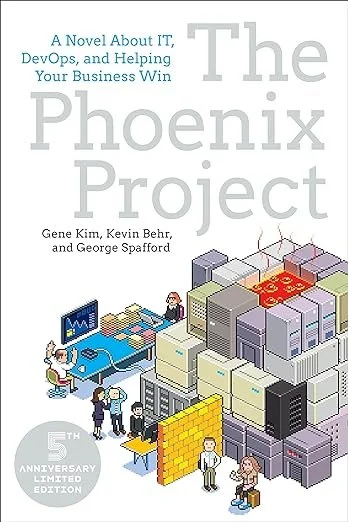
The Phoenix Project
In The Phoenix Project, Gene Kim, Kevin Behr, and George Spafford use a fictional narrative to illustrate the core principles of DevOps. Following an overwhelmed IT manager tasked with saving a failing corporate initiative, the book demonstrates how applying lean manufacturing concepts to technology can eliminate silos, manage unplanned work, and align IT with broader business goals to transform a chaotic department into a competitive advantage.

Peak Teams
In Peak Teams, executive coach Jeff James Martin provides a comprehensive operating system for venture-backed founders navigating the chaos of rapid growth. He argues that as startups scale, informal communication breaks down, creating a dangerous gap between mission and execution. By implementing the Peak Teams System—a framework of structured cadences, clear goals, and relentless visibility—leaders can align their teams, overcome internal friction, and scale efficiently.

The Personal MBA
In The Personal MBA, Josh Kaufman demystifies the corporate world by arguing that you do not need expensive graduate school to master business. He distills the entirety of business practice into five interdependent processes: Value Creation, Marketing, Sales, Value Delivery, and Finance. By understanding these core mechanics, alongside fundamental human psychology and systems thinking, anyone can build a profitable enterprise and make highly effective, real-world business decisions.

Power
In Power, Stanford business professor Jeffrey Pfeffer shatters the myth that the corporate world is a pure meritocracy. He argues that exceptional performance alone rarely guarantees advancement. Instead, professionals must actively cultivate influence, build strategic networks, and master the art of office politics. This pragmatic, unflinching guide provides a mechanical look at how authority is actually acquired, wielded, and maintained in modern organizations.

Mind Your Mindset
In Mind Your Mindset, leadership experts Michael Hyatt and Megan Hyatt Miller reveal that the biggest barrier to success is not a lack of strategy, but a flawed internal narrative. Drawing on neuroscience and psychology, they explain how the brain constructs subjective stories disguised as objective facts. By mastering a three-step framework to identify, interrogate, and imagine better stories, professionals can overcome mental blocks and achieve breakthrough results.

Your Multimillion-Dollar Exit
In Your Multimillion-Dollar Exit, CPA and attorney Wayne M. Zell provides a comprehensive blueprint for entrepreneurs aiming to sell their companies. He argues that a successful exit requires integrating business valuation, tax strategy, and estate planning long before a transaction occurs. By addressing unexpected transitions, employee retention, and structural risks, Zell offers practical tools to protect your wealth and maximize your company's value on your own terms.

Hug Your Haters
In Hug Your Haters, customer experience expert Jay Baer argues that businesses must fundamentally change how they handle complaints. Drawing on extensive research, Baer reveals that customer service is no longer a private exchange; it is a public spectator sport. By categorizing complainers into "offstage" customers seeking private resolution and "onstage" customers seeking a public audience, he provides a practical playbook for answering every complaint, defusing trolls, and turning negative feedback into loyal advocacy.

SYSTEMology
In SYSTEMology, David Jenyns provides a practical, seven-step framework to help small business owners escape the daily operations trap. Recognizing that founders fail at systemization by trying to document everything themselves, Jenyns focuses on capturing the Critical Client Flow and empowering team members to extract processes. The result is an actionable guide for reducing errors, scaling profits, and building a business that thrives without you.

Managing in the Gray
In Managing in the Gray, Harvard Business School professor Joseph L. Badaracco provides a framework for tackling your toughest workplace dilemmas. When data and standard analysis fall short, managers face complex gray areas that test their competence and character. Badaracco outlines five timeless questions drawn from humanism and history to help leaders balance pragmatic business needs with moral obligations, ensuring they make decisions they can actually live with.

Learning Leadership
In Learning Leadership, legendary researchers James M. Kouzes and Barry Z. Posner dismantle the myth of the born leader. Drawing on decades of global data, they prove that leadership is an observable, learnable skill requiring daily, deliberate effort. By mastering five fundamental practices—belief, aspiration, challenge, support, and deliberate practice—anyone can develop the competence and character required to guide others and achieve extraordinary results.

Traction
In Traction, Gino Wickman introduces the Entrepreneurial Operating System (EOS), a highly practical method for overcoming the chaos that plagues growing companies. By mastering six key components—Vision, People, Data, Issues, Process, and Traction—leadership teams can align their goals, solve recurring problems, and build exceptionally healthy cultures. It is an instruction manual for founders who want to stop putting out fires and finally take control of their business.

The 360 Degree Leader
In The 360 Degree Leader, leadership expert John C. Maxwell dismantles the illusion that influence requires a corner office. He argues that the vast majority of leadership happens in the messy middle of an organization. By mastering the distinct skills of leading up to your boss, leading across to your peers, and leading down to your team, you can multiply your impact regardless of your current job title.

The 12 Week Year
In The 12 Week Year, Brian P. Moran and Michael Lennington expose the fatal flaw of annualized thinking. They argue that twelve-month goals breed complacency, causing us to delay the actual work until December. By redefining a year as just twelve weeks, the authors provide a rigorous execution system that manufactures constant urgency, replacing vague resolutions with ruthless weekly tracking, predictable routines, and measurable daily actions.

Built To Last
In Built to Last, Jim Collins and Jerry I. Porras present the results of a six-year Stanford University study answering one question: what makes truly exceptional companies outlast their peers? Comparing visionary organizations with their closest rivals, the authors dismantle the myth of the charismatic founder. Enduring greatness, they prove, requires a fierce dedication to core values, massive audacious goals, and an architectural obsession with building systems over launching products.

Competing For The Future
In Competing for the Future, strategy experts Gary Hamel and C.K. Prahalad dismantle the corporate obsession with downsizing and restructuring. They argue that cutting costs only makes an organization thinner, not healthier. To dominate tomorrow's markets, leaders must develop industry foresight, build a portfolio of core competencies, and pursue a massive strategic intent. It is a timeless blueprint for inventing new industries rather than playing endless catch-up in existing ones.

Turn the Ship Around!
In Turn the Ship Around!, former Navy Captain L. David Marquet shares how he transformed the worst-performing submarine in the fleet into its absolute best. By abandoning the traditional top-down chain of command for a "leader-leader" model, he proves that true excellence comes from pushing decision-making power down the ranks. It is a practical, brilliant blueprint for replacing passive compliance with active, intent-based ownership.