
Creativity, Inc.
Good to Great
The Lean Startup
Blue Ocean Strategy
Leaders Eat Last
The Innovator's Dilemma
Thinking, Fast and Slow
Lean In
The Power of Habit
Four Thousand Weeks
Creativity, Inc. Good to Great The Lean Startup Blue Ocean Strategy Leaders Eat Last The Innovator's Dilemma Thinking, Fast and Slow Lean In The Power of Habit Four Thousand Weeks
Keep your mind fresh with summaries of the best business books
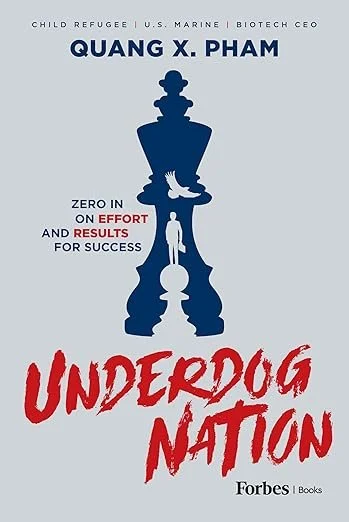
Underdog Nation
What can a U.S. Marine teach you about business? In Underdog Nation, former combat pilot Quang X. Pham reveals how the military's underdog ethos is the ultimate advantage in entrepreneurship. Through powerful principles like the "30-Second Complain-and-Fix Rule" and "Commander's Intent," he provides a battle-tested playbook for building resilient teams, leading with integrity, and thriving in the chaos of the modern marketplace.
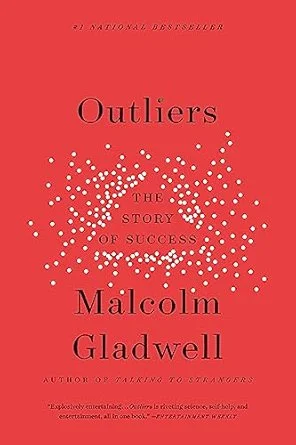
Outliers
In Outliers, Malcolm Gladwell dismantles the myth of the self-made success. Through fascinating case studies—from Canadian hockey players to Bill Gates—he demonstrates that success is rarely just about raw talent. Instead, it is the product of hidden advantages, cultural legacies, and extraordinary opportunities to practice (the 10,000-Hour Rule). By understanding these systemic factors, we can better engineer environments where success is not an accident of birth, but a cultivated outcome.
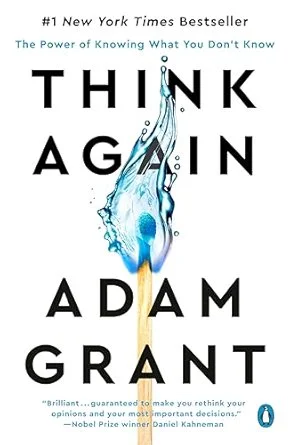
Think Again
In Think Again, organizational psychologist Adam Grant explores the critical art of rethinking. He reveals how our mental habits—preaching, prosecuting, and politicking—blind us to the truth, and argues that the most successful people adopt a "scientist" mindset. By cultivating confident humility, embracing constructive conflict, and constantly challenging our own assumptions, we can navigate a rapidly changing world with agility and wisdom.
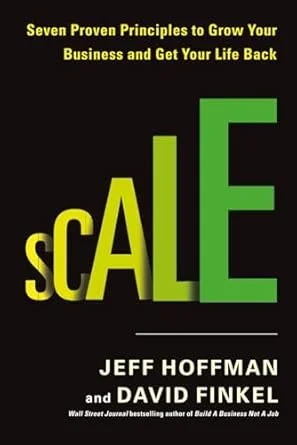
Scale
In Scale, Jeff Hoffman and David Finkel provide a pragmatic roadmap for entrepreneurs looking to grow their businesses without sacrificing their personal lives. By transitioning from a "Level One" startup to a "Level Three" owner-independent company, readers learn to build robust systems, empower teams, and focus on high-leverage strategic work. This summary details the seven principles and five pillars necessary to build a truly scalable, valuable asset.
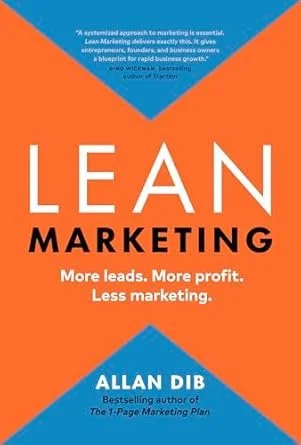
Lean Marketing
In Lean Marketing, Allan Dib applies the principles of lean manufacturing to the world of business growth. He argues that most marketing is bloated and wasteful, urging leaders to focus on "Direct Response" tactics and the "Vital Few" channels that drive ROI. By following his three-phase framework—Before, During, and After—you can automate lead generation and maximize customer lifetime value.

Moneyball
In Moneyball, Michael Lewis details how the Oakland Athletics used data-driven "Sabermetrics" to outplay wealthier opponents. By valuing undervalued traits like On-Base Percentage over traditional "scouting" metrics, Billy Beane proved that market inefficiencies are everywhere. This summary explores how business leaders can use data arbitrage to identify hidden talent, overcome subjective bias, and achieve elite results on a budget.
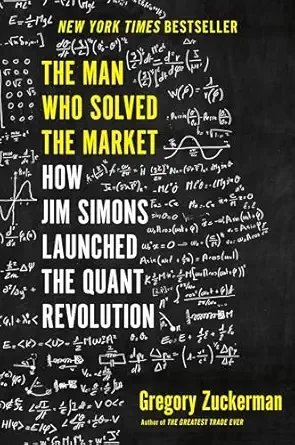
The Man Who Solved the Market
In The Man Who Solved the Market, Wall Street Journal reporter Gregory Zuckerman tells the story of Jim Simons and Renaissance Technologies, the hedge fund whose Medallion Fund produced what may be the greatest investment record in history. The book details how a team of mathematicians and physicists built a quantitative system that beat the market for three decades. Eye-opening reading for anyone curious about how systematic investing actually works.
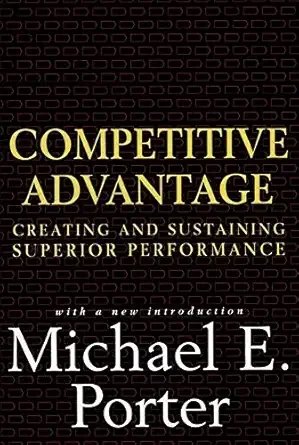
Competitive Advantage
In Competitive Advantage, Michael Porter argues that lasting profitability comes from one of three deliberate strategies, cost leadership, differentiation, or focus, and almost never from a blend of all three. Using the value chain to dissect a business into discrete activities, he shows where real advantage is built and why most companies leak margin without realizing it. The strategist's bible for a reason.
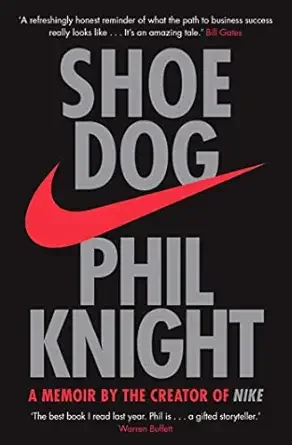
Shoe Dog
In Shoe Dog, Nike founder Phil Knight tells the raw, honest story of building the company from a car-trunk sneaker operation into a global brand. It is less a how-to than a memoir of doubt, debt, and stubborn persistence. Knight shows that entrepreneurship is messy, lonely, and rarely tidy, and that surviving long enough to win often comes down to a simple refusal to quit.

Rich Dad Poor Dad
In Rich Dad, Poor Dad, Robert Kiyosaki contrasts the financial mindsets of two father figures to show why a paycheck rarely builds wealth. Through plainspoken stories and a blunt asset-versus-liability framework, he argues that financial literacy, owning income-producing assets, and learning to make money work for you matter more than any salary. A classic starter book for anyone ready to step off the earning treadmill.
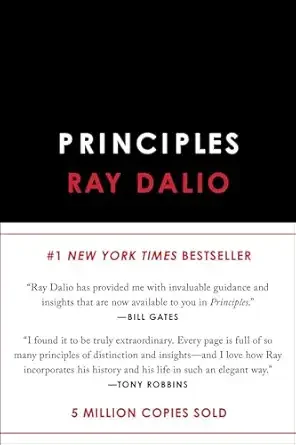
Principles
In Principles, Bridgewater founder Ray Dalio shares the rules he used to build the world's largest hedge fund and live a meaningful life. His core message is that pain plus reflection equals progress, and that radical truth, radical transparency, and an idea meritocracy beat ego and hierarchy. By writing down repeatable principles for recurring decisions, anyone can think more clearly and make far fewer avoidable mistakes.
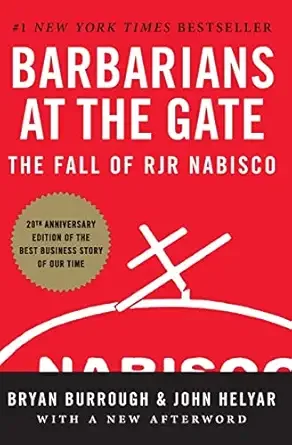
Barbarians at the Gate
In Barbarians at the Gate, journalists Bryan Burrough and John Helyar tell the definitive story of the 1988 battle for RJR Nabisco, the largest leveraged buyout of its era. What began as CEO Ross Johnson's management buyout exploded into a bidding war won by private equity firm KKR. It is an unforgettable portrait of Wall Street ego, greed, and the dealmaking that drove a 25 billion dollar takeover.
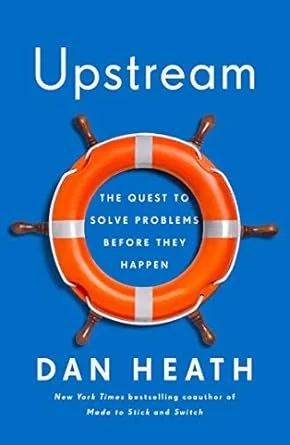
Upstream
In Upstream, Dan Heath challenges the business obsession with reactive problem-solving, urging leaders to prevent fires rather than just fighting them. He identifies the psychological barriers to prevention—Problem Blindness, Lack of Ownership, and Tunneling—and provides a framework for systemic intervention. By leveraging data, aligning stakeholders, and altering environmental levers, you can stop "handling" recurring issues and finally solve them at the source.
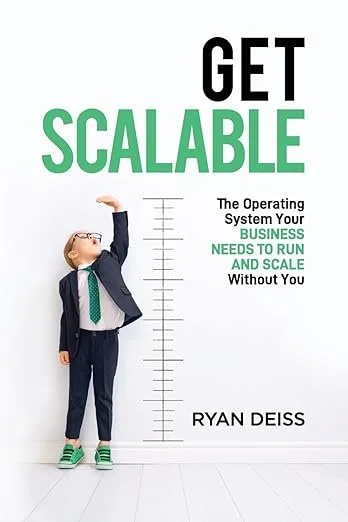
Get Scalable
In Get Scalable, Ryan Deiss provides a pragmatic roadmap for founders trapped by their own success. By implementing a "Scalable Operating System" based on the four core circuits of Strategy, People, Process, and Acceleration, leaders can move from being the bottleneck to the architect. This summary details how to document processes, delegate effectively, and build a business that runs predictably—and profitably—without you.
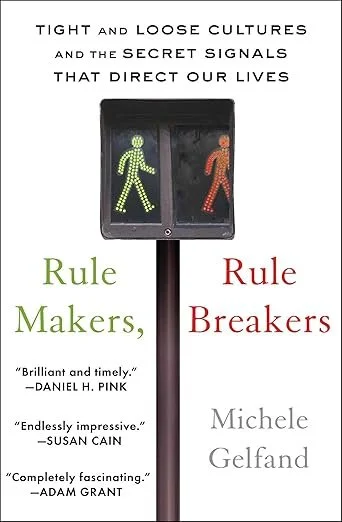
Rule Makers, Rule Breakers
In Rule Makers, Rule Breakers, Michele Gelfand reveals the hidden "tight-loose" code that governs human behavior across nations and boardrooms. She explains how perceived threats drive cultures to embrace strict rules, while safety fosters permissiveness. By mastering the "Goldilocks Principle" of cultural balance, leaders can bridge cultural divides, prevent failed mergers, and build teams that are both disciplined and creative.
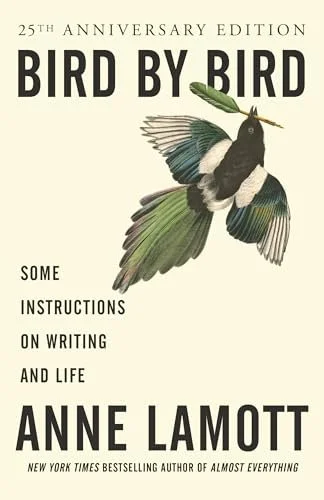
Bird by Bird
In Bird by Bird, Anne Lamott provides a soulful and practical roadmap for overcoming the paralysis of perfectionism. By breaking massive projects into "short assignments" and embracing "shitty first drafts," professionals can bypass self-doubt and find their creative flow. This summary explores how to manage your inner critic and trust the slow, "Polaroid" process of letting great ideas develop naturally over time.
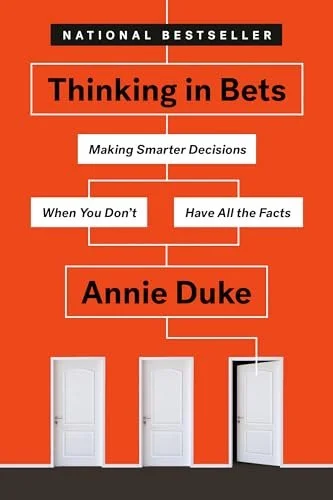
Thinking in Bets
In Thinking in Bets, Annie Duke leverages her experience as a world-class poker player to teach professionals how to navigate a world of uncertainty. By avoiding the "resulting" trap—judging decisions by their outcomes—and embracing probabilistic thinking, readers learn to make more objective, less emotional choices. This summary provides the tools to build "truth-seeking" cultures and turn hidden risks into calculated advantages.

In Search of Excellence
In "In Search of Excellence," Tom Peters and Robert H. Waterman Jr. reveal eight enduring attributes of America's best-run companies. This summary highlights their focus on action, customer obsession, employee empowerment, and strong, lived values. Discover how these principles, often overlooked in favor of complex strategies, drive sustained success and foster a culture of innovation and adaptability.

The Most Important Thing
In The Most Important Thing, legendary value investor Howard Marks distills four decades of memo-writing at Oaktree Capital into a pragmatic guide to risk-adjusted thinking. He argues that superior results flow less from bold forecasts than from second-level thinking, rigorous price-versus-value discipline, and relentless attention to cycles, probabilities, and psychology. Master these principles—especially the art of risk control—and market turbulence becomes a feature, not a fatal threat.
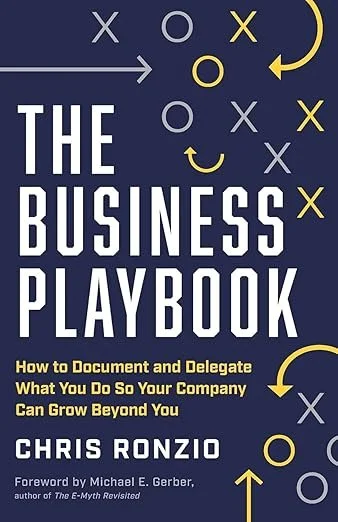
The Business Playbook
Are you trapped doing everything in your business? "The Business Playbook" by Chris Ronzio is your escape route. This summary shows you how to document your critical processes, delegate effectively, and build a "single source of truth" that empowers your team. Stop being the bottleneck and start building a company that can grow beyond you. Learn to create a business that runs itself, so you can finally have the freedom to lead it.