
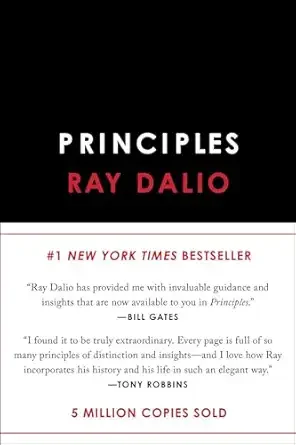
Principles
Life and Work
by Ray Dalio
The 60-Second Take
In Principles, Bridgewater founder Ray Dalio shares the rules he used to build the world's largest hedge fund and live a meaningful life. His core message is that pain plus reflection equals progress, and that radical truth, radical transparency, and an idea meritocracy beat ego and hierarchy. By writing down repeatable principles for recurring decisions, anyone can think more clearly and make far fewer avoidable mistakes.
Principles: Ray Dalio's Operating System for Work and Life
Ray Dalio built Bridgewater Associates into the largest hedge fund in the world, and he is convinced that almost none of it came from raw genius. It came from principles, the clear, written rules he developed for handling the situations that show up again and again in work and life. Principles is his attempt to hand those rules to everyone else.
The book is unusually structured. It opens with a candid memoir of how Dalio learned his lessons, often the hard way, then lays out his Life Principles, and finally his Work Principles for running an organization. This summary focuses on the ideas that translate directly into clearer thinking and better decisions, whether you run a fund, a finance team, or your own career.
What You'll Learn
Why pain plus reflection equals progress, and how to use mistakes as fuel
A simple five-step process for getting almost anything you want
What radical truth and radical transparency really mean in practice
How an idea meritocracy outperforms a traditional hierarchy
How to turn recurring decisions into repeatable, written principles
Pain Plus Reflection Equals Progress
Dalio's most quoted idea is a formula: pain plus reflection equals progress. Mistakes are not just unfortunate. They are the most valuable data you will ever get, provided you stop and examine them instead of burying them. He even built a tool at Bridgewater, an issue log, where employees were expected to record problems openly so the organization could learn from them.
The humbling story behind this conviction is Dalio's 1982 collapse. He had publicly and confidently predicted an economic depression. He was spectacularly wrong, lost almost everything, had to let his employees go, and borrowed 4,000 dollars from his father to keep his family afloat. That failure, he says, was the best thing that ever happened to him because it replaced arrogance with a fear of being wrong that made him radically open-minded.
The Five-Step Process to Get What You Want
Dalio distills goal achievement into five steps that repeat in a loop:
Set clear goals. Decide what you actually want and prioritize ruthlessly.
Identify the problems that stand in the way, and do not tolerate them.
Diagnose the root causes rather than reacting to surface symptoms.
Design a plan to get around the problems.
Do the tasks required to execute that plan.
The insight is that few people are equally good at all five. A great visionary may be terrible at execution. The fix is not to become perfect at everything but to know your weaknesses honestly and surround yourself with people who are strong where you are weak.
Core Principles at a Glance
Embrace reality and deal with it. Wishing the world were different is wasted energy. Decisions improve when you see things as they truly are.
Be radically open-minded. Treat the fear of being wrong as an asset. Actively hunt for the smartest people who disagree with you.
Distinguish the two yous. You are both the designer of your life and a worker inside it. Step back and manage yourself like a manager would.
Recognize people are wired differently. Match people to roles that fit their nature instead of expecting everyone to think alike.
Believability-weight your decisions. Give more weight to the views of people with proven track records in the relevant area, not just the loudest voice in the room.
Radical Truth and Radical Transparency
The most controversial part of Bridgewater's culture is its insistence on radical truth and radical transparency. People are expected to say what they actually think, to each other's faces, and meetings are recorded so anyone can review them. The point is to strip away the political games and quiet resentments that quietly rot most organizations.
This is uncomfortable, and Dalio admits it is not for everyone. But the underlying principle generalizes well beyond his firm. When feedback is honest and flows freely, problems surface early and get solved. When people hide what they think to protect feelings or status, small issues fester into large ones.
Building an Idea Meritocracy
Dalio's goal was an idea meritocracy, a system where the best idea wins regardless of who voiced it. The enemies of that system are the two barriers he names directly: the ego barrier, which makes us defensive about being wrong, and the blind spot barrier, which keeps us from seeing what we are not wired to see.
To fight these, Bridgewater used tools to gather input and weight it by believability, so a junior analyst with a strong record on a topic could outweigh a senior executive with a weak one. For most teams the lesson is simpler. Separate the quality of an idea from the rank of the person proposing it, and you will make better calls.
A Quick Start Guide to Living by Principles
Keep a decision journal. When you face a hard call, write down your reasoning so you can review it later.
Run a real post-mortem on mistakes. Diagnose the root cause and write a principle so the same error does not repeat.
Seek out thoughtful disagreement. Find the most believable people who think you are wrong and listen hard.
Audit your own wiring. Name the things you are bad at and build a team or system that covers those gaps.
Weight advice by track record. Ask whether a person has actually succeeded at the thing they are advising you on.
Final Reflections
Principles is part memoir, part management manual, and part philosophy of decision-making. Its enduring value is the argument that success is systematic and learnable rather than magical. By embracing reality, treating pain as a teacher, insisting on honesty, and writing down principles for the decisions you face repeatedly, you build a personal operating system that compounds over time. The book is long and occasionally dense, but its core ideas are simple enough to start using today, and powerful enough to change how you think about every mistake you make.
In a Nutshell
In Principles, Bridgewater founder Ray Dalio shares the rules he used to build the world's largest hedge fund and live a meaningful life. His core message is that pain plus reflection equals progress, and that radical truth, radical transparency, and an idea meritocracy beat ego and hierarchy. By writing down repeatable principles for recurring decisions, anyone can think more clearly and make far fewer avoidable mistakes.
Business Floss is reader-supported. When you use our links we may earn an affiliate commission that helps us keep the site running. Thank you for your support!


