
Creativity, Inc.
Good to Great
Building a Second Brand
The Lean Startup
Blue Ocean Strategy
Leaders Eat Last
The Innovator's Dilemma
Thinking, Fast and Slow
Lean In
The Power of Habit
Four Thousand Weeks
The 5AM Club
Crucial Conversations
The Infinite Game
Never Split the Difference
The First 90 Days
Creativity, Inc. Good to Great Building a Second Brand The Lean Startup Blue Ocean Strategy Leaders Eat Last The Innovator's Dilemma Thinking, Fast and Slow Lean In The Power of Habit Four Thousand Weeks The 5AM Club Crucial Conversations The Infinite Game Never Split the Difference The First 90 Days
Keep your mind fresh with summaries of the best business books

Start With No
In Start with No, expert negotiator Jim Camp completely dismantles the popular "win-win" philosophy. He argues that chasing compromise turns negotiators into needy targets. Instead, Camp provides a system for maintaining emotional control, using open-ended questions to uncover the other party's true pain, and giving them the safety to reject you. By removing the pressure to agree, you build the foundation for a highly profitable, permanent decision.

Don’t Make Me Think
In Don't Make Me Think, usability expert Steve Krug provides a masterclass in intuitive web design. He argues that users do not read pages carefully; they scan them ruthlessly. By understanding how people actually behave online, designers can eliminate cognitive friction, embrace web conventions, and create digital experiences that allow users to accomplish their goals without expending unnecessary mental energy. It remains the definitive, common-sense guide to making things easy to use.

The Four Steps To The Epiphany
In The Four Steps to the Epiphany, Silicon Valley veteran Steve Blank dismantles the traditional approach to launching a business. He argues that building a product first and searching for buyers later is a recipe for disaster. Instead, he introduces the Customer Development methodology—a rigorous process of testing hypotheses, securing early adopters, and validating your business model before scaling. This dense, highly practical manual laid the exact foundation for the modern Lean Startup movement.

Buy Back Your Time
In Buy Back Your Time, software entrepreneur Dan Martell distills years of coaching into a pragmatic guide to scaling without burnout. He argues that superior growth flows less from hiring for capacity than from auditing your calendar, calculating your exact buyback rate, and replacing yourself systematically. Master these principles, especially the art of flawless delegation, and business growth becomes a liberating journey, not a crushing burden.

Discipline Is Destiny
In Discipline is Destiny, Ryan Holiday explores the ancient Stoic virtue of temperance. Drawing on historical figures like Queen Elizabeth II, Lou Gehrig, and Marcus Aurelius, Holiday argues that self-control is not a restriction, but the ultimate source of personal freedom. By mastering the physical body, regulating the mind, and elevating the soul, readers learn how to build the iron-clad habits required to achieve enduring greatness and avoid self-destruction.

How Big Things Get Done
In How Big Things Get Done, megaproject expert Bent Flyvbjerg and journalist Dan Gardner reveal the hidden mechanics behind why projects fail. Drawing on a database of over 16,000 global endeavors, they show that successful projects share a counterintuitive approach: agonizingly slow planning followed by blistering execution. By mastering reference class forecasting and modularity, anyone can learn to beat the odds and deliver on time and on budget.

Money: Master The Game
In Money: Master the Game, Tony Robbins distills insights from over 50 financial legends into a 7-step blueprint for financial freedom. The book exposes the wealth-draining impact of hidden mutual fund fees and champions a fiduciary standard of advice. It provides actionable strategies, including a simplified "All-Weather" asset allocation portfolio from billionaire Ray Dalio, designed to help any investor protect their downside, automate their savings, and build a lifetime income plan.

Limitless
In Limitless, world-renowned brain coach Jim Kwik provides a practical manual for upgrading your cognitive performance. Having overcome a severe childhood brain injury, Kwik dispels the myth that intelligence is fixed. Instead, he introduces a three-part framework—Mindset, Motivation, and Methods—to help readers conquer digital distractions, accelerate learning, and unlock their brain's true potential. By mastering these pillars, anyone can train their memory, enhance their focus, and learn anything faster.

Competing For The Future
In Competing for the Future, strategy experts Gary Hamel and C.K. Prahalad dismantle the corporate obsession with downsizing and restructuring. They argue that cutting costs only makes an organization thinner, not healthier. To dominate tomorrow's markets, leaders must develop industry foresight, build a portfolio of core competencies, and pursue a massive strategic intent. It is a timeless blueprint for inventing new industries rather than playing endless catch-up in existing ones.

Quiet
In Quiet: The Power of Introverts in a World That Can't Stop Talking, Susan Cain offers a powerful re-examination of our cultural biases. She reveals that our modern world, from open-plan offices to public schools, has been built on the "Extrovert Ideal," often overlooking the unique strengths of introverts. Through compelling research and relatable stories, Cain demonstrates that quiet contemplation, deep listening, and focused work are not weaknesses but essential tools for innovation and leadership. This summary is your guide to understanding why we need a more balanced appreciation of both personality types.

The Infinite Game
In The Infinite Game, Simon Sinek applies the philosophical framework of finite and infinite play to the business world. He argues that leaders who try to "win" their industries end up destroying trust, stifling innovation, and driving their companies into the ground. By mastering five essential practices—including advancing a Just Cause, building Trusting Teams, and studying worthy rivals—leaders can build resilient organizations designed to outlast their competitors and thrive for generations.

Turn the Ship Around!
In Turn the Ship Around!, former Navy Captain L. David Marquet shares how he transformed the worst-performing submarine in the fleet into its absolute best. By abandoning the traditional top-down chain of command for a "leader-leader" model, he proves that true excellence comes from pushing decision-making power down the ranks. It is a practical, brilliant blueprint for replacing passive compliance with active, intent-based ownership.
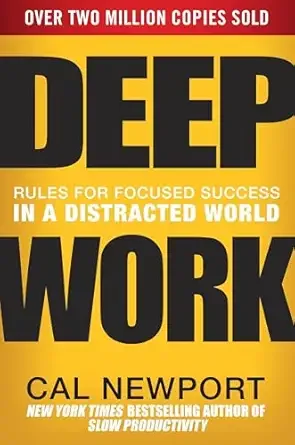
Deep Work
In Deep Work, computer science professor Cal Newport argues that the ability to focus without distraction is the defining skill of the modern economy. He divides professional activities into "deep" and "shallow" work, proving that constant connectivity actively destroys our cognitive capacity. Blending neuroscience with practical scheduling tactics, Newport provides a rigorous framework for eliminating digital noise, embracing boredom, and training your brain to produce massive value in less time.

Crossing the Chasm
In Crossing the Chasm, Geoffrey A. Moore explains why most tech products fail to gain mainstream acceptance. He identifies a dangerous gap—"the chasm"—between visionary early adopters and the pragmatic early majority. To succeed, companies must abandon a one-size-fits-all approach and instead focus all their resources on dominating a single niche market, delivering a "whole product," and then expanding from that secure beachhead.

Buy Then Build
In Buy Then Build, Walker Deibel challenges the myth that entrepreneurs must start from scratch. He presents a compelling case for "acquisition entrepreneurship"—buying an existing, profitable business. This approach de-risks the journey by providing immediate cash flow, customers, and proven systems. The book serves as a practical playbook for finding, financing, and growing an existing company, offering a smarter, more direct path to entrepreneurial success.

Founders At Work
Founders at Work by Jessica Livingston demolishes the myth of the overnight success through a series of candid interviews with the creators of companies like Apple, PayPal, and Flickr. The book reveals that the early days of startups are defined not by grand plans, but by scrappy improvisation, dogged persistence, and a fanatical focus on solving a real user problem. It’s an essential, unfiltered look at the messy truth of innovation.
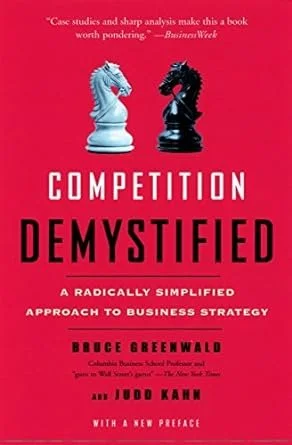
Competition Demystified
In Competition Demystified, Bruce Greenwald and Judd Kahn argue that strategy is simpler than we think. True, sustainable competitive advantage comes from one thing only: barriers to entry. They boil down all complex theories to three core advantages: supply (lower costs), demand (customer captivity), and economies of scale (usually local). This book provides a clear, actionable framework to identify these moats and determine if your business is truly protected from competitors.

The Minimalist Entrepreneur
In The Minimalist Entrepreneur, Sahil Lavingia challenges the "growth-at-all-costs" startup model. He offers a sustainable playbook for building profitable businesses by doing more with less. The core principles include starting with a community, solving a specific problem, staying lean, and prioritizing profitability from day one. It’s a guide for founders who value purpose and autonomy over chasing venture-backed unicorn status.

Just Listen
In Just Listen, psychiatrist and business coach Mark Goulston reveals that the secret to influencing anyone is not effective talking, but deep, empathetic listening. He introduces the "Persuasion Cycle," a framework for moving people from resistance to action by first making them feel understood and valued. Through practical techniques used by FBI negotiators, Goulston shows how to disarm defensiveness, bypass emotional roadblocks, and build the trust required for genuine connection and buy-in.
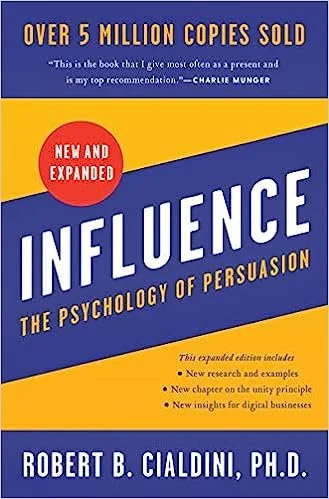
Influence
In Influence, Dr. Robert Cialdini uncovers the six universal principles that cause people to say "yes": Reciprocity, Commitment/Consistency, Social Proof, Liking, Authority, and Scarcity. This essential guide explains the psychology behind these powerful motivators, using real-world examples to show how they can be used for both persuasion and self-defense. Master these concepts to become a more effective, ethical influencer and to recognize when others are trying to manipulate you.