
Creativity, Inc.
Good to Great
Building a Second Brand
The Lean Startup
Blue Ocean Strategy
Leaders Eat Last
The Innovator's Dilemma
Thinking, Fast and Slow
Lean In
The Power of Habit
Four Thousand Weeks
The 5AM Club
Crucial Conversations
The Infinite Game
Never Split the Difference
The First 90 Days
Creativity, Inc. Good to Great Building a Second Brand The Lean Startup Blue Ocean Strategy Leaders Eat Last The Innovator's Dilemma Thinking, Fast and Slow Lean In The Power of Habit Four Thousand Weeks The 5AM Club Crucial Conversations The Infinite Game Never Split the Difference The First 90 Days
Keep your mind fresh with summaries of the best business books

StrengthsFinder 2.0
StrengthsFinder 2.0 by Tom Rath challenges the conventional wisdom of fixing weaknesses. Based on decades of Gallup research, it argues that the path to excellence is to identify your innate talents and invest in them to create powerful strengths. The book and its accompanying assessment reveal your top five of 34 "talent themes," providing a personalized guide to achieving higher engagement, performance, and fulfillment in your life and work.

Getting Things Done
Getting Things Done (GTD) by David Allen is a productivity methodology built on the principle that your brain is for having ideas, not holding them. The system relies on five steps—Capture, Clarify, Organize, Reflect, and Engage—to get all of your "stuff" out of your head and into a trusted external system. By using tools like the "Two-Minute Rule," "Next Actions," and a weekly review, GTD helps you eliminate the stress of "open loops" and achieve a state of relaxed, focused control.

Creativity, Inc.
In Creativity, Inc., Pixar co-founder Ed Catmull reveals the management philosophy behind the studio's unprecedented success. He argues that creativity is not a mystical event but a team process that can be managed by building a culture of trust and candor. Using concepts like the "Braintrust" for honest feedback and protecting new "ugly baby" ideas from fear, Catmull provides a playbook for any leader looking to overcome the hidden forces that stifle innovation and build a fearless, creative organization.

How to Become a Rainmaker
In How to Become a Rainmaker, Jeffrey J. Fox provides a no-nonsense playbook of actionable rules for winning and keeping clients. The book argues that "Rainmakers" are made, not born, through disciplined, customer-focused action. Key principles include only selling to the true decision-maker, "dollarizing" your value proposition to show clear ROI, and never giving a concession without getting one in return. It's a sharp, practical guide for anyone looking to drive revenue and become a top performer.

The 1-Page Marketing Plan
The 1-Page Marketing Plan by Allan Dib provides a simple, systematic approach to marketing for small and medium-sized businesses. The book uses a 9-square canvas to guide owners through the three crucial phases of the customer journey: Before (Prospects), During (Leads), and After (Customers). By focusing on direct response marketing and filling in each of the nine boxes—from selecting a target market to orchestrating referrals—any business can create a powerful, effective marketing plan on a single page.

Smart Brevity
Smart Brevity, by the founders of Axios, is a modern communication guide for a time-starved world. It argues that to be heard, you must say more with less. The core method involves four principles: 1) Lead with a single, powerful "Axiom," 2) Immediately explain "Why it matters," 3) Use clean, crisp language, and 4) Use scannable formatting like bullets and bolding. This audience-first approach ensures your message is clear, impactful, and respects the reader's most valuable resource: their time.

One Up on Wall Street
In One Up On Wall Street, legendary investor Peter Lynch argues that average investors have a built-in advantage over professionals because they can spot promising companies in their everyday lives long before Wall Street does. He champions a "buy what you know" philosophy, but insists it must be followed by rigorous research. The book provides a practical framework for investing, including his famous six categories of stocks, and empowers individual investors to use their own unique knowledge to find "ten-baggers" and beat the market.
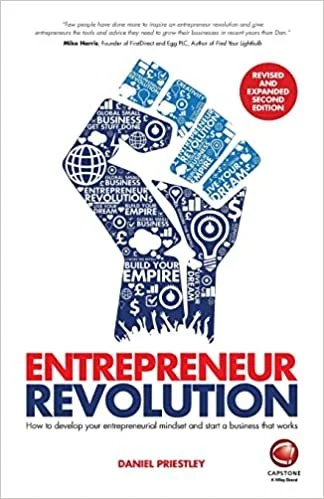
Entrepreneur Revolution
In Entrepreneur Revolution, Daniel Priestley argues that the old social contract of a "safe" corporate job is dead, and the new path to success is through entrepreneurship. He outlines the crucial mindset shifts needed to thrive in the modern, connected economy—moving from trading time for money to building assets. The book provides a 7-stage roadmap for business growth, emphasizing the importance of finding "your people," creating value, and building a business that can ultimately work without you.

Running Lean
Running Lean by Ash Maurya is a practical, step-by-step guide for applying lean principles to a new business or product. The book introduces the "Lean Canvas," a one-page business model for capturing your "Plan A" and identifying your riskiest assumptions. It provides a clear methodology—based on conducting "Problem" and "Solution" interviews—for systematically testing these assumptions with customers, achieving product/market fit, and iterating your way to a plan that works before you run out of resources.

Everything is Negotiable
In Everything is Negotiable, Gavin Kennedy provides a practical, step-by-step guide to becoming a more effective negotiator. He introduces three styles—Red (aggressive), Blue (cooperative), and Purple (strategic)—and argues for the Purple approach. The core of the book is a four-phase process: Prepare, Debate, Propose, and Bargain. By following this structured framework and always trading concessions with "If...then..." statements, anyone can learn to get a better deal in any situation.

Four Thousand Weeks
"Four Thousand Weeks: Time Management for Mortals" by Oliver Burkeman challenges readers to make the most of their limited time on Earth. He argues that time management isn't just about productivity and efficiency, but also about finding meaning and purpose in life. Burkeman offers practical advice on how to prioritize what's important, reduce distractions, and cultivate a sense of gratitude for the time we have.

The Power of Habit
In The Power of Habit, Charles Duhigg explores the science behind why we do what we do. He breaks down every habit into a simple three-step "Habit Loop"—Cue, Routine, Reward—and explains that the key to change is to substitute a new routine while keeping the original cue and reward. The book uses compelling stories from business and psychology to illustrate how understanding this loop, and leveraging "keystone habits," can empower anyone to rewrite their patterns and transform their life and organization.

The Five Dysfunctions of a Team
In The Five Dysfunctions of a Team, Patrick Lencioni presents a leadership fable that diagnoses the five common behaviors that prevent teams from succeeding. He outlines a pyramid of interrelated issues starting with an "Absence of Trust" and moving up through "Fear of Conflict," "Lack of Commitment," "Avoidance of Accountability," and "Inattention to Results." The book provides a powerful framework for leaders to identify and overcome these dysfunctions to build a cohesive and high-performing team.

The Lean Startup
In The Lean Startup, entrepreneur Eric Ries applies the principles of lean manufacturing to early-stage business creation. He argues that startups must abandon complex, long-term business plans in favor of rapid, scientifically tested experimentation. By embracing the Build-Measure-Learn feedback loop, deploying Minimum Viable Products, and replacing vanity metrics with rigorous data, founders can systematically reduce uncertainty and build products that real customers actually want to buy.

Superfans
In Superfans, entrepreneur and podcaster Pat Flynn reveals how to build a devoted community around your brand, proving that you do not need millions of passive followers to build a highly profitable business. By intentionally guiding people through the Pyramid of Fandom—from casual audience members to active participants to a connected community and true superfans—Flynn provides a tactical blueprint for cultivating loyalty that outlasts any algorithm change.

100 Things Every Designer Needs to Know About People
In 100 Things Every Designer Needs to Know About People, behavioral psychologist Susan Weinschenk bridges the gap between brain science and user experience. She outlines the neurological realities of how users see, read, remember, and decide. By understanding human limitations—from our fragile working memory to our unconscious decision-making—designers can build intuitive, friction-free interfaces that motivate action rather than causing cognitive overload.
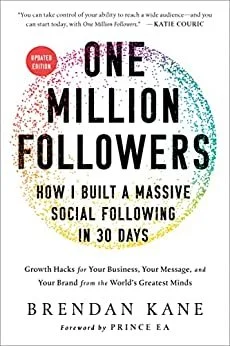
One Million Followers
In One Million Followers, digital growth strategist Brendan Kane reveals the methodology he used to build a massive global audience in just thirty days. Drawing on his experience running campaigns for Fortune 500 brands and global celebrities, he outlines a systematic, data-driven approach to social media. By combining rapid testing, precise psychological targeting, and compelling hook points, Kane shows how to stop guessing and start engineering digital growth.

The Startup Owner’s Manual
The Startup Owner's Manual by Steve Blank and Bob Dorf is the definitive guide to the Lean Startup movement. It argues that startups are not small versions of big companies, but are temporary organizations designed to search for a repeatable and scalable business model. The book provides the four-step "Customer Development" process—a rigorous, evidence-based methodology that requires founders to "get out of the building" to test their hypotheses and find product/market fit before they scale.

The Book of Boundaries
In The Book of Boundaries, Melissa Urban provides a practical guide to setting limits that will set you free from burnout and resentment. She argues that clear, kind boundaries are essential for healthy relationships. The book offers a color-coded framework (Green, Yellow, Red) for escalating your boundaries and provides word-for-word scripts for common situations at work and home. Urban’s core message is that being direct and clear is an act of kindness that protects your time, energy, and mental health.

Dare to Lead
In Dare to Lead, Brené Brown uses extensive research to argue that leadership is not about power or control, but about the courage to be vulnerable. She outlines four teachable skills for "daring leadership": rumbling with vulnerability, living into your values, building trust through her "BRAVING" framework, and learning to rise from failure. The book is a practical playbook for any leader looking to build more courageous, empathetic, and innovative teams by shedding their professional "armor."