
Creativity, Inc.
Good to Great
Building a Second Brand
The Lean Startup
Blue Ocean Strategy
Leaders Eat Last
The Innovator's Dilemma
Thinking, Fast and Slow
Lean In
The Power of Habit
Four Thousand Weeks
The 5AM Club
Crucial Conversations
The Infinite Game
Never Split the Difference
The First 90 Days
Creativity, Inc. Good to Great Building a Second Brand The Lean Startup Blue Ocean Strategy Leaders Eat Last The Innovator's Dilemma Thinking, Fast and Slow Lean In The Power of Habit Four Thousand Weeks The 5AM Club Crucial Conversations The Infinite Game Never Split the Difference The First 90 Days
Keep your mind fresh with summaries of the best business books

Power
In Power, Stanford business professor Jeffrey Pfeffer shatters the myth that the corporate world is a pure meritocracy. He argues that exceptional performance alone rarely guarantees advancement. Instead, professionals must actively cultivate influence, build strategic networks, and master the art of office politics. This pragmatic, unflinching guide provides a mechanical look at how authority is actually acquired, wielded, and maintained in modern organizations.

Mind Your Mindset
In Mind Your Mindset, leadership experts Michael Hyatt and Megan Hyatt Miller reveal that the biggest barrier to success is not a lack of strategy, but a flawed internal narrative. Drawing on neuroscience and psychology, they explain how the brain constructs subjective stories disguised as objective facts. By mastering a three-step framework to identify, interrogate, and imagine better stories, professionals can overcome mental blocks and achieve breakthrough results.

The StorySelling Method
In The StorySelling Method, communication expert Philipp Humm argues that the most effective sales tool is not a feature list, but a well-told story. He provides a practical, step-by-step system for transforming mundane interactions into compelling narratives. By mastering the CCRR framework and five essential story types, professionals can bypass sales resistance, forge genuine connections, and make their message impossible to forget.

Small Data
In Small Data, branding expert Martin Lindstrom challenges the assumption that algorithms hold all the answers. He argues that while big data reveals broad correlations, it takes tiny, seemingly insignificant behavioral clues to uncover the emotional desires driving our choices. By blending forensic psychology with cultural observation, Lindstrom shows how paying attention to hidden habits helps businesses solve the mysteries that scale alone misses.

The Boron Letters
In the 1980s, legendary copywriter Gary Halbert was sent to a federal minimum-security prison. While serving his time, he wrote a series of letters to his youngest son, Bond, distilling everything he knew about direct response marketing, consumer psychology, and living a successful life. The Boron Letters collects this correspondence. Gritty, conversational, and highly practical, it remains one of the most revered texts on how to actually persuade people to buy.

The 7 Habits of Highly Effective People
In The 7 Habits of Highly Effective People, Stephen R. Covey dismantles the quick-fix culture of modern self-help by shifting the focus from personality to character. Moving readers through a maturity continuum from dependence to interdependence, he provides a timeless framework for personal and professional effectiveness. Master these seven principles, from proactivity to empathetic listening, and you will build lasting success rooted in fairness, integrity, and human dignity.

Start, Stay, or Leave
In Start, Stay, or Leave, former prosecutor and congressman Trey Gowdy offers a practical framework for navigating life's heaviest decisions. Blending personal memoir with courtroom logic, he argues that every choice boils down to one of three actions. By learning to weigh logic against emotion, distinguish between a career and a calling, and prioritize the fear of regret over the fear of failure, you can make hard choices with clarity and walk away on your own terms.

Master Your Emotions
In Master Your Emotions, personal development author Thibaut Meurisse provides a straightforward manual for untangling your identity from your feelings. He explains how our evolutionary survival mechanisms create a natural bias toward negativity, and how our ego traps us in destructive emotional loops. By learning to reframe your interpretations, manage your physical state, and view feelings as temporary data, you can build true emotional resilience.

How to Win Friends & Influence People
In How to Win Friends and Influence People, Dale Carnegie codified the modern rules of human relations. Drawing on history, psychology, and his own corporate training courses, he proves that financial success and personal happiness rely far less on technical knowledge than on the ability to handle people. By mastering the art of sincere appreciation, active listening, and avoiding arguments, readers learn to navigate social friction and build immense, lasting influence.

Start With No
In Start with No, expert negotiator Jim Camp completely dismantles the popular "win-win" philosophy. He argues that chasing compromise turns negotiators into needy targets. Instead, Camp provides a system for maintaining emotional control, using open-ended questions to uncover the other party's true pain, and giving them the safety to reject you. By removing the pressure to agree, you build the foundation for a highly profitable, permanent decision.

Limitless
In Limitless, world-renowned brain coach Jim Kwik provides a practical manual for upgrading your cognitive performance. Having overcome a severe childhood brain injury, Kwik dispels the myth that intelligence is fixed. Instead, he introduces a three-part framework—Mindset, Motivation, and Methods—to help readers conquer digital distractions, accelerate learning, and unlock their brain's true potential. By mastering these pillars, anyone can train their memory, enhance their focus, and learn anything faster.

Quiet
In Quiet: The Power of Introverts in a World That Can't Stop Talking, Susan Cain offers a powerful re-examination of our cultural biases. She reveals that our modern world, from open-plan offices to public schools, has been built on the "Extrovert Ideal," often overlooking the unique strengths of introverts. Through compelling research and relatable stories, Cain demonstrates that quiet contemplation, deep listening, and focused work are not weaknesses but essential tools for innovation and leadership. This summary is your guide to understanding why we need a more balanced appreciation of both personality types.
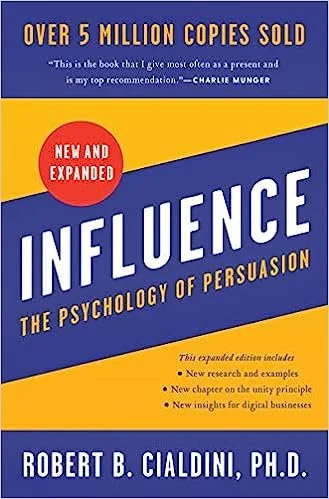
Influence
In Influence, Dr. Robert Cialdini uncovers the six universal principles that cause people to say "yes": Reciprocity, Commitment/Consistency, Social Proof, Liking, Authority, and Scarcity. This essential guide explains the psychology behind these powerful motivators, using real-world examples to show how they can be used for both persuasion and self-defense. Master these concepts to become a more effective, ethical influencer and to recognize when others are trying to manipulate you.

The Power of Habit
In The Power of Habit, Charles Duhigg explores the science behind why we do what we do. He breaks down every habit into a simple three-step "Habit Loop"—Cue, Routine, Reward—and explains that the key to change is to substitute a new routine while keeping the original cue and reward. The book uses compelling stories from business and psychology to illustrate how understanding this loop, and leveraging "keystone habits," can empower anyone to rewrite their patterns and transform their life and organization.

100 Things Every Designer Needs to Know About People
In 100 Things Every Designer Needs to Know About People, behavioral psychologist Susan Weinschenk bridges the gap between brain science and user experience. She outlines the neurological realities of how users see, read, remember, and decide. By understanding human limitations—from our fragile working memory to our unconscious decision-making—designers can build intuitive, friction-free interfaces that motivate action rather than causing cognitive overload.

Awaken the Giant Within
In Awaken the Giant Within, Tony Robbins lays out a 544-page system for changing behavior on purpose: pain and pleasure as the engine, beliefs built on references, and the personal rules that quietly decide whether you ever feel satisfied. Overclaimed in places and unmistakably a seminar in book form, it still contains ideas that have outlasted most of the genre.

The Happiness Advantage
In The Happiness Advantage, Harvard researcher Shawn Achor argues the success formula most of us run is backwards. Happiness is not the prize waiting at the end of hard work; it is the fuel that makes the work go better. Across seven principles, from the Tetris Effect to the Zorro Circle to the 20-Second Rule, he shows how small mindset and habit shifts compound into real performance gains.

Never Split The Difference
In Never Split the Difference, former FBI hostage negotiator Chris Voss argues that negotiation is driven by emotional intelligence, not logic. He introduces a toolkit of field-tested techniques like Mirroring, Labeling, and asking Calibrated "How/What" Questions. The goal is to use Tactical Empathy to understand your counterpart's worldview and guide them to a solution—your solution—without the lazy compromise of "splitting the difference."

Thinking, Fast and Slow
In Thinking, Fast and Slow, Nobel laureate Daniel Kahneman provides a masterclass in human irrationality. He reveals that our minds operate on two systems: one fast, intuitive, and prone to hidden biases, the other slow, logical, and incredibly lazy. By exposing the predictable mental shortcuts we take, Kahneman offers a profound framework for making better decisions in business and life while recognizing the limits of our own objectivity.