
Creativity, Inc.
Good to Great
Building a Second Brand
The Lean Startup
Blue Ocean Strategy
Leaders Eat Last
The Innovator's Dilemma
Thinking, Fast and Slow
Lean In
The Power of Habit
Four Thousand Weeks
The 5AM Club
Crucial Conversations
The Infinite Game
Never Split the Difference
The First 90 Days
Creativity, Inc. Good to Great Building a Second Brand The Lean Startup Blue Ocean Strategy Leaders Eat Last The Innovator's Dilemma Thinking, Fast and Slow Lean In The Power of Habit Four Thousand Weeks The 5AM Club Crucial Conversations The Infinite Game Never Split the Difference The First 90 Days
Keep your mind fresh with summaries of the best business books

SYSTEMology
In SYSTEMology, David Jenyns provides a practical, seven-step framework to help small business owners escape the daily operations trap. Recognizing that founders fail at systemization by trying to document everything themselves, Jenyns focuses on capturing the Critical Client Flow and empowering team members to extract processes. The result is an actionable guide for reducing errors, scaling profits, and building a business that thrives without you.

The SaaS Playbook
In The SaaS Playbook, serial entrepreneur Rob Walling dismantles the Silicon Valley myth that software startups require venture capital to survive. Drawing on his experience launching and acquiring multiple bootstrapped companies, Walling provides a tactical manual for building a multimillion-dollar software-as-a-service (SaaS) business. He covers everything from achieving product-market fit and optimizing pricing tiers to tracking essential metrics and navigating the psychological challenges of self-funding a sustainable company.

The Boron Letters
In the 1980s, legendary copywriter Gary Halbert was sent to a federal minimum-security prison. While serving his time, he wrote a series of letters to his youngest son, Bond, distilling everything he knew about direct response marketing, consumer psychology, and living a successful life. The Boron Letters collects this correspondence. Gritty, conversational, and highly practical, it remains one of the most revered texts on how to actually persuade people to buy.

Traction
In Traction, Gino Wickman introduces the Entrepreneurial Operating System (EOS), a highly practical method for overcoming the chaos that plagues growing companies. By mastering six key components—Vision, People, Data, Issues, Process, and Traction—leadership teams can align their goals, solve recurring problems, and build exceptionally healthy cultures. It is an instruction manual for founders who want to stop putting out fires and finally take control of their business.

Zero To One
In Zero to One, PayPal co-founder and venture capitalist Peter Thiel challenges almost every accepted dogma of the Silicon Valley startup ecosystem. Blending philosophy with ruthless business strategy, he argues that the greatest companies do not copy existing models; they create entirely new markets. By pursuing secrets, rejecting the cult of extreme iteration, and deliberately building creative monopolies, founders can escape the margin-destroying trap of competition and invent the future.
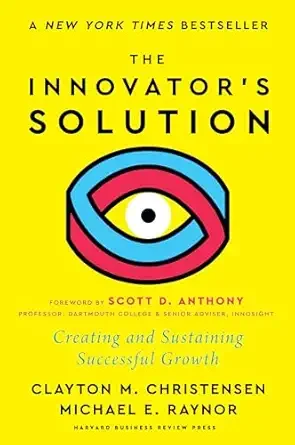
The Innovator’s Solution
In The Innovator's Solution, Clayton M. Christensen and Michael E. Raynor move from diagnosing market disruption to actively harnessing it. Building on the theories that toppled established corporate giants, the authors offer a practical playbook for creating sustainable growth. By mastering the "Jobs to Be Done" framework, identifying asymmetric motivation, and knowing whose capital to accept, leaders can predict industry shifts and launch successful new ventures before their core markets evaporate.

The Four Steps To The Epiphany
In The Four Steps to the Epiphany, Silicon Valley veteran Steve Blank dismantles the traditional approach to launching a business. He argues that building a product first and searching for buyers later is a recipe for disaster. Instead, he introduces the Customer Development methodology—a rigorous process of testing hypotheses, securing early adopters, and validating your business model before scaling. This dense, highly practical manual laid the exact foundation for the modern Lean Startup movement.

Buy Then Build
In Buy Then Build, Walker Deibel challenges the myth that entrepreneurs must start from scratch. He presents a compelling case for "acquisition entrepreneurship"—buying an existing, profitable business. This approach de-risks the journey by providing immediate cash flow, customers, and proven systems. The book serves as a practical playbook for finding, financing, and growing an existing company, offering a smarter, more direct path to entrepreneurial success.

Founders At Work
Founders at Work by Jessica Livingston demolishes the myth of the overnight success through a series of candid interviews with the creators of companies like Apple, PayPal, and Flickr. The book reveals that the early days of startups are defined not by grand plans, but by scrappy improvisation, dogged persistence, and a fanatical focus on solving a real user problem. It’s an essential, unfiltered look at the messy truth of innovation.

The Minimalist Entrepreneur
In The Minimalist Entrepreneur, Sahil Lavingia challenges the "growth-at-all-costs" startup model. He offers a sustainable playbook for building profitable businesses by doing more with less. The core principles include starting with a community, solving a specific problem, staying lean, and prioritizing profitability from day one. It’s a guide for founders who value purpose and autonomy over chasing venture-backed unicorn status.
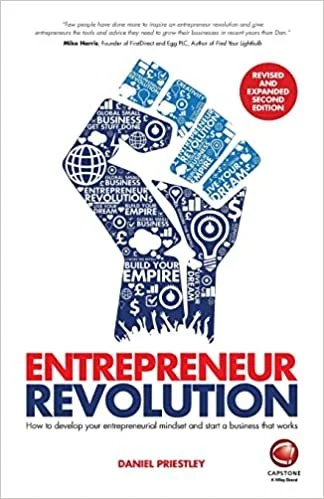
Entrepreneur Revolution
In Entrepreneur Revolution, Daniel Priestley argues that the old social contract of a "safe" corporate job is dead, and the new path to success is through entrepreneurship. He outlines the crucial mindset shifts needed to thrive in the modern, connected economy—moving from trading time for money to building assets. The book provides a 7-stage roadmap for business growth, emphasizing the importance of finding "your people," creating value, and building a business that can ultimately work without you.

The Lean Startup
The Lean Startup by Eric Ries provides a scientific methodology for building successful businesses by avoiding waste.The core of the system is the "Build-Measure-Learn" feedback loop, which cycles through creating a Minimum Viable Product (MVP), measuring how customers respond with actionable metrics, and learning whether to "pivot" or "persevere." This framework prioritizes validated learning over building things nobody wants, helping entrepreneurs navigate uncertainty and find a sustainable business model faster.

The Startup Owner’s Manual
The Startup Owner's Manual by Steve Blank and Bob Dorf is the definitive guide to the Lean Startup movement. It argues that startups are not small versions of big companies, but are temporary organizations designed to search for a repeatable and scalable business model. The book provides the four-step "Customer Development" process—a rigorous, evidence-based methodology that requires founders to "get out of the building" to test their hypotheses and find product/market fit before they scale.

The Membership Economy
In The Membership Economy, Robbie Kellman Baxter provides a playbook for the shift from one-time transactions to ongoing customer relationships. She distinguishes between a simple subscription (a tactic) and a true membership (a relationship based on a "Forever Promise" and a sense of belonging). By focusing on customer-centric strategies for onboarding, engagement, and community building, businesses like Netflix and Peloton create predictable revenue and unbreakable loyalty in an age where access trumps ownership.

Business Model Generation
Business Model Generation by Osterwalder and Pigneur replaces the outdated 50-page business plan with the Business Model Canvas, a one-page visual framework. This tool helps you map, design, and innovate any business model using nine core building blocks, from customer segments to revenue streams. By leveraging patterns like Freemium and Multi-Sided Platforms, it provides a dynamic, hands-on way for entrepreneurs and innovators to visualize and test their ideas.

Made to Stick
In Made to Stick, Chip and Dan Heath reveal why some ideas thrive while others die. They argue that the "Curse of Knowledge" makes us poor communicators and offer a six-part framework, SUCCESs, to make ideas stickier. By making messages Simple, Unexpected, Concrete, Credible, Emotional, and telling them as Stories, anyone can craft an idea that is memorable, understandable, and capable of changing minds and behavior.
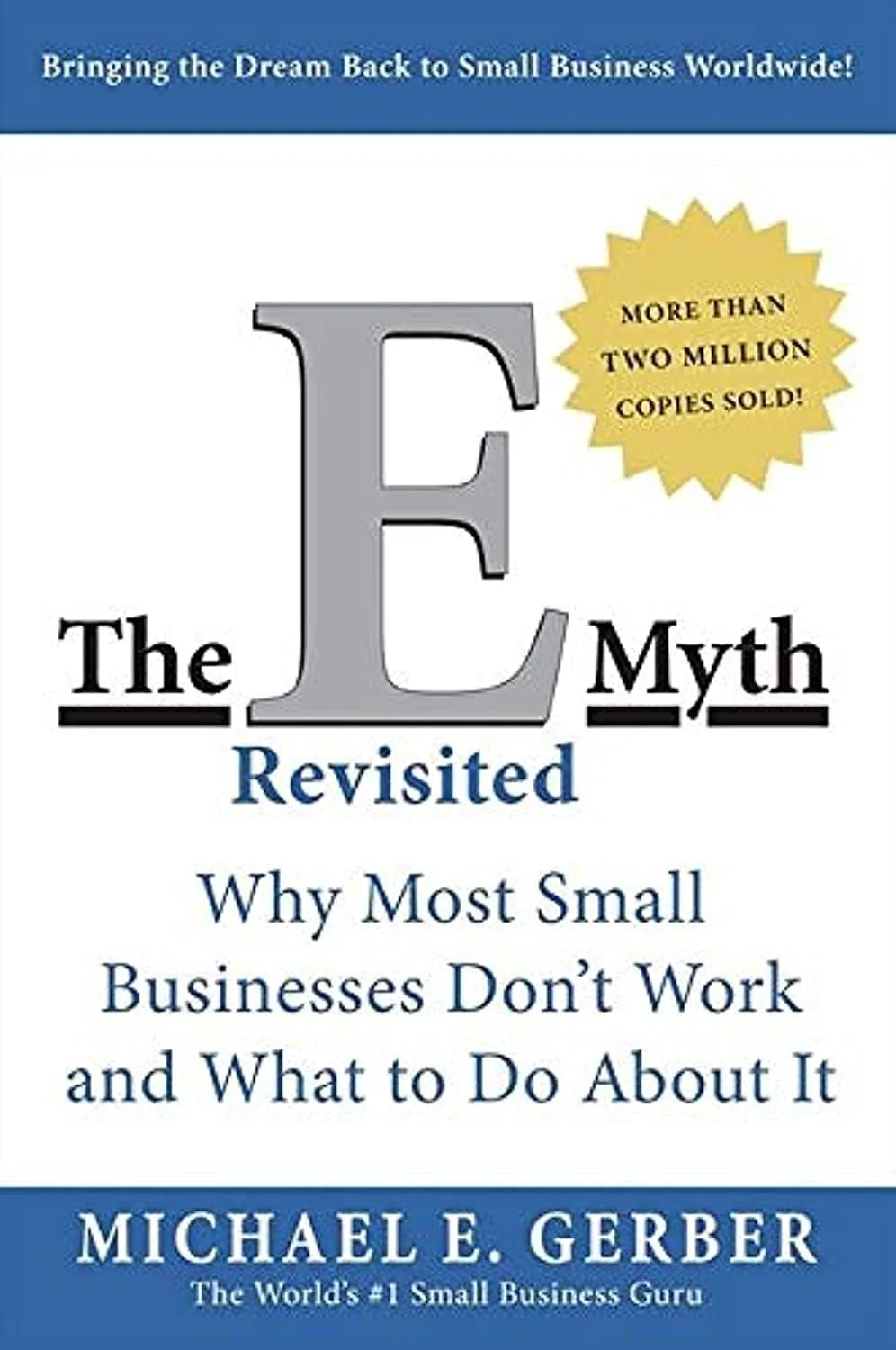
The E-Myth Revisited
In The E-Myth Revisited, Michael Gerber dismantles the myth that technical skill equals business acumen. He argues that most businesses fail because they are run by "Technicians" who create jobs for themselves, not scalable enterprises. The solution is to work on your business, not just in it, by balancing your inner Entrepreneur, Manager, and Technician and building a "Franchise Prototype" driven by documented systems.