
Creativity, Inc.
Good to Great
Building a Second Brand
The Lean Startup
Blue Ocean Strategy
Leaders Eat Last
The Innovator's Dilemma
Thinking, Fast and Slow
Lean In
The Power of Habit
Four Thousand Weeks
The 5AM Club
Crucial Conversations
The Infinite Game
Never Split the Difference
The First 90 Days
Creativity, Inc. Good to Great Building a Second Brand The Lean Startup Blue Ocean Strategy Leaders Eat Last The Innovator's Dilemma Thinking, Fast and Slow Lean In The Power of Habit Four Thousand Weeks The 5AM Club Crucial Conversations The Infinite Game Never Split the Difference The First 90 Days
Keep your mind fresh with summaries of the best business books

The 360 Degree Leader
In The 360 Degree Leader, leadership expert John C. Maxwell dismantles the illusion that influence requires a corner office. He argues that the vast majority of leadership happens in the messy middle of an organization. By mastering the distinct skills of leading up to your boss, leading across to your peers, and leading down to your team, you can multiply your impact regardless of your current job title.

The 12 Week Year
In The 12 Week Year, Brian P. Moran and Michael Lennington expose the fatal flaw of annualized thinking. They argue that twelve-month goals breed complacency, causing us to delay the actual work until December. By redefining a year as just twelve weeks, the authors provide a rigorous execution system that manufactures constant urgency, replacing vague resolutions with ruthless weekly tracking, predictable routines, and measurable daily actions.

Built To Last
In Built to Last, Jim Collins and Jerry I. Porras present the results of a six-year Stanford University study answering one question: what makes truly exceptional companies outlast their peers? Comparing visionary organizations with their closest rivals, the authors dismantle the myth of the charismatic founder. Enduring greatness, they prove, requires a fierce dedication to core values, massive audacious goals, and an architectural obsession with building systems over launching products.

Competing For The Future
In Competing for the Future, strategy experts Gary Hamel and C.K. Prahalad dismantle the corporate obsession with downsizing and restructuring. They argue that cutting costs only makes an organization thinner, not healthier. To dominate tomorrow's markets, leaders must develop industry foresight, build a portfolio of core competencies, and pursue a massive strategic intent. It is a timeless blueprint for inventing new industries rather than playing endless catch-up in existing ones.

Turn the Ship Around!
In Turn the Ship Around!, former Navy Captain L. David Marquet shares how he transformed the worst-performing submarine in the fleet into its absolute best. By abandoning the traditional top-down chain of command for a "leader-leader" model, he proves that true excellence comes from pushing decision-making power down the ranks. It is a practical, brilliant blueprint for replacing passive compliance with active, intent-based ownership.

The Five Dysfunctions of a Team
The Five Dysfunctions of a Team is Patrick Lencioni's model of why teams underperform, presented mostly as a fable about a new CEO inheriting a dysfunctional executive group. His five dysfunctions form a pyramid: absence of trust at the base, then fear of conflict, lack of commitment, avoidance of accountability, and inattention to results at the top. The sequence is the point, since each one is produced by the one below it, which means visible symptoms almost always trace to a foundation problem nobody is addressing.

The Six Sigma Way
The Six Sigma Way demystifies the powerful data-driven methodology for eliminating defects and improving business processes. The book breaks down the core principles, including the five-step DMAIC framework (Define, Measure, Analyze, Improve, Control) and the goal of achieving less than 3.4 defects per million opportunities. Using examples from Motorola and GE, it shows how any business can use this systematic approach to solve persistent problems, reduce costs, and dramatically increase quality and customer satisfaction.

Good to Great
In Good to Great, Jim Collins presents a data-backed framework for why some companies make the leap to enduring success. After a five-year study, he found that great companies are led by humble "Level 5 Leaders," get the "right people on the bus" before setting a direction, and develop a simple, focused "Hedgehog Concept." They achieve breakthroughs not through single miracle actions, but by relentlessly pushing a "flywheel" of disciplined action until it builds unstoppable momentum.

Reengineering the Corporation
In Reengineering the Corporation, Michael Hammer and James Champy argue that companies must obliterate their outdated, fragmented processes and start over. They advocate for a radical shift from focusing on individual tasks to redesigning end-to-end business processes to achieve dramatic gains in speed, cost, and quality. Using principles like organizing around outcomes, not tasks, the book offers a manifesto for fundamental business reinvention, not just incremental improvement.

The Power of KM
The Power of KM is a strategic approach to capturing, sharing, and utilizing the collective intelligence within an organization. It addresses the critical business problem of "reinventing the wheel" and losing expertise when employees leave. By distinguishing between explicit (documented) and tacit (experiential) knowledge, and building a culture of sharing, companies can leverage their most valuable asset—their people's wisdom—to innovate faster, make smarter decisions, and build a lasting competitive advantage.

Rework
Rework is a book that challenges traditional business wisdom and offers a contrarian approach to entrepreneurship and work. The authors argue for efficiency, simplicity, and creativity in starting and growing a business, promoting short bursts of focused work, minimal bureaucracy, and a strong brand. The book covers topics such as starting a business, hiring, marketing, financial management, and more, offering practical and relevant insights for businesses of all sizes and industries.

Leaders Eat Last
Simon Sinek's argument starts with a Marine Corps custom, officers eating after their troops, and builds it into a theory of why some workplaces produce loyalty and others produce quiet self-protection. His central idea is the Circle of Safety: when people trust that leadership will absorb risk on their behalf, they stop guarding against threats from inside the organization and turn their energy outward. Sinek grounds this in the neurochemistry of endorphins, dopamine, serotonin and oxytocin, argues that most modern workplaces have become dopamine-heavy and trust-poor, and names the imbalance Destructive Abundance. The conclusion is that protecting people is not the reward for performance but the precondition for it.
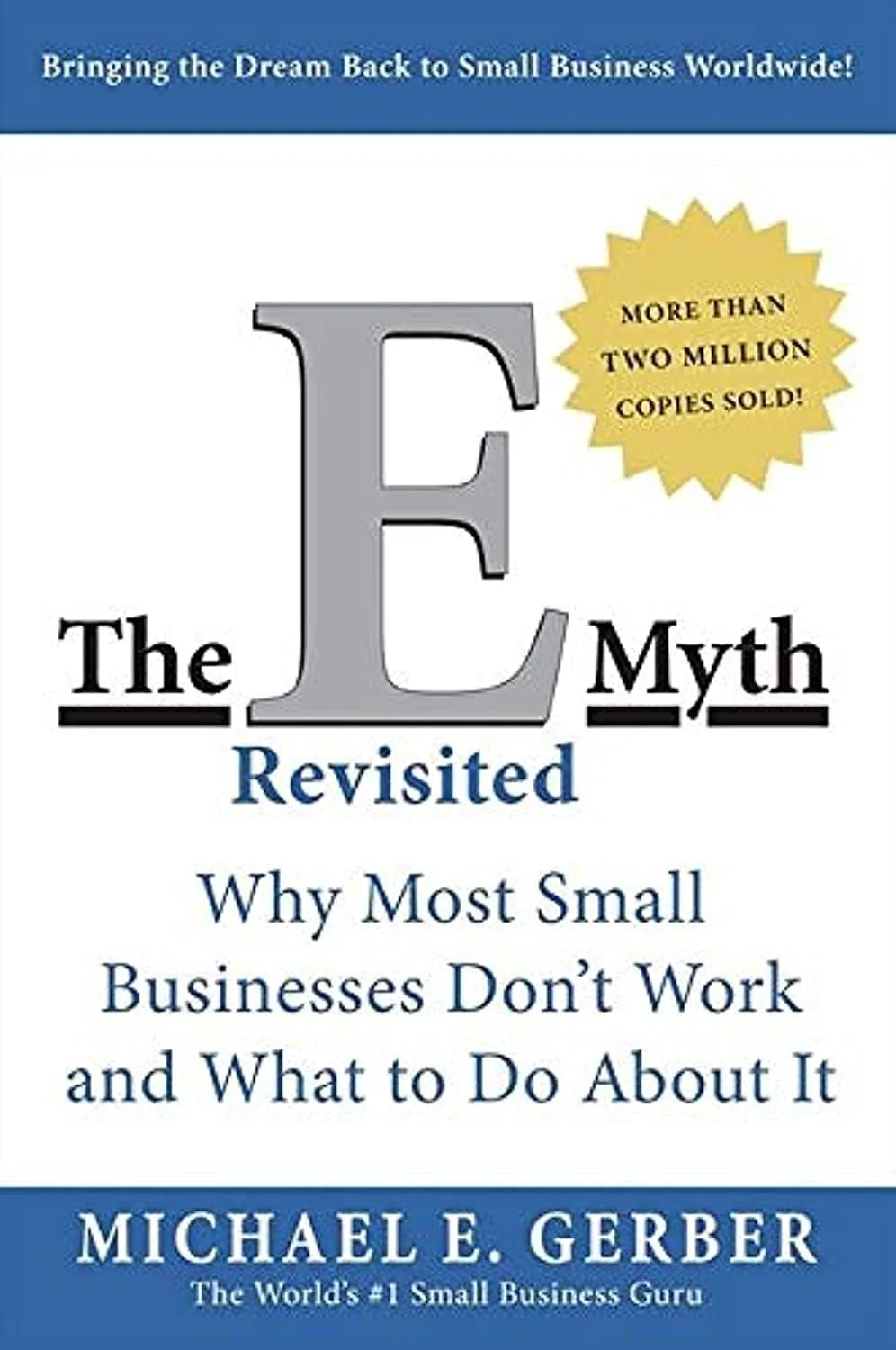
The E-Myth Revisited
Michael Gerber's argument is that most small businesses fail for a reason nobody warns you about: they are started by skilled technicians who assume doing the work qualifies them to own a company that does the work. He calls that the entrepreneurial seizure, and traces the wreckage through three personalities every owner carries, three phases every business passes through, and one structural fix. Build your company as though it were the prototype for five thousand more, and refine it through a loop of innovation, quantification, and orchestration. The result is a business that runs on systems rather than on you, and a real answer to the question of what it is all supposed to be for.

The Effective Executive
Peter Drucker's 1967 classic argues that effectiveness is not a talent but a habit, and that any knowledge worker can learn it. Through five practices, from keeping an honest time log to building on strengths and making decisions that start with disagreement rather than consensus, The Effective Executive explains how to get the right things done instead of merely doing things right.
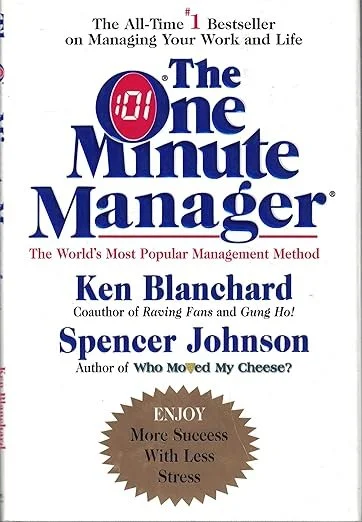
The One Minute Manager
In The One Minute Manager, Ken Blanchard and Spencer Johnson use a short business parable to solve a classic leadership dilemma. They reveal how to achieve massive results while genuinely supporting a team. By mastering three techniques—One Minute Goals, One Minute Praisings, and One Minute Reprimands—leaders can drastically improve productivity, eliminate micromanagement, and build confident employees who learn to manage themselves.

The Ride of a Lifetime
In The Ride of a Lifetime, former Walt Disney Company CEO Bob Iger reflects on fifteen years leading the world’s most powerful entertainment brand. Blending personal memoir with a practical masterclass in leadership, he details the high-stakes negotiations behind acquiring Pixar, Marvel, and Lucasfilm. Iger proves that sustaining a creative empire requires radical focus, enduring optimism, and a willingness to embrace disruption rather than fight it.

The First 90 Days
In The First 90 Days, transition expert Michael D. Watkins provides a definitive playbook for leaders stepping into new roles. He argues that transitions are critical periods of vulnerability, where early missteps can derail an otherwise promising career. By accurately diagnosing the business situation, securing early wins, aligning with the boss, and deliberately rebuilding the team, leaders can rapidly reach the break-even point where they contribute more value than they consume.