
Creativity, Inc.
Good to Great
Building a Second Brand
The Lean Startup
Blue Ocean Strategy
Leaders Eat Last
The Innovator's Dilemma
Thinking, Fast and Slow
Lean In
The Power of Habit
Four Thousand Weeks
The 5AM Club
Crucial Conversations
The Infinite Game
Never Split the Difference
The First 90 Days
Creativity, Inc. Good to Great Building a Second Brand The Lean Startup Blue Ocean Strategy Leaders Eat Last The Innovator's Dilemma Thinking, Fast and Slow Lean In The Power of Habit Four Thousand Weeks The 5AM Club Crucial Conversations The Infinite Game Never Split the Difference The First 90 Days
Keep your mind fresh with summaries of the best business books

Quiet
Quiet is Susan Cain's case that Western culture has organized itself around an ideal of the outgoing, quick-speaking personality, and that this costs organizations and individuals a great deal. She traces the temperament to measurable differences in nervous system reactivity, examines the research showing group brainstorming and open offices undermine the outcomes they promise, and offers Free Trait Theory as the reconciliation: people can act out of character for things they care about, provided they build in time to recover.

The Infinite Game
In The Infinite Game, Simon Sinek applies the philosophical framework of finite and infinite play to the business world. He argues that leaders who try to "win" their industries end up destroying trust, stifling innovation, and driving their companies into the ground. By mastering five essential practices—including advancing a Just Cause, building Trusting Teams, and studying worthy rivals—leaders can build resilient organizations designed to outlast their competitors and thrive for generations.

Turn the Ship Around!
In Turn the Ship Around!, former Navy Captain L. David Marquet shares how he transformed the worst-performing submarine in the fleet into its absolute best. By abandoning the traditional top-down chain of command for a "leader-leader" model, he proves that true excellence comes from pushing decision-making power down the ranks. It is a practical, brilliant blueprint for replacing passive compliance with active, intent-based ownership.
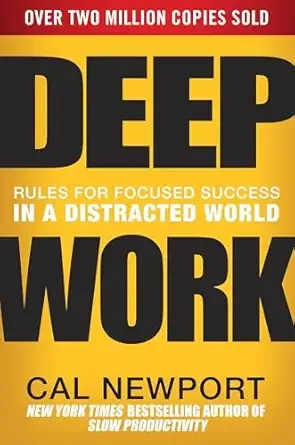
Deep Work
In Deep Work, computer science professor Cal Newport argues that the ability to focus without distraction is the defining skill of the modern economy. He divides professional activities into "deep" and "shallow" work, proving that constant connectivity actively destroys our cognitive capacity. Blending neuroscience with practical scheduling tactics, Newport provides a rigorous framework for eliminating digital noise, embracing boredom, and training your brain to produce massive value in less time.

Crossing the Chasm
In Crossing the Chasm, Geoffrey A. Moore explains why most tech products fail to gain mainstream acceptance. He identifies a dangerous gap—"the chasm"—between visionary early adopters and the pragmatic early majority. To succeed, companies must abandon a one-size-fits-all approach and instead focus all their resources on dominating a single niche market, delivering a "whole product," and then expanding from that secure beachhead.

Buy Then Build
In Buy Then Build, Walker Deibel challenges the myth that entrepreneurs must start from scratch. He presents a compelling case for "acquisition entrepreneurship"—buying an existing, profitable business. This approach de-risks the journey by providing immediate cash flow, customers, and proven systems. The book serves as a practical playbook for finding, financing, and growing an existing company, offering a smarter, more direct path to entrepreneurial success.

Founders At Work
Founders at Work by Jessica Livingston demolishes the myth of the overnight success through a series of candid interviews with the creators of companies like Apple, PayPal, and Flickr. The book reveals that the early days of startups are defined not by grand plans, but by scrappy improvisation, dogged persistence, and a fanatical focus on solving a real user problem. It’s an essential, unfiltered look at the messy truth of innovation.
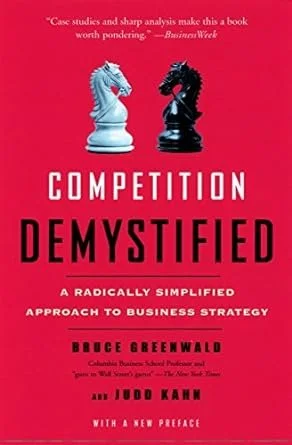
Competition Demystified
In Competition Demystified, Bruce Greenwald and Judd Kahn argue that strategy is simpler than we think. True, sustainable competitive advantage comes from one thing only: barriers to entry. They boil down all complex theories to three core advantages: supply (lower costs), demand (customer captivity), and economies of scale (usually local). This book provides a clear, actionable framework to identify these moats and determine if your business is truly protected from competitors.

The Minimalist Entrepreneur
In The Minimalist Entrepreneur, Sahil Lavingia challenges the "growth-at-all-costs" startup model. He offers a sustainable playbook for building profitable businesses by doing more with less. The core principles include starting with a community, solving a specific problem, staying lean, and prioritizing profitability from day one. It’s a guide for founders who value purpose and autonomy over chasing venture-backed unicorn status.

Just Listen
In Just Listen, psychiatrist and business coach Mark Goulston reveals that the secret to influencing anyone is not effective talking, but deep, empathetic listening. He introduces the "Persuasion Cycle," a framework for moving people from resistance to action by first making them feel understood and valued. Through practical techniques used by FBI negotiators, Goulston shows how to disarm defensiveness, bypass emotional roadblocks, and build the trust required for genuine connection and buy-in.
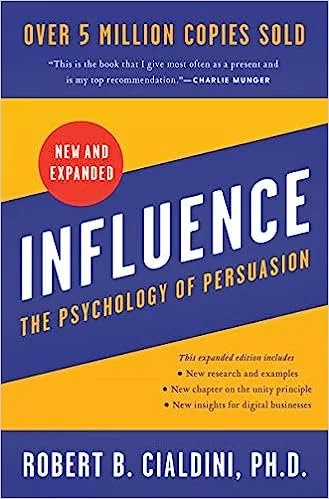
Influence
In Influence, Dr. Robert Cialdini uncovers the six universal principles that cause people to say "yes": Reciprocity, Commitment/Consistency, Social Proof, Liking, Authority, and Scarcity. This essential guide explains the psychology behind these powerful motivators, using real-world examples to show how they can be used for both persuasion and self-defense. Master these concepts to become a more effective, ethical influencer and to recognize when others are trying to manipulate you.

StrengthsFinder 2.0
StrengthsFinder 2.0 by Tom Rath challenges the conventional wisdom of fixing weaknesses. Based on decades of Gallup research, it argues that the path to excellence is to identify your innate talents and invest in them to create powerful strengths. The book and its accompanying assessment reveal your top five of 34 "talent themes," providing a personalized guide to achieving higher engagement, performance, and fulfillment in your life and work.

Getting Things Done
Getting Things Done is David Allen's system for managing commitments so they stop consuming attention. Its premise is that the mind is for having ideas rather than holding them, and that every unfinished obligation stored mentally drains focus regardless of whether you can act on it. The method runs in five steps — capture, clarify, organize, reflect, engage — anchored by two disciplines that do most of the work: defining the specific next physical action for everything, and a weekly review that keeps the whole system trustworthy.

Creativity, Inc.
In Creativity, Inc., Pixar co-founder Ed Catmull reveals the management philosophy behind the studio's unprecedented success. He argues that creativity is not a mystical event but a team process that can be managed by building a culture of trust and candor. Using concepts like the "Braintrust" for honest feedback and protecting new "ugly baby" ideas from fear, Catmull provides a playbook for any leader looking to overcome the hidden forces that stifle innovation and build a fearless, creative organization.

How to Become a Rainmaker
In How to Become a Rainmaker, Jeffrey J. Fox provides a no-nonsense playbook of actionable rules for winning and keeping clients. The book argues that "Rainmakers" are made, not born, through disciplined, customer-focused action. Key principles include only selling to the true decision-maker, "dollarizing" your value proposition to show clear ROI, and never giving a concession without getting one in return. It's a sharp, practical guide for anyone looking to drive revenue and become a top performer.

The 1-Page Marketing Plan
The 1-Page Marketing Plan by Allan Dib provides a simple, systematic approach to marketing for small and medium-sized businesses. The book uses a 9-square canvas to guide owners through the three crucial phases of the customer journey: Before (Prospects), During (Leads), and After (Customers). By focusing on direct response marketing and filling in each of the nine boxes—from selecting a target market to orchestrating referrals—any business can create a powerful, effective marketing plan on a single page.

Smart Brevity
Smart Brevity, by the founders of Axios, is a modern communication guide for a time-starved world. It argues that to be heard, you must say more with less. The core method involves four principles: 1) Lead with a single, powerful "Axiom," 2) Immediately explain "Why it matters," 3) Use clean, crisp language, and 4) Use scannable formatting like bullets and bolding. This audience-first approach ensures your message is clear, impactful, and respects the reader's most valuable resource: their time.
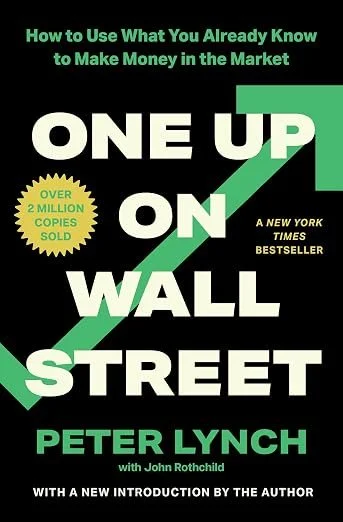
One Up on Wall Street
In One Up On Wall Street, legendary investor Peter Lynch argues that average investors have a built-in advantage over professionals because they can spot promising companies in their everyday lives long before Wall Street does. He champions a "buy what you know" philosophy, but insists it must be followed by rigorous research. The book provides a practical framework for investing, including his famous six categories of stocks, and empowers individual investors to use their own unique knowledge to find "ten-baggers" and beat the market.
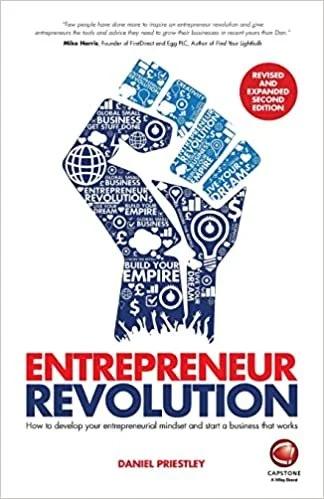
Entrepreneur Revolution
In Entrepreneur Revolution, Daniel Priestley argues that the old social contract of a "safe" corporate job is dead, and the new path to success is through entrepreneurship. He outlines the crucial mindset shifts needed to thrive in the modern, connected economy—moving from trading time for money to building assets. The book provides a 7-stage roadmap for business growth, emphasizing the importance of finding "your people," creating value, and building a business that can ultimately work without you.

Running Lean
Running Lean by Ash Maurya is a practical, step-by-step guide for applying lean principles to a new business or product. The book introduces the "Lean Canvas," a one-page business model for capturing your "Plan A" and identifying your riskiest assumptions. It provides a clear methodology—based on conducting "Problem" and "Solution" interviews—for systematically testing these assumptions with customers, achieving product/market fit, and iterating your way to a plan that works before you run out of resources.