
Creativity, Inc.
Good to Great
Building a Second Brand
The Lean Startup
Blue Ocean Strategy
Leaders Eat Last
The Innovator's Dilemma
Thinking, Fast and Slow
Lean In
The Power of Habit
Four Thousand Weeks
The 5AM Club
Crucial Conversations
The Infinite Game
Never Split the Difference
The First 90 Days
Creativity, Inc. Good to Great Building a Second Brand The Lean Startup Blue Ocean Strategy Leaders Eat Last The Innovator's Dilemma Thinking, Fast and Slow Lean In The Power of Habit Four Thousand Weeks The 5AM Club Crucial Conversations The Infinite Game Never Split the Difference The First 90 Days
Keep your mind fresh with summaries of the best business books

How Big Things Get Done
In How Big Things Get Done, megaproject expert Bent Flyvbjerg and journalist Dan Gardner reveal the hidden mechanics behind why projects fail. Drawing on a database of over 16,000 global endeavors, they show that successful projects share a counterintuitive approach: agonizingly slow planning followed by blistering execution. By mastering reference class forecasting and modularity, anyone can learn to beat the odds and deliver on time and on budget.

Competing For The Future
In Competing for the Future, strategy experts Gary Hamel and C.K. Prahalad dismantle the corporate obsession with downsizing and restructuring. They argue that cutting costs only makes an organization thinner, not healthier. To dominate tomorrow's markets, leaders must develop industry foresight, build a portfolio of core competencies, and pursue a massive strategic intent. It is a timeless blueprint for inventing new industries rather than playing endless catch-up in existing ones.

The Infinite Game
In The Infinite Game, Simon Sinek applies the philosophical framework of finite and infinite play to the business world. He argues that leaders who try to "win" their industries end up destroying trust, stifling innovation, and driving their companies into the ground. By mastering five essential practices—including advancing a Just Cause, building Trusting Teams, and studying worthy rivals—leaders can build resilient organizations designed to outlast their competitors and thrive for generations.
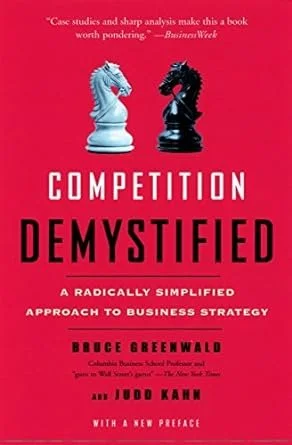
Competition Demystified
In Competition Demystified, Bruce Greenwald and Judd Kahn argue that strategy is simpler than we think. True, sustainable competitive advantage comes from one thing only: barriers to entry. They boil down all complex theories to three core advantages: supply (lower costs), demand (customer captivity), and economies of scale (usually local). This book provides a clear, actionable framework to identify these moats and determine if your business is truly protected from competitors.

Running Lean
Running Lean by Ash Maurya is a practical, step-by-step guide for applying lean principles to a new business or product. The book introduces the "Lean Canvas," a one-page business model for capturing your "Plan A" and identifying your riskiest assumptions. It provides a clear methodology—based on conducting "Problem" and "Solution" interviews—for systematically testing these assumptions with customers, achieving product/market fit, and iterating your way to a plan that works before you run out of resources.
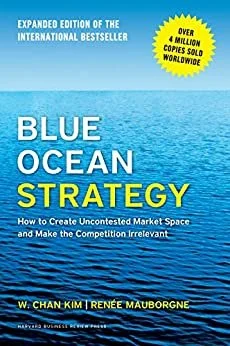
Blue Ocean Strategy
Blue Ocean Strategy, by Kim and Mauborgne, presents a systematic approach to making competition irrelevant by creating uncontested market space. The book contrasts bloody "red oceans" of competition with wide-open "blue oceans" of new demand. The key is "value innovation"—the simultaneous pursuit of differentiation and low cost. Using the "Four Actions Framework" (Eliminate-Reduce-Raise-Create), companies like Cirque du Soleil can reconstruct market boundaries and create a new, powerful value curve.
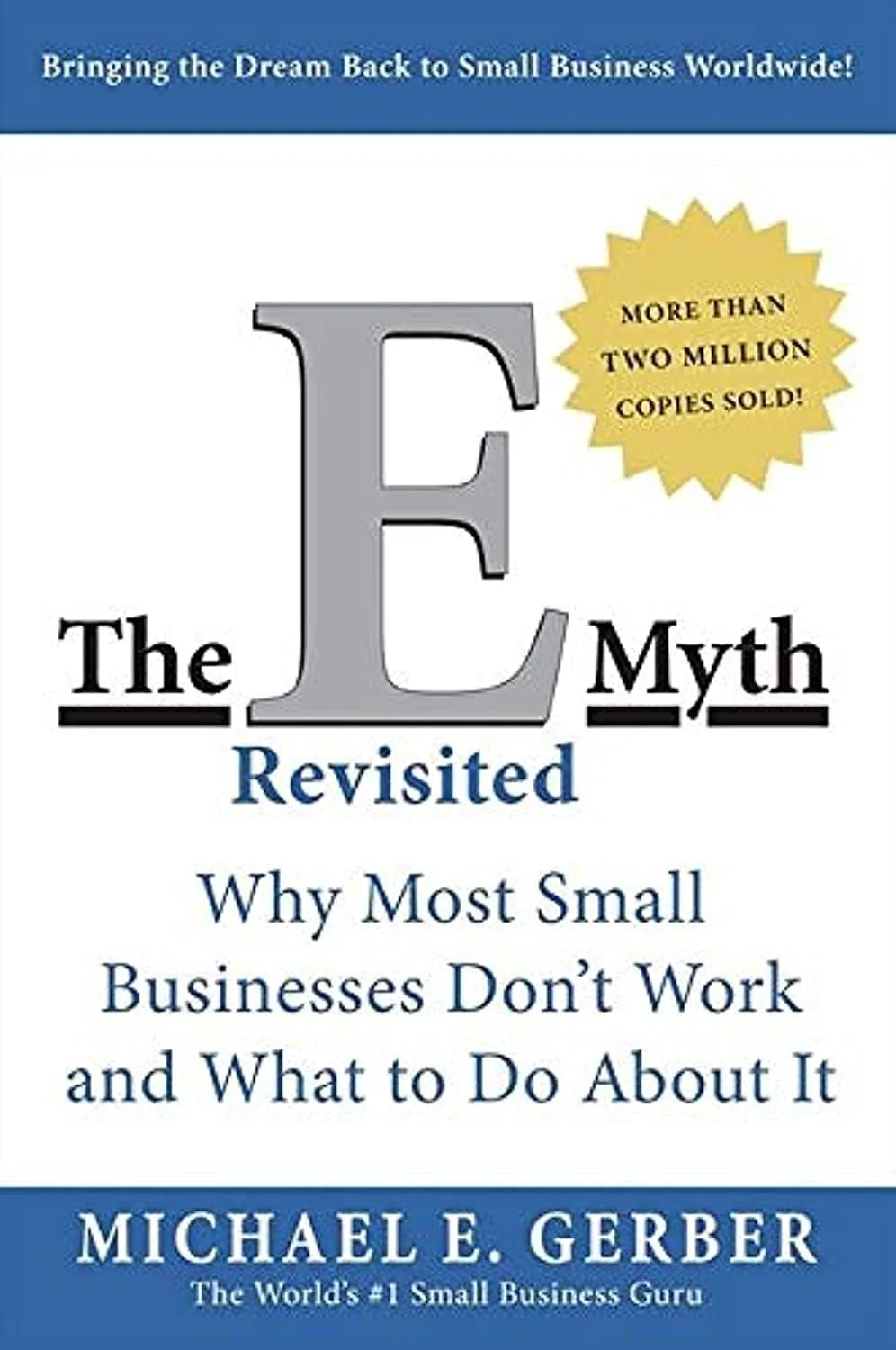
The E-Myth Revisited
Michael Gerber's argument is that most small businesses fail for a reason nobody warns you about: they are started by skilled technicians who assume doing the work qualifies them to own a company that does the work. He calls that the entrepreneurial seizure, and traces the wreckage through three personalities every owner carries, three phases every business passes through, and one structural fix. Build your company as though it were the prototype for five thousand more, and refine it through a loop of innovation, quantification, and orchestration. The result is a business that runs on systems rather than on you, and a real answer to the question of what it is all supposed to be for.

The Ride of a Lifetime
In The Ride of a Lifetime, former Walt Disney Company CEO Bob Iger reflects on fifteen years leading the world’s most powerful entertainment brand. Blending personal memoir with a practical masterclass in leadership, he details the high-stakes negotiations behind acquiring Pixar, Marvel, and Lucasfilm. Iger proves that sustaining a creative empire requires radical focus, enduring optimism, and a willingness to embrace disruption rather than fight it.

The Innovator's Dilemma
In The Innovator's Dilemma, Clayton M. Christensen explains why outstanding companies lose their market leadership despite doing everything right. He reveals that the very practices of good management—listening to customers and focusing on high-margin products—blind incumbents to disruptive technologies. By analyzing industries like steel and disk drives, Christensen provides a structural framework for recognizing disruptive threats and creating the organizational space required to survive them.