
Creativity, Inc.
Good to Great
Building a Second Brand
The Lean Startup
Blue Ocean Strategy
Leaders Eat Last
The Innovator's Dilemma
Thinking, Fast and Slow
Lean In
The Power of Habit
Four Thousand Weeks
The 5AM Club
Crucial Conversations
The Infinite Game
Never Split the Difference
The First 90 Days
Creativity, Inc. Good to Great Building a Second Brand The Lean Startup Blue Ocean Strategy Leaders Eat Last The Innovator's Dilemma Thinking, Fast and Slow Lean In The Power of Habit Four Thousand Weeks The 5AM Club Crucial Conversations The Infinite Game Never Split the Difference The First 90 Days
Keep your mind fresh with summaries of the best business books

Competing For The Future
In Competing for the Future, strategy experts Gary Hamel and C.K. Prahalad dismantle the corporate obsession with downsizing and restructuring. They argue that cutting costs only makes an organization thinner, not healthier. To dominate tomorrow's markets, leaders must develop industry foresight, build a portfolio of core competencies, and pursue a massive strategic intent. It is a timeless blueprint for inventing new industries rather than playing endless catch-up in existing ones.

The Infinite Game
In The Infinite Game, Simon Sinek applies the philosophical framework of finite and infinite play to the business world. He argues that leaders who try to "win" their industries end up destroying trust, stifling innovation, and driving their companies into the ground. By mastering five essential practices—including advancing a Just Cause, building Trusting Teams, and studying worthy rivals—leaders can build resilient organizations designed to outlast their competitors and thrive for generations.

Turn the Ship Around!
In Turn the Ship Around!, former Navy Captain L. David Marquet shares how he transformed the worst-performing submarine in the fleet into its absolute best. By abandoning the traditional top-down chain of command for a "leader-leader" model, he proves that true excellence comes from pushing decision-making power down the ranks. It is a practical, brilliant blueprint for replacing passive compliance with active, intent-based ownership.

Creativity, Inc.
In Creativity, Inc., Pixar co-founder Ed Catmull reveals the management philosophy behind the studio's unprecedented success. He argues that creativity is not a mystical event but a team process that can be managed by building a culture of trust and candor. Using concepts like the "Braintrust" for honest feedback and protecting new "ugly baby" ideas from fear, Catmull provides a playbook for any leader looking to overcome the hidden forces that stifle innovation and build a fearless, creative organization.

Dare to Lead
In Dare to Lead, Brené Brown uses extensive research to argue that leadership is not about power or control, but about the courage to be vulnerable. She outlines four teachable skills for "daring leadership": rumbling with vulnerability, living into your values, building trust through her "BRAVING" framework, and learning to rise from failure. The book is a practical playbook for any leader looking to build more courageous, empathetic, and innovative teams by shedding their professional "armor."
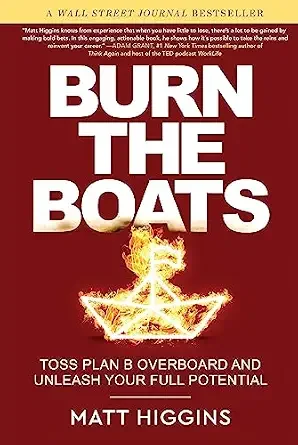
Burn the Boats
In Burn the Boats, Matt Higgins argues that having a "Plan B" is a recipe for mediocrity. He uses the ancient military tactic of burning one's ships to illustrate how eliminating the option of retreat forces total commitment and unleashes one's full potential. This mindset isn't about reckless risk, but about making a calculated, all-in decision after due diligence. By removing your safety net, you unlock the desperate creativity required for breakthrough success.

The Hard Thing About Hard Things
In The Hard Thing About Hard Things, Ben Horowitz provides a brutally honest guide to the challenges of entrepreneurship that business schools don't cover. He argues that "The Struggle" is an inevitable part of the journey and introduces critical concepts like the Peacetime vs. Wartime CEO. Offering no easy answers, Horowitz gives unfiltered advice on difficult tasks like firing friends and managing your own psychology, making this an essential read for any leader navigating chaos.

Leaders Eat Last
Leaders Eat Last by Simon Sinek delves into the various aspects of leadership and how they can be used to create a successful and sustainable company culture. It explains how the most successful organizations are those where the leaders put the needs of their employees first. The book emphasizes the importance of leading by example, building trust, creating a sense of belonging, being vulnerable, and understanding the human brain, to create a culture where employees feel safe, valued and motivated.

The Ride of a Lifetime
In The Ride of a Lifetime, former Walt Disney Company CEO Bob Iger reflects on fifteen years leading the world’s most powerful entertainment brand. Blending personal memoir with a practical masterclass in leadership, he details the high-stakes negotiations behind acquiring Pixar, Marvel, and Lucasfilm. Iger proves that sustaining a creative empire requires radical focus, enduring optimism, and a willingness to embrace disruption rather than fight it.

The Innovator's Dilemma
In The Innovator's Dilemma, Clayton M. Christensen explains why outstanding companies lose their market leadership despite doing everything right. He reveals that the very practices of good management—listening to customers and focusing on high-margin products—blind incumbents to disruptive technologies. By analyzing industries like steel and disk drives, Christensen provides a structural framework for recognizing disruptive threats and creating the organizational space required to survive them.