
Creativity, Inc.
Good to Great
Building a Second Brand
The Lean Startup
Blue Ocean Strategy
Leaders Eat Last
The Innovator's Dilemma
Thinking, Fast and Slow
Lean In
The Power of Habit
Four Thousand Weeks
The 5AM Club
Crucial Conversations
The Infinite Game
Never Split the Difference
The First 90 Days
Creativity, Inc. Good to Great Building a Second Brand The Lean Startup Blue Ocean Strategy Leaders Eat Last The Innovator's Dilemma Thinking, Fast and Slow Lean In The Power of Habit Four Thousand Weeks The 5AM Club Crucial Conversations The Infinite Game Never Split the Difference The First 90 Days
Keep your mind fresh with summaries of the best business books
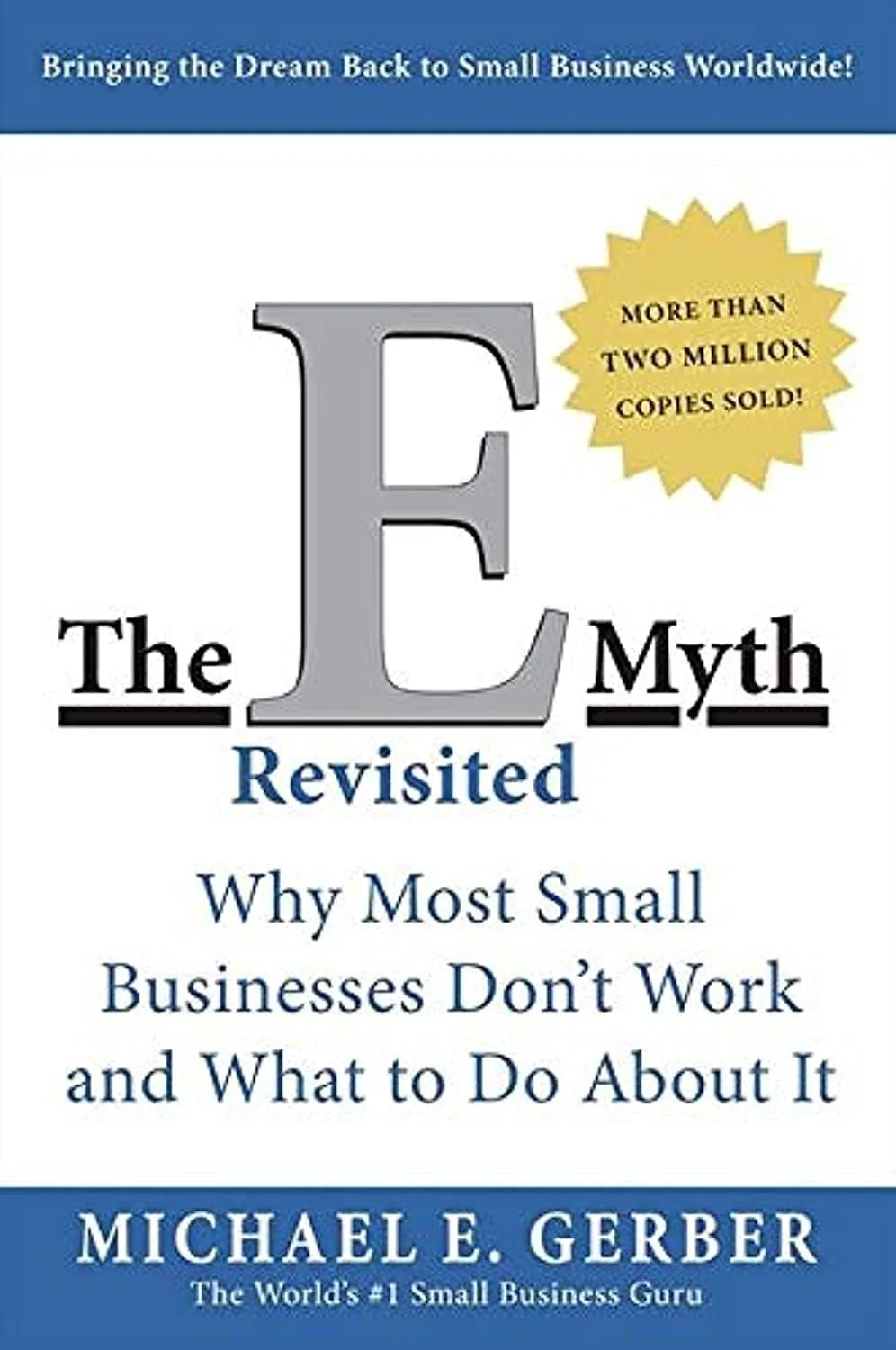
The E-Myth Revisited
In The E-Myth Revisited, Michael Gerber dismantles the myth that technical skill equals business acumen. He argues that most businesses fail because they are run by "Technicians" who create jobs for themselves, not scalable enterprises. The solution is to work on your business, not just in it, by balancing your inner Entrepreneur, Manager, and Technician and building a "Franchise Prototype" driven by documented systems.
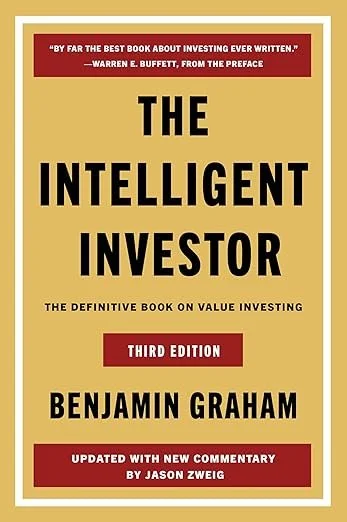
The Intelligent Investor
First published in 1949 and updated regularly since, Benjamin Graham’s The Intelligent Investor is the foundational text of value investing. Graham distinguishes between “investment” and “speculation,” urges a margin-of-safety in every purchase, and personifies market swings as the capricious “Mr. Market.” By focusing on intrinsic value, rigorous analysis, and emotional discipline, he equips both “defensive” and “enterprising” investors to compound wealth while sidestepping ruinous fads and panics.
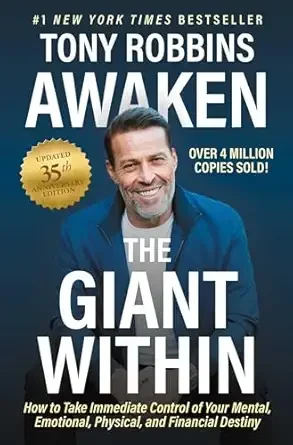
Awaken the Giant Within
In Awaken the Giant Within, Tony Robbins provides a high-energy blueprint for personal mastery. He argues that you can take immediate control of your life by making true decisions, mastering your emotional state through physiology and focus, and applying his "Ultimate Success Formula." By understanding and managing our core beliefs and the Six Human Needs, Robbins claims we can reshape our destiny and unleash our full potential for a magnificent life.

The Effective Executive
In The Effective Executive, Peter Drucker argues that effectiveness is a learnable discipline, not an innate talent. He outlines five essential practices for any knowledge worker: rigorously managing one's time, focusing on outward contribution instead of effort, making strengths productive, concentrating on a few key priorities, and following a systematic process for making decisions. This timeless guide is a manual for managing oneself to achieve results in any organization.

The Happiness Advantage
In The Happiness Advantage, Shawn Achor uses research from positive psychology to argue that happiness is not the reward for success, but the fuel for it. The book outlines seven actionable principles for training your brain for positivity, which is scientifically proven to make you more creative, resilient, and productive. By changing your mindset, building good habits with the "20-Second Rule," and investing in social connections, you can create a powerful competitive edge in work and life.

Never Split The Difference
In Never Split the Difference, former FBI hostage negotiator Chris Voss argues that negotiation is driven by emotional intelligence, not logic. He introduces a toolkit of field-tested techniques like Mirroring, Labeling, and asking Calibrated "How/What" Questions. The goal is to use Tactical Empathy to understand your counterpart's worldview and guide them to a solution—your solution—without the lazy compromise of "splitting the difference."

The 5AM Club
In The 5 AM Club, leadership expert Robin Sharma uses a narrative fable to present a comprehensive system for mastering your morning. He argues that waking up at 5:00 a.m. offers a distraction-free window to optimize your mind, body, and spirit. By applying structured routines like the 20/20/20 Formula and cultivating four interior empires, you can build lasting habits and dramatically increase your daily output.
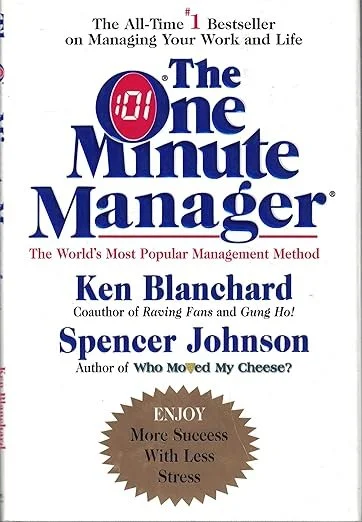
The One Minute Manager
In The One Minute Manager, Ken Blanchard and Spencer Johnson use a short business parable to solve a classic leadership dilemma. They reveal how to achieve massive results while genuinely supporting a team. By mastering three techniques—One Minute Goals, One Minute Praisings, and One Minute Reprimands—leaders can drastically improve productivity, eliminate micromanagement, and build confident employees who learn to manage themselves.

The Ride of a Lifetime
In The Ride of a Lifetime, former Walt Disney Company CEO Bob Iger reflects on fifteen years leading the world’s most powerful entertainment brand. Blending personal memoir with a practical masterclass in leadership, he details the high-stakes negotiations behind acquiring Pixar, Marvel, and Lucasfilm. Iger proves that sustaining a creative empire requires radical focus, enduring optimism, and a willingness to embrace disruption rather than fight it.

The Innovator's Dilemma
In The Innovator's Dilemma, Clayton M. Christensen explains why outstanding companies lose their market leadership despite doing everything right. He reveals that the very practices of good management—listening to customers and focusing on high-margin products—blind incumbents to disruptive technologies. By analyzing industries like steel and disk drives, Christensen provides a structural framework for recognizing disruptive threats and creating the organizational space required to survive them.

Thinking, Fast and Slow
In Thinking, Fast and Slow, Nobel laureate Daniel Kahneman provides a masterclass in human irrationality. He reveals that our minds operate on two systems: one fast, intuitive, and prone to hidden biases, the other slow, logical, and incredibly lazy. By exposing the predictable mental shortcuts we take, Kahneman offers a profound framework for making better decisions in business and life while recognizing the limits of our own objectivity.

The First 90 Days
In The First 90 Days, transition expert Michael D. Watkins provides a definitive playbook for leaders stepping into new roles. He argues that transitions are critical periods of vulnerability, where early missteps can derail an otherwise promising career. By accurately diagnosing the business situation, securing early wins, aligning with the boss, and deliberately rebuilding the team, leaders can rapidly reach the break-even point where they contribute more value than they consume.

How Soccer Explains the World
In How Soccer Explains the World, journalist Franklin Foer uses humanity's most popular sport to test the optimistic promises of globalization. Traveling from the violent terraces of Serbia to the suburban fields of America, he reveals how global capitalism failed to erase tribalism, nationalism, and corruption. Instead, the beautiful game exposes how fiercely people cling to local identities and sectarian divides in a rapidly integrating world.