How Netflix Built a Culture of Freedom and Responsibility
Many companies rely on policies, processes, and annual reviews to manage employees. Patty McCord argues that these systems often treat adults like children and get in the way of performance. At Netflix, she helped create a different approach: give people freedom, share context, expect honesty, and hold them responsible for results.
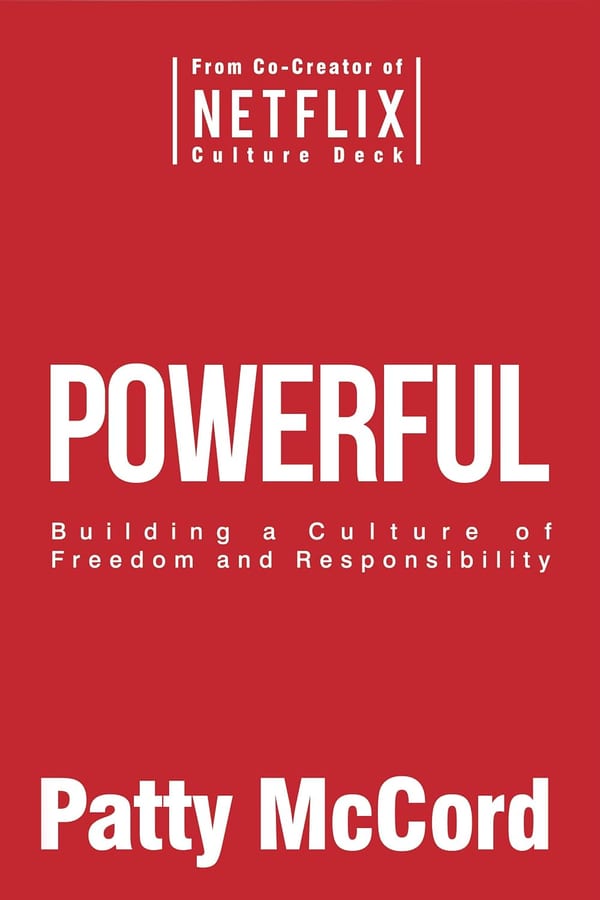
Powerful: Building a Culture of Freedom and Responsibility, published in 2018, is McCord's account of building Netflix's culture. McCord served as Netflix's chief talent officer for about 14 years and helped write the company's influential culture deck, a presentation outlining its values that was widely shared online. This summary covers the core principles of Netflix's culture, the practices McCord describes, and the debates around them.
What You'll Learn
- Why McCord believes employees should be treated as adults
- Why every employee should understand the business
- How radical honesty supports performance
- Why debate and facts should drive decisions
- How to hire for the company you want to become
- Why Netflix paid top-of-market salaries
- What the keeper test is and how to part ways respectfully
Treat People Like Adults
McCord's foundational principle is that the greatest motivation for employees is being part of a team that achieves great things. People want to contribute to success, not be managed through rules and incentives.
She argues that companies should treat employees as capable adults. Rather than creating policies for every situation, leaders should share context and trust people to make good decisions.
Netflix's elimination of its formal vacation policy illustrates this approach. Rather than tracking vacation days, the company encouraged employees to take time off as needed while ensuring their work got done. Similarly, Netflix simplified its expense policy, asking employees to act in the company's best interest.
Everyone Should Understand the Business
McCord argues that every employee should understand how the business works, including its customers, competitors, financial performance, and strategy. When people understand the business, they can make better decisions and see how their work contributes.
She encourages leaders to communicate constantly and openly. At Netflix, leaders shared information widely, held meetings to explain strategy, and encouraged employees to ask questions.
Radical Honesty
McCord emphasizes radical honesty: telling people the truth in a timely, constructive way. She argues that feedback should be delivered face-to-face, in real time, rather than saved for annual reviews.
Netflix eventually moved away from formal annual performance reviews, relying instead on continuous feedback. McCord argues that regular, honest conversations are more effective than periodic evaluations.
She also encourages leaders to model honesty by admitting mistakes and inviting feedback.
Debate Vigorously
McCord argues that strong opinions should be grounded in facts. She encourages teams to debate ideas openly, with participants presenting evidence and listening to opposing views.
She describes practices such as asking people to argue the other side of a position, which can reveal weaknesses in their reasoning and encourage more thoughtful decisions.
Build the Company You Want to Be
McCord argues that companies should hire for the future rather than the present. As businesses grow and change, they need different skills. Leaders should think about the capabilities the company will need in six months or a year and hire accordingly.
She acknowledges that this can mean moving on from employees whose skills no longer fit, even if they performed well in the past.
The Right Person for Each Position
McCord emphasizes hiring the right people for each role. She argues that companies should focus on finding people with the specific skills and experience needed, rather than relying on generic criteria.
She also encourages managers to take ownership of hiring, working closely with recruiters and treating recruiting as a core part of their job.
The Keeper Test
One of McCord's best-known ideas is the keeper test. Managers ask themselves: if this person told me they were leaving, would I fight to keep them? If the answer is no, it may be time to part ways.
McCord argues that this approach ensures teams consist of high performers who fit the company's current needs. She describes Netflix as more like a sports team than a family. Teams need the right players for each position, and those positions change over time.
Pay People What They're Worth
Netflix paid employees at the top of the market for their roles. McCord argues that companies should pay people based on the value they create and what they could earn elsewhere, rather than relying on rigid salary bands or annual raises.
She also encourages employees to explore their market value, even by interviewing with other companies, so they understand their worth.
The Art of Good Goodbyes
McCord argues that letting people go is a normal part of building a high-performing organization. When employees no longer fit the company's needs, leaders should part ways respectfully and generously, often with severance.
She emphasizes honesty and dignity in these conversations. She also notes that she herself eventually left Netflix, illustrating that the principles applied to everyone.
Powerful at a Glance
- Freedom and responsibility. Give employees context and trust, and hold them accountable.
- Radical honesty. Deliver feedback in real time, face-to-face.
- The keeper test. Ask whether you would fight to keep each team member.
- Common misreading. Treating Netflix's practices as a template to copy rather than principles to adapt.
Lessons to Apply from Powerful
- Share context. Make sure everyone understands the business and how their work contributes.
- Give feedback continuously. Replace annual reviews with real-time conversations.
- Hire for the future. Consider the skills you'll need as the company grows.
- Use the keeper test. Regularly assess whether each role is filled by the right person.
- Part ways respectfully. Handle departures with honesty, dignity, and generosity.
Who Should Read Powerful (and Who Can Skip It)
- Read it if you're a leader or HR professional rethinking traditional people practices.
- Read it if you want insight into Netflix's culture and how it was built.
- Read it if you're building a high-growth company.
- Skip it if you work in a highly regulated environment where policies are essential.
- Skip it if you prefer a gentler, family-oriented model of company culture.
Final Reflections
Powerful is valuable because it challenges conventional HR practices and offers a bold alternative. McCord's emphasis on treating employees as adults, sharing context, and expecting honesty provides useful lessons for any organization. Her candid stories make the book engaging and practical. Readers interested in direct, caring feedback can pair it with Kim Scott's Radical Candor, and those interested in radical transparency at another company can turn to Ray Dalio's Principles.
The book also has limitations. Netflix's culture was shaped by its specific circumstances, including rapid growth, high margins, and a talent-intensive business, which may not apply to many organizations. Critics argue that the keeper test and frequent turnover can create insecurity and fear. Paying top-of-market salaries is not feasible for many companies. And the book reflects McCord's perspective, without much input from employees who experienced the culture differently. Still, it offers thought-provoking ideas for building high-performance teams.
The Bottom Line
High-performance cultures treat employees as adults, share business context openly, expect radical honesty, and ensure every role is filled by the right person for the company's future.
Frequently Asked Questions
What is the keeper test?
It's a question managers ask about each team member: if this person told me they were leaving, would I fight to keep them? If not, it may be time to part ways.
Why did Netflix eliminate its vacation policy?
Netflix believed that treating employees as adults meant trusting them to take time off responsibly, rather than tracking vacation days.
What is the Netflix culture deck?
It's a presentation Netflix created to describe its values and culture, including freedom and responsibility, radical honesty, and high performance. McCord helped write it.