What Computer Science Teaches Us About Everyday Decisions
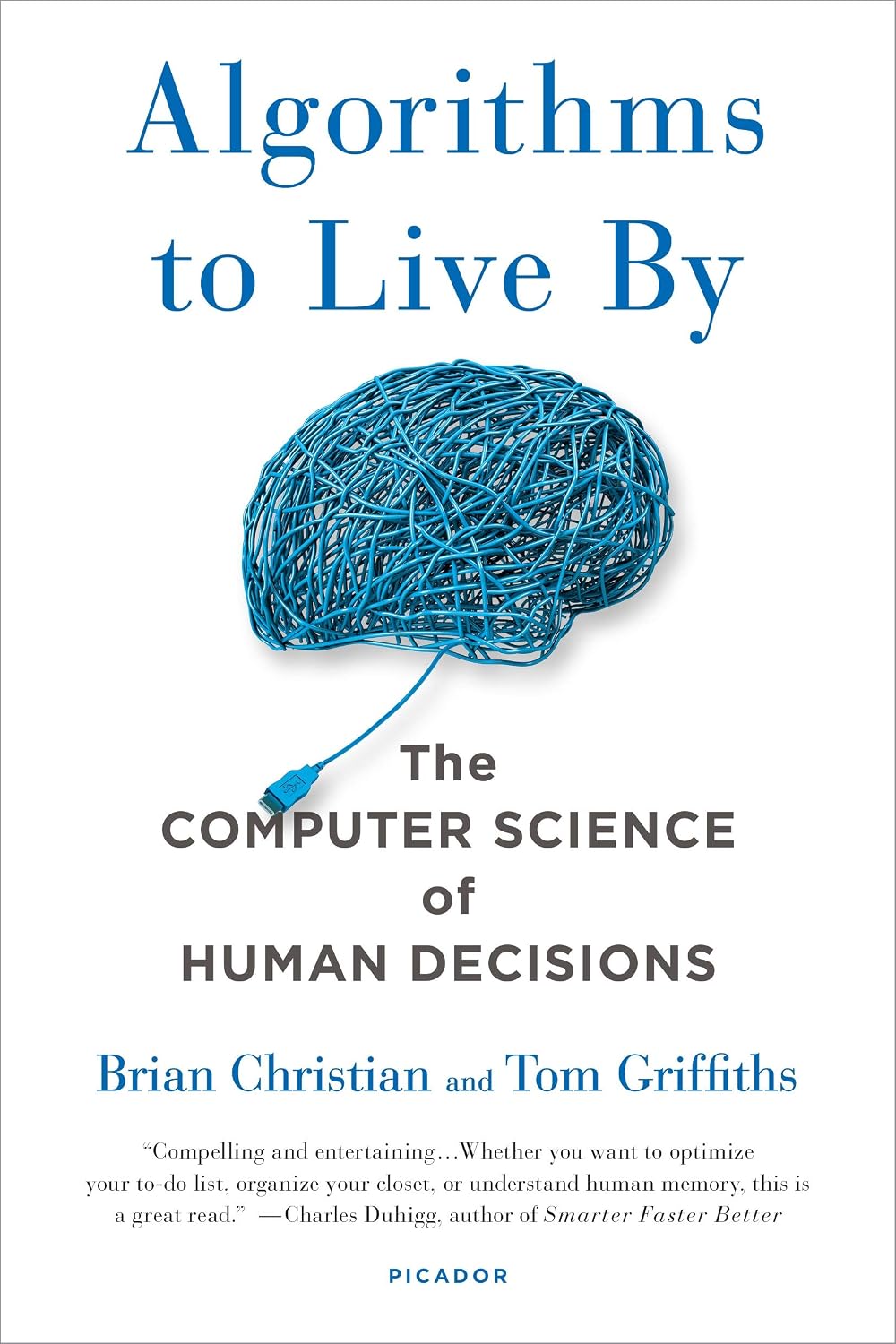
People face difficult decisions every day. How long should you search for an apartment before committing? Should you try a new restaurant or return to a favorite? How should you organize your tasks? Brian Christian and Tom Griffiths argue that computer scientists have studied versions of these problems for decades, and that their solutions can help people decide better.
Algorithms to Live By: The Computer Science of Human Decisions was published in 2016. Christian is a writer known for books on technology and human nature. Griffiths is a professor of psychology and computer science at Princeton who studies how people make decisions. This summary covers the book's main chapters and the lessons each offers for life and work.
What You'll Learn
- When to stop searching and commit
- How to balance exploration and exploitation
- What sorting and caching teach about organization
- How to schedule tasks effectively
- How to make predictions with Bayes's rule
- Why simpler models often work better
- How relaxation and randomness help solve hard problems
- What networking teaches about communication
- What game theory reveals about cooperation
- Why computational kindness matters
Optimal Stopping: The 37 Percent Rule
The first chapter addresses optimal stopping, the problem of when to stop searching and make a decision. The classic version is the secretary problem: you interview candidates one at a time and must decide immediately whether to hire each one.
The mathematical solution is the 37 percent rule. Spend the first 37 percent of your search evaluating options without committing. Then choose the first option that's better than everything you've seen. This approach gives you the best chance of choosing the best option.
The authors apply this idea to apartment hunting, hiring, and dating. They also note variations, such as when you can return to previous options or when there's a chance of rejection.
Explore/Exploit
The second chapter addresses the trade-off between exploring new options and exploiting known ones. Should you try a new restaurant or return to a favorite?
The authors explain that the answer depends on how much time you have left. When you have a lot of time, exploration is valuable because you can benefit from what you learn. When time is short, exploitation makes more sense.
They discuss strategies from computer science, such as the Gittins index and upper confidence bound algorithms, which favor options with uncertain potential. They also suggest this explains why young people explore more and older people prefer familiar experiences.
Sorting
The third chapter discusses sorting. The authors explain that sorting is expensive, and that the cost of sorting rises faster than the number of items. They argue that sorting is valuable only if you'll search the sorted items later.
They also discuss how sports tournaments and social hierarchies function as sorting systems, and how competition can be used to establish rankings efficiently.
Caching
The fourth chapter discusses caching, how computers store frequently used information for quick access. The authors explain the least recently used principle: when space runs out, discard the item you've used least recently.
They apply this to organizing physical spaces, such as closets and desks. They describe a filing system in which papers are returned to the front of a pile after use, keeping recently used items within easy reach. They also suggest that human memory works like a cache, and that forgetting may reflect the brain's efficient prioritization of useful information.
Scheduling
The fifth chapter addresses scheduling. The authors explain that the best scheduling strategy depends on your goal. If you want to minimize lateness, do tasks in order of due date. If you want to minimize the total time people wait, do the shortest tasks first.
They also discuss priority inversion, a problem that affected NASA's Mars Pathfinder mission, when a low-priority task blocked a high-priority one. And they warn about thrashing, when a system spends so much time switching between tasks that it gets little done. They recommend batching tasks and limiting interruptions. For a practical system for managing tasks, see David Allen's Getting Things Done.
Bayes's Rule
The sixth chapter discusses Bayesian reasoning, making predictions by combining prior beliefs with new evidence. The authors explain that good predictions depend on knowing the type of distribution involved.
For phenomena with normal distributions, such as human lifespans, predict close to the average. For power-law distributions, such as box office revenues, predict that things will continue in proportion to how long they've lasted. They note that people often have good intuitions about these distributions, but that media coverage can distort them.
Overfitting
The seventh chapter discusses overfitting, when a model fits past data so closely that it fails to predict the future. The authors argue that simpler models often perform better than complex ones.
They apply this to decisions, suggesting that people sometimes overthink choices. They recommend techniques such as regularization, penalizing complexity, and early stopping, ending analysis before it becomes counterproductive.
Relaxation and Randomness
The authors discuss relaxation, solving hard problems by temporarily relaxing constraints, and randomness, using random sampling to approximate solutions. They argue that these approaches can help people make progress on problems that seem impossible.
They also discuss simulated annealing, an approach that starts with a lot of randomness and gradually reduces it, as a model for exploring options before settling down.
Networking
The authors discuss how computer networks handle communication. They describe exponential backoff, in which systems wait progressively longer before retrying after a failure. They suggest this approach can apply to relationships and second chances.
They also discuss how networks use acknowledgments to confirm messages, comparing this to the importance of feedback in human communication.
Game Theory
The authors discuss game theory, the study of strategic interaction. They explain concepts such as the Nash equilibrium and the prisoner's dilemma, showing how rational individuals can produce bad collective outcomes.
They argue that changing the rules of the game, through mechanism design, can produce better outcomes. They also discuss information cascades, in which people follow others' actions instead of their own information. For more on decisions under uncertainty, see Annie Duke's Thinking in Bets.
Computational Kindness
The authors conclude with computational kindness, the idea that people can reduce the mental burden they place on others. For example, instead of asking "Where do you want to eat?" you can propose specific options, making the decision easier.
Algorithms to Live By at a Glance
- 37 percent rule. Look before you leap, then commit to the best option.
- Explore/exploit. Explore when you have time, exploit when time is short.
- Overfitting. Simpler models often predict better.
- Common misreading. Treating algorithms as rigid rules rather than ways of thinking about trade-offs.
Lessons to Apply from Algorithms to Live By
- Set a search period. Decide how long to explore before committing.
- Match exploration to time. Try new things early in a project or career.
- Choose a scheduling goal. Decide whether to minimize lateness or total waiting.
- Avoid overthinking. Stop analysis when more detail adds little.
- Be computationally kind. Offer specific options instead of open-ended questions.
Who Should Read Algorithms to Live By (and Who Can Skip It)
- Read it if you enjoy ideas from math and computer science.
- Read it if you want new ways to think about everyday decisions.
- Read it if you're curious about how algorithms relate to human behavior.
- Skip it if you want a simple self-help guide.
- Skip it if you dislike technical explanations.
Final Reflections
Algorithms to Live By is valuable because it offers a fresh, rigorous way to think about everyday decisions. Its concepts, such as the 37 percent rule, explore/exploit, and computational kindness, are memorable and useful. The book also offers comfort: many problems have no perfect solution, and good decisions are often about managing trade-offs. Readers interested in the psychology of decision-making can turn to Daniel Kahneman's Thinking, Fast and Slow.
The book also has limitations. Some chapters are technical and may be difficult for readers without a math background. The connections between algorithms and human life can feel loose at times, and the practical takeaways are not always clear. Real-life decisions often involve factors that algorithms don't capture, such as emotions and values. Still, it's an engaging and thought-provoking book.
The Bottom Line
Computer science offers useful ways to think about everyday problems, from when to stop searching to how to schedule time, and can help people make better decisions with less stress.
Frequently Asked Questions
What is the 37 percent rule?
It's the solution to the optimal stopping problem: spend the first 37 percent of your search evaluating options, then choose the first option better than all you've seen.
What is the explore/exploit trade-off?
It's the balance between trying new options and sticking with known ones. The authors argue that exploration makes more sense when you have more time ahead.
What is computational kindness?
It's the idea of reducing the mental burden you place on others, such as by offering specific options instead of open-ended questions.