
Creativity, Inc.
Good to Great
The Lean Startup
Blue Ocean Strategy
Leaders Eat Last
The Innovator's Dilemma
Thinking, Fast and Slow
Lean In
The Power of Habit
Four Thousand Weeks
Creativity, Inc. Good to Great The Lean Startup Blue Ocean Strategy Leaders Eat Last The Innovator's Dilemma Thinking, Fast and Slow Lean In The Power of Habit Four Thousand Weeks
Keep your mind fresh with summaries of the best business books

The Membership Economy
In The Membership Economy, Robbie Kellman Baxter provides a playbook for the shift from one-time transactions to ongoing customer relationships. She distinguishes between a simple subscription (a tactic) and a true membership (a relationship based on a "Forever Promise" and a sense of belonging). By focusing on customer-centric strategies for onboarding, engagement, and community building, businesses like Netflix and Peloton create predictable revenue and unbreakable loyalty in an age where access trumps ownership.

Burn the Boats
In Burn the Boats, Matt Higgins argues that having a "Plan B" is a recipe for mediocrity. He uses the ancient military tactic of burning one's ships to illustrate how eliminating the option of retreat forces total commitment and unleashes one's full potential. This mindset isn't about reckless risk, but about making a calculated, all-in decision after due diligence. By removing your safety net, you unlock the desperate creativity required for breakthrough success.

The Innovator's Dilemma
In The Innovator's Dilemma, Clayton Christensen explains why successful, well-managed companies often fail. He introduces the theory of disruptive innovation, where new, "inferior" technologies create new markets and topple industry leaders from below. The dilemma is that the very practices that make companies great—listening to customers and investing in high-margin products—cause them to ignore these disruptive threats. Christensen’s solution is for firms to nurture disruptive projects in separate, independent organizations.

The Power of KM
The Power of KM is a strategic approach to capturing, sharing, and utilizing the collective intelligence within an organization. It addresses the critical business problem of "reinventing the wheel" and losing expertise when employees leave. By distinguishing between explicit (documented) and tacit (experiential) knowledge, and building a culture of sharing, companies can leverage their most valuable asset—their people's wisdom—to innovate faster, make smarter decisions, and build a lasting competitive advantage.

Fooling Some of the People All of the Time
In Fooling Some of the People All of the Time, hedge fund manager David Einhorn chronicles his six-year war against Allied Capital, a company he accused of systemic accounting fraud. This real-life financial thriller details how Einhorn used forensic accounting to uncover inflated asset valuations and how he withstood attacks from the company and inaction from regulators. It's a gripping lesson in critical thinking, market skepticism, and the courage required to hold power to account.

The Effective Executive
In The Effective Executive, Peter Drucker argues that effectiveness is a learnable discipline, not an innate talent. He outlines five essential practices for any knowledge worker: rigorously managing one's time, focusing on outward contribution instead of effort, making strengths productive, concentrating on a few key priorities, and following a systematic process for making decisions. This timeless guide is a manual for managing oneself to achieve results in any organization.

Business Model Generation
Business Model Generation by Osterwalder and Pigneur replaces the outdated 50-page business plan with the Business Model Canvas, a one-page visual framework. This tool helps you map, design, and innovate any business model using nine core building blocks, from customer segments to revenue streams. By leveraging patterns like Freemium and Multi-Sided Platforms, it provides a dynamic, hands-on way for entrepreneurs and innovators to visualize and test their ideas.

How Soccer Explains the World
In How Soccer Explains the World, Franklin Foer takes readers on a global tour to show how the world's favorite sport is a powerful lens for understanding globalization's complex effects. From the religious wars of Scottish football to the gangster-nationalists of the Balkans and the oligarchs of the English Premier League, Foer argues that soccer, rather than erasing local identities, has become a primary stage where ancient tribes and modern economies clash.

Focal Point
In Focal Point, Brian Tracy provides a system for achieving more by doing less. The core idea is to gain absolute clarity on your most important goals and then apply the 80/20 rule to focus on the vital few activities that produce the majority of your results. By identifying your Key Result Areas and ruthlessly prioritizing your tasks, you can double your productivity, reduce stress, and achieve your most ambitious goals.

Reengineering the Corporation
In Reengineering the Corporation, Michael Hammer and James Champy argue that companies must obliterate their outdated, fragmented processes and start over. They advocate for a radical shift from focusing on individual tasks to redesigning end-to-end business processes to achieve dramatic gains in speed, cost, and quality. Using principles like organizing around outcomes, not tasks, the book offers a manifesto for fundamental business reinvention, not just incremental improvement.

Never Split The Difference
In Never Split the Difference, former FBI hostage negotiator Chris Voss argues that negotiation is driven by emotional intelligence, not logic. He introduces a toolkit of field-tested techniques like Mirroring, Labeling, and asking Calibrated "How/What" Questions. The goal is to use Tactical Empathy to understand your counterpart's worldview and guide them to a solution—your solution—without the lazy compromise of "splitting the difference."

Awaken the Giant Within
In Awaken the Giant Within, Tony Robbins provides a high-energy blueprint for personal mastery. He argues that you can take immediate control of your life by making true decisions, mastering your emotional state through physiology and focus, and applying his "Ultimate Success Formula." By understanding and managing our core beliefs and the Six Human Needs, Robbins claims we can reshape our destiny and unleash our full potential for a magnificent life.

Thinking, Fast and Slow
In Thinking, Fast and Slow, Daniel Kahneman explains that our minds are governed by two systems: a fast, intuitive, and emotional System 1, and a slow, deliberate, and logical System 2. He reveals how our reliance on System 1's mental shortcuts leads to predictable biases like anchoring and loss aversion. This landmark book provides a powerful framework for understanding human judgment and making better decisions by recognizing our own irrational tendencies.

The 5AM Club
In The 5 AM Club, Robin Sharma uses a fictional story to teach his philosophy that owning your morning elevates your life. The core of the book is the "20/20/20 Formula," a morning routine dividing the first hour into 20 minutes each of intense exercise, quiet reflection, and focused learning. By implementing this "Victory Hour," readers can develop their inner empires—Mindset, Heartset, Healthset, and Soulset—and achieve extraordinary results.

The Hard Thing About Hard Things
In The Hard Thing About Hard Things, Ben Horowitz provides a brutally honest guide to the challenges of entrepreneurship that business schools don't cover. He argues that "The Struggle" is an inevitable part of the journey and introduces critical concepts like the Peacetime vs. Wartime CEO. Offering no easy answers, Horowitz gives unfiltered advice on difficult tasks like firing friends and managing your own psychology, making this an essential read for any leader navigating chaos.

Made to Stick
In Made to Stick, Chip and Dan Heath reveal why some ideas thrive while others die. They argue that the "Curse of Knowledge" makes us poor communicators and offer a six-part framework, SUCCESs, to make ideas stickier. By making messages Simple, Unexpected, Concrete, Credible, Emotional, and telling them as Stories, anyone can craft an idea that is memorable, understandable, and capable of changing minds and behavior.

Rework
Rework is a book that challenges traditional business wisdom and offers a contrarian approach to entrepreneurship and work. The authors argue for efficiency, simplicity, and creativity in starting and growing a business, promoting short bursts of focused work, minimal bureaucracy, and a strong brand. The book covers topics such as starting a business, hiring, marketing, financial management, and more, offering practical and relevant insights for businesses of all sizes and industries.

Lean In
In her influential book Lean In, Sheryl Sandberg urges women to combat the internal barriers holding them back in the workplace. She argues that women should "sit at the table" by speaking up, owning their ambition, and fighting impostor syndrome. Sandberg provides a compelling framework for navigating career challenges, from avoiding the trap of "leaving before you leave" to the necessity of making your partner a true partner at home.

Leaders Eat Last
Leaders Eat Last by Simon Sinek delves into the various aspects of leadership and how they can be used to create a successful and sustainable company culture. It explains how the most successful organizations are those where the leaders put the needs of their employees first. The book emphasizes the importance of leading by example, building trust, creating a sense of belonging, being vulnerable, and understanding the human brain, to create a culture where employees feel safe, valued and motivated.
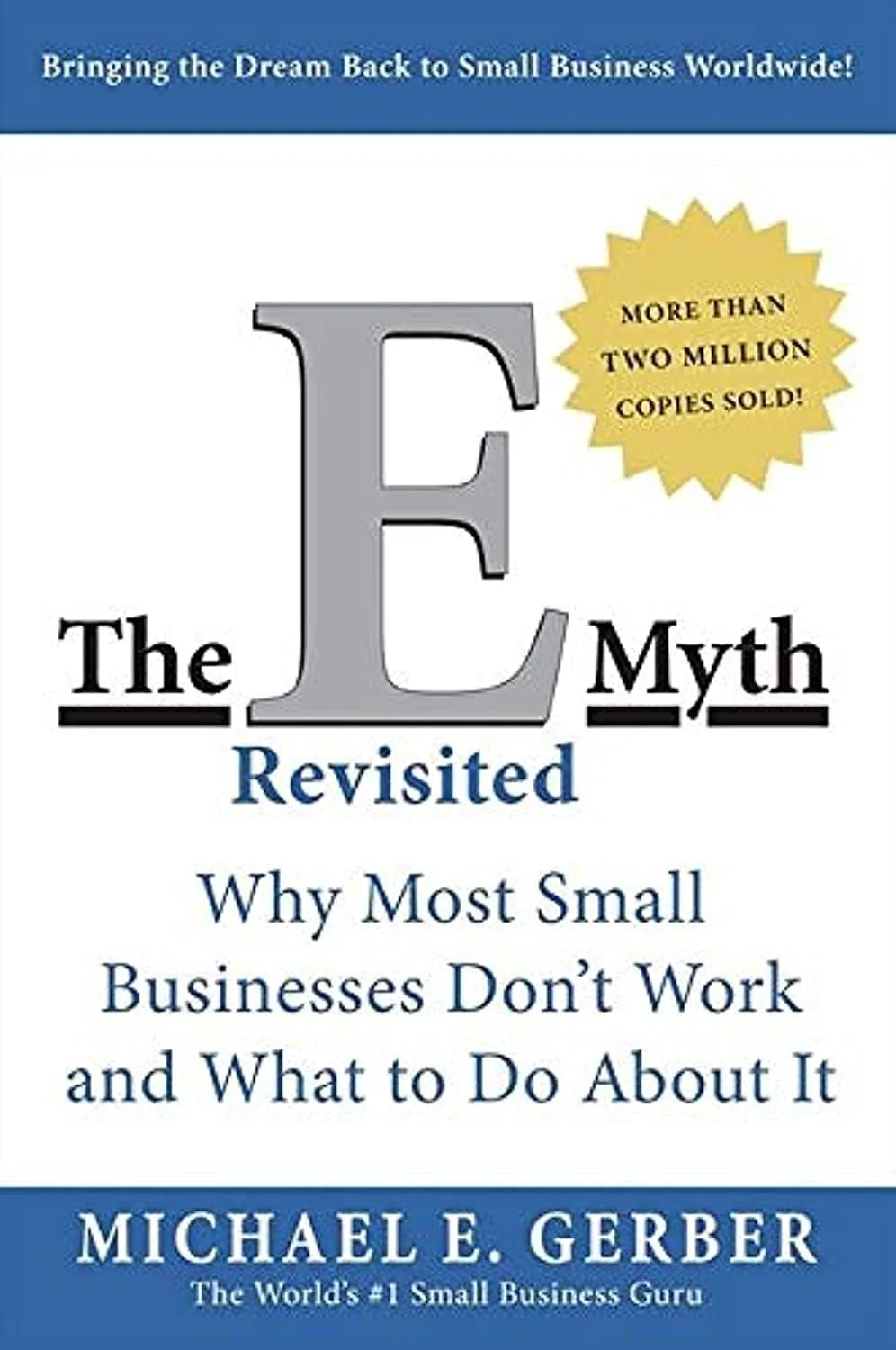
The E-Myth Revisited
"The E-Myth Revisited" by Michael E. Gerber explores the myth of the entrepreneurial mindset and explains how to turn small businesses into successful enterprises. The book argues that most small business owners are technicians who are great at their craft but lack the business knowledge to run a successful business. The book provides practical advice on how to build a business that works, including creating systems and processes, hiring and managing employees, and developing a business strategy. It also focuses on the importance of the entrepreneur's mindset and how to develop it.