Fifteen Years, Forty-Five Million Dollars, and Still a Disappointment
The standard startup story has a shape everyone knows. Young founder, brilliant idea, dorm room, doubters, billions, vindication.
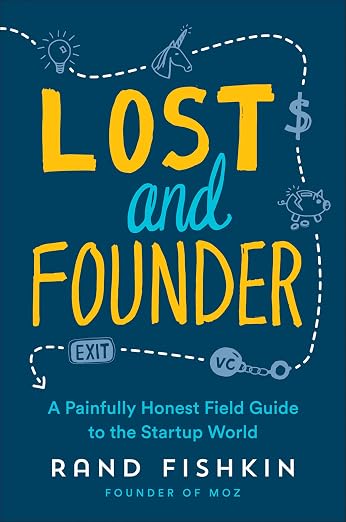
Rand Fishkin's book exists because that shape describes almost nothing. Moz, the SEO software company he cofounded, grew to roughly $45 million in annual revenue over fifteen years, starting as a mother-and-son consulting business that went deeply into debt before it became anything. It employed hundreds of people and helped define its category. By any ordinary measure it worked.
By venture standards it was a disappointment, and that gap is the most useful thing in the book.
Fishkin is one of the few founders willing to write about the parts that normally get edited out: the funding decisions he regrets, the expansion that cost enormously, the layoffs, stepping down as CEO, and his own depression through it. He now runs SparkToro. This is a memoir with lessons attached rather than a framework book, and its worth lies in being true rather than in being new.
What You'll Learn
- Why venture capital changes the definition of success rather than just the balance sheet
- What Moz's radical transparency actually cost and returned
- When a minimum viable product damages more than it validates
- Why revenue and growth don't protect anyone from layoffs
- How to read the book's conclusions given it draws on one company
Venture Capital Comes With Strings
The book's central argument, and Fishkin's most-quoted position, is that raising venture money is not simply acquiring capital. It's accepting a definition of an acceptable outcome.
Venture funds need a small number of enormous returns to work. A company that grows steadily to fifty million in revenue and stays profitable is a good business and a poor venture outcome. Once you've taken the money, the pressure toward the enormous version is structural rather than personal, and it shapes every subsequent decision: which markets to enter, how fast to hire, whether to sell, what counts as a good quarter.
Fishkin's related advice is not to raise simply because you can. Available money is persuasive, and taking it at the wrong moment locks in expectations before you know whether the business can meet them.
He's careful enough to say this isn't an argument that venture funding is always wrong. It's an argument that founders should understand what they're agreeing to, because the terms of success stop being theirs to set afterwards.
Radical Transparency
Moz published things most companies keep private: financials, board decks, salary formulas, and detailed accounts of failures as they happened.
Fishkin's case is that transparency built trust with customers, with employees, and with a wider audience, and that the trust compounded into something more valuable than the information was worth protecting. It also let the company recruit and retain people who cared about how it operated.
The honest qualification he supplies is that transparency costs something. Publishing bad news means living with it publicly, and it removes the option of quietly fixing things before anyone notices. There's a further wrinkle he's more candid about than most: for a marketing software company selling to marketers, transparency was itself a marketing strategy. It differentiated Moz in a category full of opacity. That doesn't make it insincere, but it does mean the returns won't be identical for a company where openness carries no strategic benefit.
MVPs, Growth Hacks, and Other Received Wisdom
Several chapters attack advice that circulates as settled truth.
On minimum viable products: launching something deliberately rough can be destructive if you do it at the wrong moment or with the wrong audience. First impressions are durable, and in a market where your brand is your main asset, shipping something embarrassing to your core audience costs more than the learning is worth. The MVP logic assumes cheap, reversible reputation, and that assumption doesn't always hold.
On growth hacking: the tactics that produce dramatic charts tend to be one-time effects that decay, and building a company around them produces a treadmill rather than a foundation.
On revenue and growth as protection: Moz was growing and generating substantial revenue when it went through layoffs. Fishkin's account of the expansion that drove this, a costly attempt to move beyond the company's core into a much broader product, is the most instructive part of the book. Scope expanded, focus dispersed, spending ran ahead of results, and the correction fell on people who hadn't made the decision.
That chain, from ambitious strategy to painful correction, is far more representative of how companies actually get into trouble than any of the sudden-collapse stories that get told.
The Emotional Register
The section readers most often single out. Fishkin writes openly about depression and anxiety during his time as CEO, about the pressure of maintaining a confident exterior while privately struggling, and about eventually stepping down.
This is unusual in the genre and it's doing real work rather than adding colour. Founder mythology systematically excludes this material, which leaves people currently experiencing it convinced they're uniquely unsuited to the job. The book's most-cited effect on readers is not a tactic. It's the relief of recognition.
Startup Reality at a Glance
- The venture trade. Capital in exchange for a definition of success you can't later revise.
- Transparency. Real trust returns, real exposure costs, and a payoff that depends on your market.
- MVP caution. Rough launches damage brands where first impressions are expensive and durable.
- Growth hacking. Usually a decaying one-time effect rather than a foundation.
- Layoffs. Not prevented by revenue or growth, and usually downstream of a strategy decision made a year earlier.
- Founder mental health. Common, systematically hidden, and worse for being hidden.
A Quick Start Guide to Avoiding Startup Mythology
- Define your acceptable outcome first. Write down what success looks like before any conversation with investors, because afterwards it isn't your definition anymore.
- Price the reputational cost of a rough launch. If your brand is your main asset, an MVP in front of your core audience may cost more than it teaches.
- Distinguish durable growth from one-time spikes. Ask whether a tactic still works on the hundredth repetition.
- Watch scope, not just spend. Most painful corrections trace back to a strategy that expanded further than the company could support.
- Find somewhere honest to talk. Peers, a therapist, anyone outside the company. The isolation is the part that compounds.
Who Should Read Lost and Founder (and Who Can Skip It)
- Read it if you're weighing venture funding and have only heard the case for it.
- Read it if you're a founder having a hard time and every book you pick up makes you feel worse. This one is written for exactly that.
- Read it if you want a realistic picture of what a successful-but-not-legendary company actually looks like from inside, which is what most companies are.
- Skip it if you want frameworks and tools. This is a memoir with lessons attached, and the lessons are contextual rather than systematic.
- Skip it if you're not in software. The specifics are SaaS and startup-shaped, and while the emotional content transfers, the tactical content largely doesn't.
Final Reflections
The value here is candour rather than originality. Several reviewers note that the advice isn't earth-shattering, and they're right; what's rare is a founder describing the ordinary version of the journey without retrofitting it into a triumph. Startup literature is overwhelmingly written by outliers and survivors, which systematically misinforms everyone reading it. A book about a good company that took fifteen years and involved a lot of pain is more representative than almost anything else on the shelf.
The limitation is inherent to the form. This is one company's experience, and Fishkin generalizes from it more confidently than a sample of one supports. His position on venture capital is the clearest instance: it's a fair account of what happened to Moz with the investors Moz had, and it reads at times as though the structure guarantees that outcome. Plenty of founders have taken venture money and been well served, and the honest version is that the fit between funding type and business type matters enormously. Similarly, radical transparency worked partly because of who Moz sold to, which the book acknowledges less than it might.
Read it for the corrective and the company, not as a general theory of how startups work.
The Bottom Line
Decide what outcome would count as enough before you accept money from anyone whose model requires more than that.
Frequently Asked Questions
**What is the main argument of **
Lost and Founder**?**
That mainstream startup wisdom, particularly around venture funding, minimum viable products, and growth tactics, leads many founders astray. Fishkin's central point is that taking venture capital means accepting an outcome definition set by the fund's economics rather than by you, and most founders don't grasp this before signing.
**Is **
Lost and Founder** anti-venture-capital?**
Not exactly. Fishkin argues founders should understand what venture funding commits them to rather than raising because money is available. His view is shaped by one company's experience with specific investors, so treat it as a corrective to the standard case for VC rather than a general verdict.
Who is this book for?
Founders and early employees at software startups, particularly anyone considering funding or currently struggling. Its distinctive contribution is describing what a successful but non-legendary company feels like from inside, which almost no other startup book attempts.