The Order of Operations Is the Argument
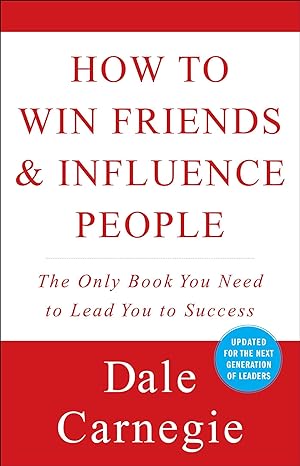
Dale Carnegie published How to Win Friends and Influence People in 1936, and it remains one of the most read personal development books ever written. Nearly ninety years later, the organization that carries his name published a successor aimed at a generation that hasn't read the original.
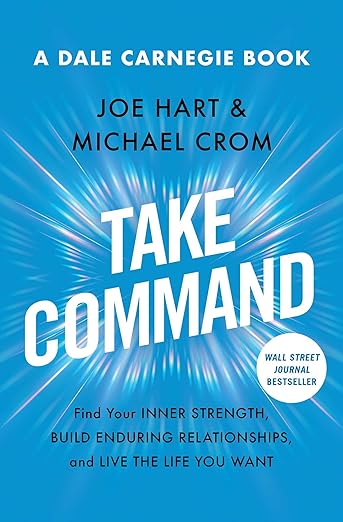
Take Command, published in 2023, is written by Joe Hart, chief executive of Dale Carnegie & Associates, and Michael Crom, a board member and Carnegie's grandson. It draws on interviews with over a hundred high-performing leaders alongside the organization's own research and training experience.
What distinguishes it from a general self-improvement book is its sequence. Three parts, in a deliberate order: thoughts and emotions, then relationships, then future. The implicit argument is that each stage depends on the one before — you can't build good relationships while your reactions are running you, and you can't build a coherent future without either. This summary follows that order.
What You'll Learn
- Why the authors treat thoughts as chosen rather than received
- How to work with stress rather than eliminating it
- What trust consists of practically, and how feedback either builds or destroys it
- Why perspective-taking is treated as a skill rather than a disposition
- How values, purpose, and vision connect to what you actually do
Part One: Thoughts and Emotions
The book opens where Carnegie did, with the observation that the largest problem most people face is the one in their own head.
Choosing your thoughts. The core claim is that between an event and your response sits an interpretation, and the interpretation is a choice most people never notice making. A short reply from a colleague is read as irritation, or as someone typing between meetings — same facts, different day. The practical instruction is to catch strong reactions and deliberately generate an alternative explanation before acting on the first one.
Mastering emotions. Not suppression, which the authors are careful to distinguish. The aim is recognizing what you're feeling, understanding what triggered it, and choosing a response rather than being carried by one. This is familiar territory from emotional intelligence writing, and the treatment here is practical rather than theoretical.
Stress as a usable force. Their framing is that stress is a signal about something mattering, and that the relationship you have with it determines whether it becomes fuel or damage. The advice is directed at what's within your control in a given situation and at accepting what isn't.
Letting go of regret. One of the more affecting sections, arguing that rumination over past decisions consumes present capacity and that treating the past as a source of information rather than a verdict is what allows people to move.
Confidence and courage. Both treated as consequences of action rather than prerequisites for it. You build confidence by doing difficult things badly first, not by waiting until you feel ready.
Part Two: Relationships
The second part is closest to Carnegie's original territory, updated.
Building trust. The authors treat it as accumulated behavior rather than a quality you possess: doing what you said you would, admitting when you didn't, and being consistent across audiences. Trust built slowly and lost quickly is a cliché because it's accurate.
Giving and receiving feedback. The section most useful to anyone managing people. On giving it, the emphasis is on specificity, timing, and separating the behavior from the person. On receiving it, the harder half, they focus on the reflex to defend and explain — which teaches the other person not to bother next time. Listening fully and thanking someone for difficult feedback is the behavior that determines whether you ever get any again.
Perspective-taking. Framed as a skill you practice rather than a trait you have. The specific version is to construct the other person's account of the situation, in which their behavior is reasonable, and to test it before deciding they're being difficult.
Repairing difficult relationships. The authors' position is that most damaged working relationships are recoverable and that almost nobody attempts it, because the first move is uncomfortable and requires acknowledging your own contribution.
Part Three: Your Future
The final part addresses direction, and its sequence is values, then purpose, then vision.
Values come first because they're the filter for everything else: without knowing what you actually prioritize, decisions get made by whatever is most urgent or most flattering. Purpose is the contribution you want to make, which the authors are careful to describe as discovered through action rather than found through reflection. Vision is the concrete picture of the life you're building toward, specific enough to guide a choice.
The closing material widens into community and contribution, arguing that a life organized entirely around personal achievement tends to disappoint, and that the people they interviewed consistently described meaning as coming from what they contributed to others. It's a familiar conclusion, and the interview base gives it more weight than assertion alone would.
Take Command at a Glance
- Choosing your thoughts. Recognizing the interpretation between event and reaction, and deliberately generating alternatives.
- Stress as signal. Working with stress by focusing on what's controllable rather than trying to eliminate it.
- Trust as accumulation. Consistency, follow-through, and honesty about failures, built slowly.
- Receiving feedback. Listening without defending, since the response determines whether you get any again.
- Perspective-taking. Constructing the account in which the other person's behavior is reasonable.
- Values, purpose, vision. Clarified in that order, since values filter the decisions the other two depend on.
A Quick Start Guide to Taking Command
- Interrupt one reaction. When something lands badly, write down two other explanations before you respond.
- Ask for feedback and say thank you. Request it specifically, then resist explaining yourself, however strong the urge.
- Name your top values. Write down three, then check your last month's decisions against them.
- Reopen one damaged relationship. Make the first move on something you've been avoiding, starting with your own part in it.
- Act before you feel ready. Pick the thing you're waiting to feel confident about and do a small version of it badly.
Who Should Read Take Command (and Who Can Skip It)
- Read it if you're early in your career or new to personal development and want a structured, readable starting point in the Carnegie tradition.
- Read it if you respond well to stories. The book is built around accounts of ordinary people and interviewed leaders rather than frameworks.
- Read it if you want the sequencing. Working from internal state to relationships to direction is a more sensible order than most books in this category use.
- Skip it if you've read widely in this genre. Reviewers consistently note it's a refresher rather than new material, and you'll recognize the substance.
- Skip it if you want research depth. The interviews and Carnegie tradition supply the authority, and there's little engagement with the underlying psychology.
- Skip it if you want specificity over breadth. Covering thoughts, emotions, relationships, and life direction in one volume means each gets a chapter where it could have a book.
Final Reflections
The most defensible thing about this book is its architecture. A great deal of personal development writing starts with goals and vision, which is the wrong end: people with unmanaged reactions and damaged relationships don't execute five-year plans. Working from internal state outward is the correct order, and stating it as a sequence rather than a menu is a genuine contribution.
The section on receiving feedback is the most practically valuable, because it addresses the half of the exchange nobody works on. Plenty of managers have been trained to give feedback well; almost none have been trained to take it without explaining, and the explaining is what stops it arriving.
The honest limitation is novelty. This is Carnegie's philosophy restated for a contemporary audience, wrapped in current stories, and readers already familiar with the tradition will find little they haven't met. That's not a flaw so much as a description of what it is — an accessible entry point, deliberately written for people who won't read the 1936 original. Judged that way it does its job well, and judged as a contribution to the field it doesn't add much.
The Bottom Line
You can't manage relationships while your own reactions are running you, and you can't build a future without both. Start with the interpretation you're placing on things, because that's the part you have most control over and the part you've probably never examined.
Frequently Asked Questions
**What is **
Take Command** about?** Living deliberately rather than reactively, worked through in three stages: taking command of your thoughts and emotions, then your relationships, then your future direction. It's published by the Dale Carnegie organization and written by its chief executive and Carnegie's grandson.
**How does it relate to **
How to Win Friends and Influence People**?** It's a modern successor from the same organization, restating and extending Carnegie's principles for a contemporary audience. The relationship material is closest to the original, while the sections on thoughts, emotions, and life direction are broader in scope.
**Is **
Take Command** worth reading if you know the genre?** Probably not for new ideas. Reviewers consistently describe it as a well-structured refresher rather than original material. Its strength is as a first book for someone new to personal development, or as a readable restatement for someone who wants the Carnegie tradition updated.